

NASA Tests New Heat Shield Designs Using Small Capsules Returning From Space
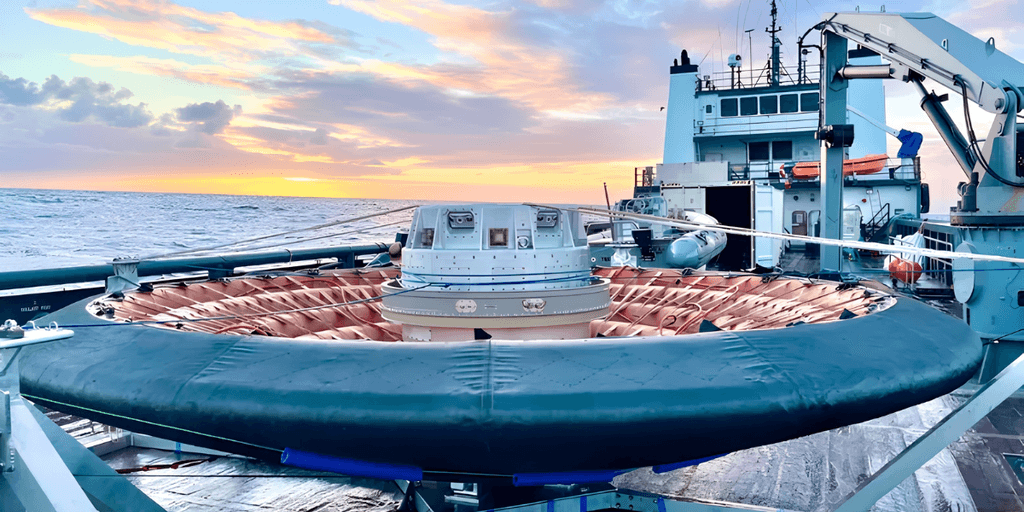
NASA's KREPE-3 experiment tests 12 small capsules to evaluate heat shield materials and spacecraft designs during atmospheric reentry.
An Experiment Designed Around a Returning Cargo Spacecraft
NASA announced new details about its Kentucky Reentry Probe Experiment, known as KREPE-3, on October 9. The experiment involves 12 small capsules designed to evaluate thermal protection materials and related technologies under the conditions encountered during reentry into Earth's atmosphere.
The capsules were carried aboard Northrop Grumman's Cygnus XL cargo spacecraft, which departed the International Space Station on October 9 after delivering supplies and research equipment to the orbiting laboratory.
Instead of requiring an entirely separate spacecraft launch for the tests, researchers are using the cargo vehicle's planned disposal trajectory to gather experimental data. As the vehicle returns through the atmosphere, the capsules are intended to separate and collect measurements during their own reentry.
NASA described the approach as a way to obtain useful flight data while limiting the cost associated with dedicated test missions.
Why Heat Shields Are Essential
Spacecraft returning from orbit encounter extreme heating as they move through the atmosphere at high speeds. Thermal protection systems are designed to manage that heat and prevent dangerous temperatures from reaching a vehicle's structure or its occupants.
The challenge becomes more demanding for future missions involving the Moon and Mars. Different trajectories, vehicle sizes and atmospheric conditions create different engineering requirements, and a design suitable for one mission may not be appropriate for another.
Researchers need to understand how protective materials behave under realistic conditions, including how they respond to heat, pressure and mechanical stress. Laboratory tests provide important information, but flight experiments can help validate models against measurements collected during actual reentry.
KREPE-3 is intended to contribute to that process by evaluating multiple materials, sensor systems and shapes.
Testing Different Materials
The experiment includes a range of thermal protection approaches. Some capsules carry established materials, including phenolic impregnated carbon ablator, a protective material previously used in NASA missions.
Other capsules will test newer technologies, including a three-dimensionally printed heat shield developed through work involving NASA's Johnson Space Center and Oak Ridge National Laboratory.
NASA Ames Research Center is also contributing flexible protective materials known as Materials Engineered for Re-entry using Innovative Needling Operations, or MERINO. These materials use layers of carbon and phenolic fibers stitched together.
The approach is intended to provide alternatives to more conventional rigid protection systems. Flexible materials may offer advantages in manufacturing, storage and deployment, although their suitability depends on the requirements of a specific mission and the results of testing.
Another capsule will examine a deployable heat shield designed to increase surface area during descent. At a larger scale, a foldable design could potentially allow spacecraft to transport payloads that would otherwise be difficult to accommodate within a launch vehicle's available space.
The Importance of Sensors and Flight Data
The capsules include instruments designed to measure variables such as temperature, pressure, motion, magnetic fields and light. Those measurements can help researchers evaluate how different materials and shapes perform under reentry conditions.
The data can also help scientists assess computer models used to predict heat transfer, vehicle stability and other aspects of atmospheric entry.
Accurate models are important because engineers use them to evaluate designs before committing to full-scale missions. Experimental results can reveal where predictions agree with observed behavior and where further research is needed.
The capsules are intended to transmit information through satellite signals, allowing researchers to collect measurements during the experiment. The availability and completeness of the resulting data will determine how much can be concluded about each tested design.
A Collaborative Research Effort
KREPE-3 involves the University of Kentucky, NASA's Established Program to Stimulate Competitive Research, multiple NASA centers and other partners. Students and researchers contributed to the development of the experimental capsules.
The project illustrates how aerospace research can combine university participation, government laboratories and commercial transportation services. Each organization contributes different capabilities, from materials development and instrumentation to spacecraft operations.
Using an already scheduled cargo vehicle's disposal phase can also create opportunities to test concepts without dedicating a separate launch solely to the experiment.
Relevance to Future Missions
Improved thermal protection could support future spacecraft returning from the Moon or carrying payloads into other planetary environments. The benefits, however, depend on the performance demonstrated by each material and design.
A successful experiment does not automatically mean that a technology is ready for operational use. Engineers must examine the measurements, assess limitations and determine whether a tested design meets the requirements of its intended mission.
KREPE-3 offers NASA another opportunity to collect practical data about reentry materials and configurations. Its broader significance lies in improving the evidence available to engineers as they develop systems intended to withstand one of spaceflight's most demanding phases.

Good Morning US Contributor
Covers world affairs and science, connecting research and foreign policy to the readers they affect.
This article features partner, contributor, or branded content from a third party. Members of the Good Morning US editorial staff were not involved in the creation of this content. All views and opinions are those of the contributor alone.
You May Also Like

Turning Your Life Savings Into a Retirement Plan

Water Guys Reveals The Hidden Costs Of Hard Water For Homeowners In Eastern Washington And North Idaho
Scientists and Technology Companies Commit $1.8 Billion to AI-Based Biology Research

Kully Bath: A Voice for the Unseen

Diana Sussman Unveils The Texter’s Secret, Her Latest Maddie Mystery