
The Game Show Trolley Turns Savannah Into A Game Board
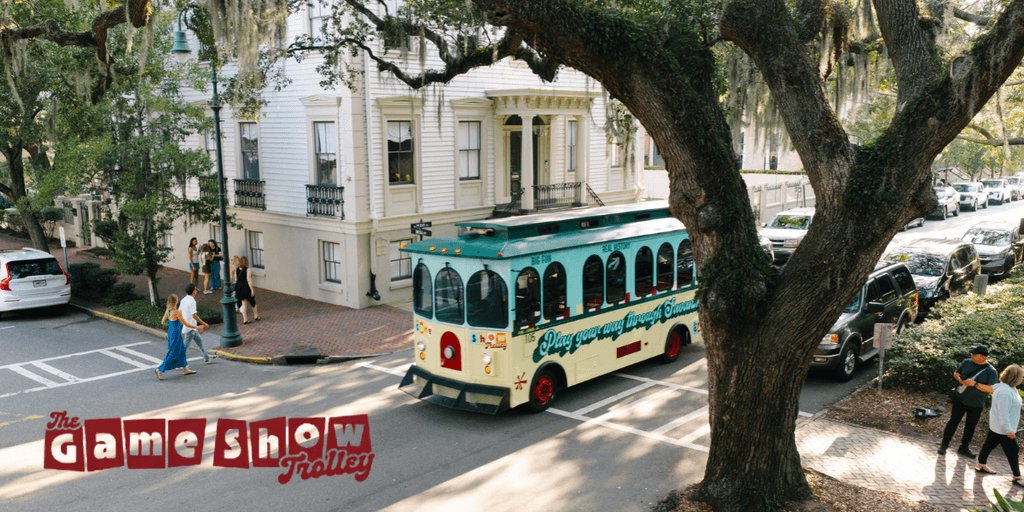
A Savannah guide saw a game in the city’s historic squares, then built a trolley where guests become players.
Garrett Zajac was explaining Savannah’s street plan when he heard an idea hiding inside his own words. The city, with its grid of neighborhoods built around public squares, looked like a game board. For a former tour guide with eight years of team-building experience, that thought opened a door. What if visitors did more than watch Savannah pass by? What if they played their way through it? The Game Show Trolley grew from that moment, turning a familiar sightseeing ride into a contest with buzzers, teams, and a host facing the crowd.
The Game Show Trolley Begins With Savannah’s Squares
The idea belongs to Savannah as much as it belongs to Zajac. In 1733, James Oglethorpe laid out the city around a system of squares. Today, twenty-two remain, giving the Historic District its distinctive rhythm of streets, green spaces, and gathering places. In 2026, that 293-year-old plan gave Zajac a fresh way to introduce his hometown. Instead of treating the layout only as something to explain, he saw a structure that could inspire a show. History supplied the setting, but it also supplied the spark.
“I was explaining how Oglethorpe laid out the city, and I heard myself say it: Savannah is a game board. Then ‘Savannah Squares’ popped into my head like a game show marquee. After that, the show pretty much designed itself.” His account captures the appeal of the concept: it does not require visitors to separate learning from having fun. The squares give the ride a sense of place, while the game gives guests a reason to take part. Each side supports the other.
Before founding the business, Zajac worked as a guide for several Savannah tour companies. He valued the chance to introduce people to the city, but he wanted to shape that encounter himself. “Introducing someone to a city is special. I did it for other companies for years, and I wanted to make it my own and make it a lot more fun.” That goal called for more than a new script. It called for a different relationship between the person leading the tour and the people taking it.
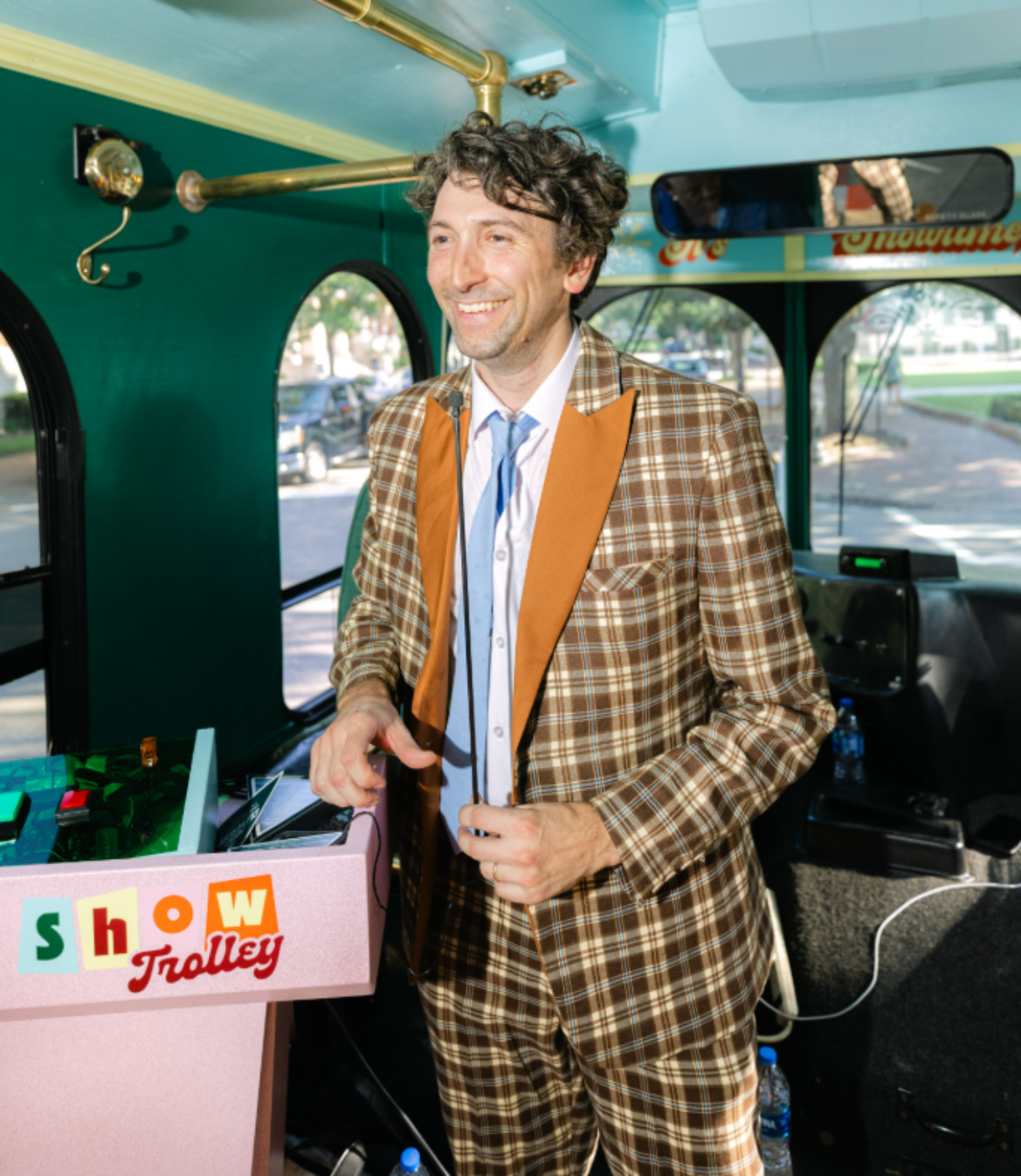
Zajac also took a hands-on role in making the idea real. He built the benches and host stand, then wired the buzzers himself. Those details reveal how closely the physical space serves the show. Guests need to see one another, reach their buzzers, and follow the host. The trolley launched in October 2026 with twenty-four seats and a clear premise: a seventy-five-minute ride through the Historic District, staged as a live 1960s-style game show. The city remains in view, but the passengers now have a part to play.
Inside The Game Show Trolley: Facing The Players
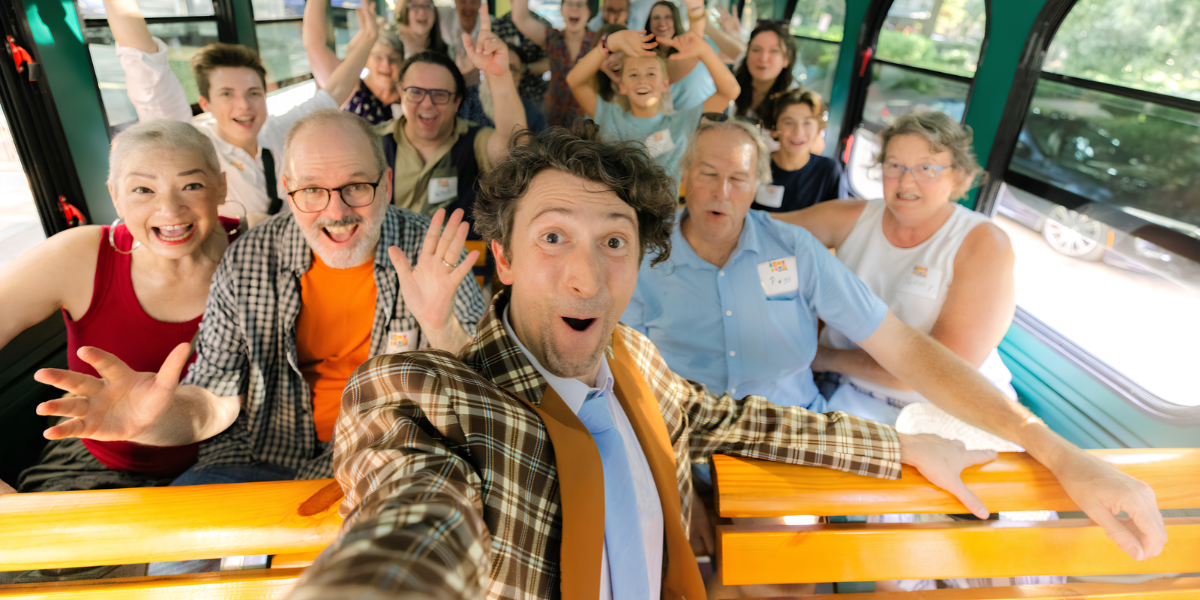
One clear difference is that with the Game Show Trolley, the host does not drive. Instead, Fancy Parker stands at the front, facing the players and running the show. That arrangement lets the host focus on the crowd rather than the road. Team Biscuit and Team Gravy sit across from each other, buzzers in hand, as Savannah rolls past. A sightseeing trip becomes a shared event, with the next answer able to change the mood.
The distinction is not simply that someone asks trivia questions on a trolley. It is that the seating, host, and pace all support participation. Guests can see a rival react, cheer for a teammate, or join the friendly trash talk. Meanwhile, Savannah history remains part of the ride. Zajac sums up the shift in a short line: “On most trolley tours, you’re a passenger. On ours, you’re a player.” It is a statement of his approach, built around giving visitors something to do together.
One group of women from Texas showed how quickly that approach can take hold. They signed up on a whim because they wanted to see Savannah. Then they learned they would sit opposite one another and compete. According to Zajac, the group soon grew rowdy and loved the change. Their visit did not begin with a search for a game show. The game became the surprise inside the tour. For people traveling together, that shift creates another layer to the outing: their own reactions become part of the show.
A younger guest supplied a different kind of turning point. An eight-year-old won the lightning round for his whole team by knowing the hottest planet in the solar system: Venus, not Mercury. The answer mattered, but so did the role it gave him. In that moment, an adult did not need to lead and a child did not need to follow. The person who knew the answer could carry the team. That story illustrates the mixed-age experience Zajac wants to offer, with kids and grown-ups sharing the same contest.
The Game Show Trolley Builds A Shared Experience
There is also something tangible at stake. Name tags, winner stickers, a trophy photo, and a prize wall help give the contest its shape. These touches make the game more than a loose series of questions. Players have teams to claim and a result to celebrate. Still, the outing does not depend on everyone winning. Both sides get the city, the show, and the chance to take part. Competition gives the ride momentum without replacing its purpose as a Savannah experience.
The group focus draws on Zajac’s eight years in team building. “A show that brings people together just made sense.” The business offers public tours, private tours, and corporate events, along with an on-site version for groups larger than the trolley’s twenty-four seats. That range keeps the core idea intact while allowing for different settings. A family visit, a private celebration, and a company gathering can each make room for a hosted game, even when the whole group cannot fit aboard.
What makes The Game Show Trolley distinctive is the connection between its origin and its design. Savannah’s squares sparked the idea; the facing benches turn guests toward one another; the host keeps attention on the players. None of those parts needs to stand alone. Together, they express a local guide’s wish to make an introduction to his city feel more personal, active, and fun. For readers weighing a family outing or group event, the links below offer a place to explore the format and consider how it fits their visit.
Explore More About The Game Show Trolley
Connect with The Game Show Trolley, Instagram, Facebook and TripAdvisor

Good Morning US Contributor
Covers national politics and policy, with an eye on how decisions in Washington reach everyday households.
This article features partner, contributor, or branded content from a third party. Members of the Good Morning US editorial staff were not involved in the creation of this content. All views and opinions are those of the contributor alone.
You May Also Like
Bill's Family Garage Door Named Best Garage Door Repair Company in the United States of 2026
Hike Tee: Bringing Humor, Sustainability, and Meaningful Connections to Every Outdoor Adventure

Prepping Bargains: How Diane Dunn Is Making Everyday Preparedness More Affordable For Families

Memorra: Best AI Powered Memory Preservation Service in the USA of 2026

How ORYN Quest Uses AI to Help Parents Discover Kids’ Activities and Support Their Growth