
Uber and Zipline Move Drone Delivery Closer to Everyday U.S. Commerce
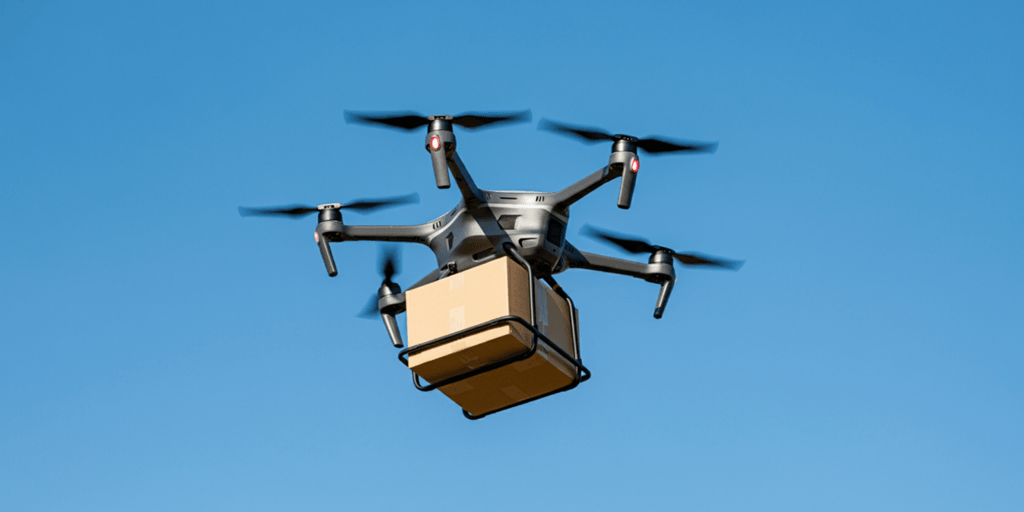
Uber and drone-delivery company Zipline announced a strategic partnership Monday that could bring autonomous aerial deliveries to millions of American consumers through Uber Eats.
The companies said the first deliveries are expected to begin later in the year in markets where Zipline already operates, with plans to expand into dozens of U.S. cities. They are targeting one million drone deliveries per day by the end of 2029.
The agreement also includes a strategic investment by Uber in Zipline, although the companies did not disclose the amount.
From roads to the air
Food and consumer-goods delivery in American cities is heavily dependent on road transportation. Delivery drivers must navigate traffic, parking limitations and increasingly congested urban streets.
Zipline's technology offers a different model. Its autonomous aircraft can travel above road networks and deliver packages directly to designated locations.
The company said its system is designed to complete deliveries in approximately five to 10 minutes.
The partnership with Uber gives that technology access to an established consumer marketplace. Rather than requiring customers to use a separate drone-delivery service, the companies plan to integrate Zipline deliveries into Uber Eats.
That could make autonomous delivery easier for consumers to encounter as part of an existing ordering process.
A large expansion target
The one-million-deliveries-per-day target represents an ambitious expansion of drone logistics. Zipline said it has spent a decade developing an international delivery network and currently serves more than 5,000 hospitals and health facilities.
Reuters reported that Zipline has completed more than two million deliveries and operates across four continents. The company has also expanded its U.S. commercial partnerships beyond healthcare.
The Uber relationship is significant because it connects that existing operational experience with one of the largest consumer delivery platforms in the United States.
The first phase will begin in markets where Zipline already operates before expanding to additional cities.
What consumers could notice
For customers, the most visible change would be the possibility of receiving smaller orders by air rather than by conventional vehicle.
That could eventually include restaurant meals and other consumer goods. The companies have emphasized speed, with the proposed service designed to make deliveries within minutes rather than relying exclusively on road-based couriers.
The practical experience will depend on the type of order, location, weather, delivery infrastructure and regulatory requirements. The announcement does not mean that drone delivery will immediately replace conventional drivers or become available everywhere.
Instead, the partnership represents an effort to add autonomous aircraft as another layer in the delivery network.
A new phase for autonomous technology
Uber has increasingly relied on partnerships as it expands into autonomous transportation technologies. The company previously partnered with other firms in areas including autonomous vehicles and drone delivery.
The Zipline agreement follows a similar strategy: Uber provides a large consumer platform while a specialized technology company provides the autonomous hardware and operational network.
That model can allow companies to deploy new technologies without developing every component internally.
For consumers, it also means autonomous systems may become visible first through familiar services rather than entirely new applications.
Infrastructure and regulation remain important
Drone delivery still depends on operational infrastructure and compliance with aviation requirements. Scaling a system from existing markets to dozens of U.S. cities involves more than producing aircraft.
Companies must establish launch and landing procedures, delivery locations, customer interfaces and safety systems while operating within the rules governing commercial drone activity.
The announcement therefore represents an expansion plan rather than a guarantee that one million deliveries will occur every day.
Why it matters
The Uber-Zipline agreement is significant because it moves drone delivery further into mainstream consumer commerce.
For years, autonomous drones have been associated primarily with demonstrations, specialized logistics and medical deliveries. The new partnership connects the technology directly to a mass-market food and delivery platform.
If the companies achieve their stated expansion plans, consumers could increasingly encounter autonomous aircraft as part of ordinary commerce.
The broader significance is the convergence of several technologies—autonomous flight, digital marketplaces, logistics software and on-demand delivery—into a single consumer service.

Good Morning US Contributor
Covers health, consumer technology, and entertainment, tracking the stories driving the daily conversation.
This article features partner, contributor, or branded content from a third party. Members of the Good Morning US editorial staff were not involved in the creation of this content. All views and opinions are those of the contributor alone.
You May Also Like

SunKissed Greenz Expands Its Natural Wellness Mission With More Thoughtful Choices For Pets

The Assurance Network: Insurance With Heart

Money Is Not Your Problem. Your Pattern Is.

Are Kids' Shoes Hurting Growing Feet? Zebs Says Yes
Castaways Bistro Enters a New Chapter in Punta Cana