

WashU Surgeons Report First Known Robotic Liver-and-Kidney Double Transplant
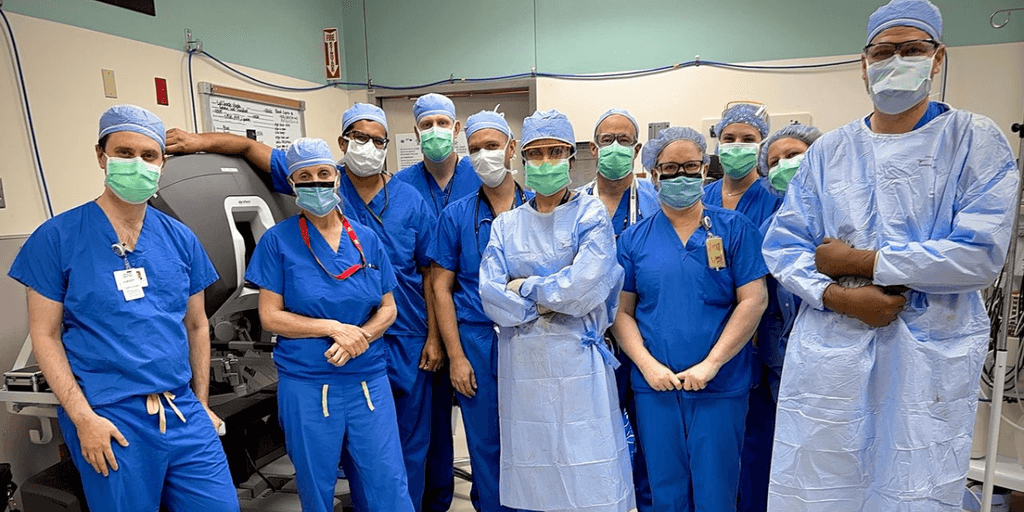
Surgeons at Washington University School of Medicine and Barnes-Jewish Transplant Center have performed what the institutions describe as the world’s first reported robotic combined liver-and-kidney transplant, extending minimally invasive robotic surgery to a procedure involving two transplanted organs.
The operation was performed on Darrell Bosworth, a Missouri patient who had developed advanced liver disease, cirrhosis and kidney failure. The procedure took place in May, and WashU Medicine announced the result on September 2.
The milestone is significant because combined liver-and-kidney transplantation is already among the most complex forms of transplant surgery. The robotic approach could eventually provide another option for carefully selected patients, although the procedure remains highly specialized and the long-term applicability of the technique requires further experience.
A Two-Stage Robotic Operation
The surgical team, led by Adeel Khan and Jessica Lindemann, performed the liver transplant first. The operation lasted just over eight hours.
Khan controlled the robotic instruments from a surgical console while viewing the operating field through a magnified three-dimensional display. Lindemann worked at the bedside and provided manual assistance during critical portions of the procedure.
The liver was removed and replaced through an incision of approximately three inches, supplemented by smaller secondary incisions. WashU Medicine noted that conventional open abdominal surgery typically requires a much larger incision and involves cutting through much of the abdominal musculature.
The following morning, the team returned to the operating room to transplant the kidney. The surgeons were able to use the same general access points created for the first procedure.
The kidney began producing urine within minutes after its blood vessels were connected, according to the medical center.
A Patient With Severe Organ Failure
Bosworth’s case illustrates the type of patient for whom combined transplantation can become necessary. His liver disease eventually affected his kidney function, leaving him dependent on dialysis and increasingly limited physically.
By the time he underwent transplantation, he had lost approximately 70 pounds and was largely confined to bed. He had also experienced episodes of confusion associated with his liver disease.
A donor liver and kidney became available approximately three weeks after he was placed on the transplant waiting list.
Because the surgical team already had experience with robotic liver and kidney transplantation separately, physicians determined that a minimally invasive approach could be considered for the combined procedure.
The decision required detailed planning because two major transplant operations had to be coordinated in a single patient.
Recovery Provided an Early Measure
WashU Medicine reported that both transplanted organs began functioning immediately. By the tenth day after surgery, Bosworth had significantly improved mental clarity and excellent transplant-organ function.
Within two weeks, he was able to climb a short flight of stairs. At the time of the announcement, he was able to move independently with the assistance of a walker.
Those results provide an important early outcome from the individual procedure, but they do not establish that the robotic technique is appropriate for all combined-transplant patients.
The medical center described the approach as potentially feasible for carefully selected patients, reflecting the limited scope of the milestone.
Building on Earlier Robotic Transplants
The operation represents an extension of work that the WashU team has developed over several years.
Robotic kidney transplantation had already been performed successfully before the combined operation. Khan performed one of the early robotic kidney transplants in the United States at Barnes-Jewish Hospital in 2020.
In 2023, he performed the country’s first robotic liver transplant at Barnes-Jewish. The combined procedure brought the two areas of experience together in a single operation.
The medical center said its transplant program performs approximately 20 combined liver-and-kidney transplants annually, providing the team with experience in managing patients requiring both organs.
What the Milestone Means
Robotic surgery does not eliminate the complexity of transplantation. Instead, it changes how surgeons access and operate within the body.
For patients requiring multiple organs, minimizing surgical trauma could be valuable if the approach can be reproduced safely across additional cases. However, the WashU announcement frames the procedure as a development for carefully selected patients rather than a replacement for conventional transplant surgery.
The significance of the operation therefore lies in expanding the technical possibilities available to transplant teams.
The procedure demonstrates how robotic systems are moving beyond isolated organ operations into increasingly complex surgical settings. Further experience will determine whether the approach can become a broader part of transplant medicine.
For now, the WashU and Barnes-Jewish operation represents a documented milestone in minimally invasive transplant surgery and another step in the evolution of robotic procedures for patients with severe organ failure.

Good Morning US Contributor
Covers world affairs and science, connecting research and foreign policy to the readers they affect.
This article features partner, contributor, or branded content from a third party. Members of the Good Morning US editorial staff were not involved in the creation of this content. All views and opinions are those of the contributor alone.
You May Also Like

Scientists and Technology Companies Commit $1.8 Billion to AI-Based Biology Research

Kully Bath: A Voice for the Unseen

Diana Sussman Unveils The Texter’s Secret, Her Latest Maddie Mystery

Michael J. Bannach: The Most Expensive IT Plan Is the One Without an Agreement

Michelle Bishop: Choose You First and Thrive