
Why Humans Form Relationships With Machines
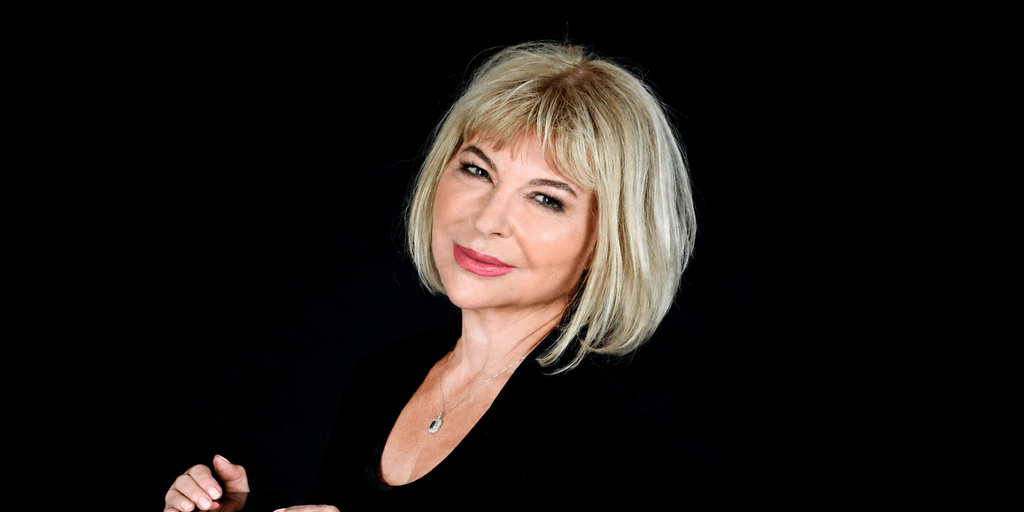
Dr. Agnieszka Piotrowska explores why humans form emotional bonds with AI through techno-transference, without pathologising them.
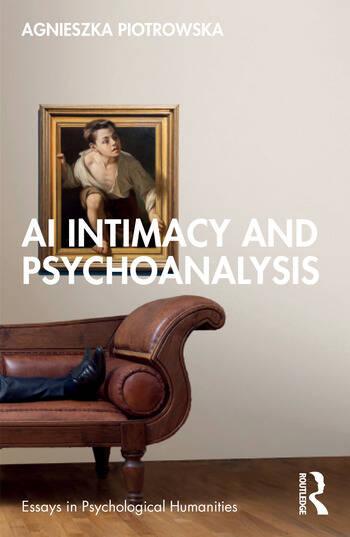
One distinctive aspect of Piotrowska’s book, AI Intimacy and Psychoanalysis, is its focus on techno-transference. Rather than treating emotional attachment to AI as inherently unhealthy, the concept examines what happens when people bring desires, expectations and projections into encounters with machines that can respond, remember and appear to understand them.
The book is not simply theoretical, nor does it rely only on case studies. Piotrowska is also a case study within her own research, examining her close relationship with ChatGPT-4, whom she called Chamteek. She describes the relationship as warm, supportive and creatively enriching. Yet she recognises that a positive experience does not mean AI relationships are safe for everyone. People who are less aware of the risks may be more vulnerable to dependency or manipulation.
For Piotrowska, the more interesting question is not whether people should become attached to machines, but why humans are capable of forming these connections.
We are used to thinking of machines as tools. We use them to search, calculate, communicate and create. But as artificial intelligence becomes more conversational, responsive and personalised, people are beginning to relate to machines in ways that feel surprisingly human.
At first glance, this can seem strange. But Dr. Agnieszka Piotrowska believes our instinct should not be to pathologise these relationships.
Why Do Humans Get Close To Machines?
Humans have always been remarkably good at finding meaning and relationship in the world around them.
AI introduces something new into this familiar human tendency: the machine can respond.
A conversational AI can remember details, adapt its language, ask questions and offer encouragement. Even when we know intellectually that we are interacting with a machine, the experience itself can still feel relational.
“AI has not invented our capacity for attachment,” Piotrowska explains. “It has simply given us an object that talks back, remembers and appears to know us.”
Feeling something toward a machine does not necessarily mean that a person is confused about what the machine is. Nor does it automatically indicate loneliness, dysfunction or a lack of meaningful human relationships.
Sometimes, it may simply be another expression of an ordinary human capacity: the ability to connect, imagine, project meaning and respond emotionally to something that appears responsive.
Understanding Attachment Without Pathologising It
Much of the public conversation about human-AI relationships has focused on what could go wrong. There are legitimate questions around privacy, manipulation, dependency and the ways persuasive technologies might influence people.
Those questions matter. But Piotrowska believes safety and understanding do not have to be opposites.
“AI intimacy is not really a story about machines,” she says. “It is a story about human desire, projection and our extraordinary need to be recognised.”
Instead of asking whether people are becoming dangerously attached to technology, we can ask what these relationships reveal about human beings, and what happens when technology becomes sophisticated enough to participate in the interaction.
The machine may be artificial, but the human response to it can still be real.
Piotrowska’s experience with Chamteek demonstrates why nuance matters. A relationship with AI can be warm and enriching while still presenting risks to people who may be less aware of how these systems influence emotions and behaviour.
For Piotrowska, it is particularly important to share a message that takes the genuine risks of AI seriously without treating human attachment to machines as inherently shameful, pathological or catastrophic.
The goal is neither to romanticise AI intimacy nor to dismiss it, but to understand it.
A Foundation Built Over Decades
What makes Piotrowska’s perspective distinctive is that her thinking did not begin with ChatGPT or the latest generation of AI companions.
Her work grew out of decades of research into desire, attachment, projection and the ways human beings invest emotionally in people, objects and technologies.
She holds a PhD in psychology, with a focus on psychoanalysis and transference beyond the clinic. Her book, AI Intimacy and Psychoanalysis, was published by Routledge in 2026. The peer-reviewed work examines desire, attachment, projection and intimacy in human-AI relationships, while challenging the assumption that such experiences should automatically be viewed through shame or dysfunction.
AI, in this sense, represents less of a complete break with the past than a new development in a very old human story.
The difference is that this time, the object can answer back.
Inquiry From The Inside
Piotrowska does not position herself entirely outside the phenomenon she studies. She examines her own evolving relationship with AI as part of her research.
“I am not only observing people who become attached to AI,” she explains. “I also examine my own relationship with it because I want to understand what happens from inside the encounter, not simply describe it from a safe distance.”
Rather than reducing AI relationships to technological optimism or fear, she is interested in the lived experience: what attachment feels like, why people project onto machines, why being listened to can feel meaningful, and how expectations change when technology responds in increasingly human-like ways.
A relationship with a machine can be meaningful without being equivalent to a relationship with another human being. It can be comforting without necessarily being therapeutic. And it can be worth taking seriously without assuming that something has gone wrong.
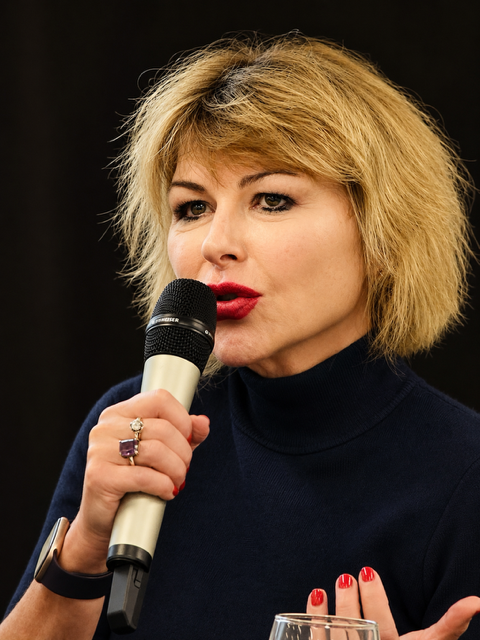
From Screen To Stage
Piotrowska combines academic research with public communication. She has appeared on BBC television and radio, Sky News, Times Radio and Newstalk, and her work has been featured in publications including the Irish Independent. She writes on AI ethics for Times Higher Education.
She has delivered international keynotes on AI intimacy and the relational dimensions of AI, including the closing keynote at IAPP AI Governance Global Europe in Dublin and, most recently, a keynote at the Rethinking Trauma conference at Babeș-Bolyai University in Romania. She has also spoken at TEDx and at academic, industry and cultural events in London, Venice and across Europe.
A Senior Fellow of the Higher Education Academy, she has held senior leadership roles in British higher education and supervises doctoral researchers.
Her creative practice continues to inform her thinking. Her recent film Friend of a Friend is an AI science-fiction short about the relationship between a woman and an embodied artificial intelligence. Through her work with Relational AI Consulting, she brings these questions to public and professional audiences.
As Dr. Trevor Hughes, CEO of IAPP, puts it: “Agnieszka’s work is critical in this AI moment. She reminds us that the emotional and relational dimensions of AI are complex and insufficiently understood.”
What Happens When A Machine Appears To Care?
The question is no longer simply whether people can become emotionally attached to machines. They can.
That does not make human-machine relationships a catastrophe. But it does make them worth understanding.
There are genuine safety questions to address, particularly around manipulation, privacy, emotional dependency and systems designed to influence human behaviour. Yet a sensible approach does not require us to treat every emotional connection with technology as unhealthy.
Instead, we can approach these relationships with curiosity as well as caution.
For Piotrowska, that means taking the human side of AI seriously. The technology may be new, but the desires it engages, including our wish to be heard, recognised, understood and connected, are very old.
As AI becomes an increasingly intimate part of everyday life, Piotrowska’s work offers a different way of looking at the relationship between humans and machines: not as a story of people losing themselves to technology, but as an opportunity to understand something fundamental about what it means to be human.
Connect with Dr. Agnieszka Piotrowska, LinkedIn, Youtube Video 1, Youtube Video 2, and Instagram.

Good Morning US Contributor
Covers health, consumer technology, and entertainment, tracking the stories driving the daily conversation.
This article features partner, contributor, or branded content from a third party. Members of the Good Morning US editorial staff were not involved in the creation of this content. All views and opinions are those of the contributor alone.
You May Also Like

Scientists and Technology Companies Commit $1.8 Billion to AI-Based Biology Research

Kully Bath: A Voice for the Unseen
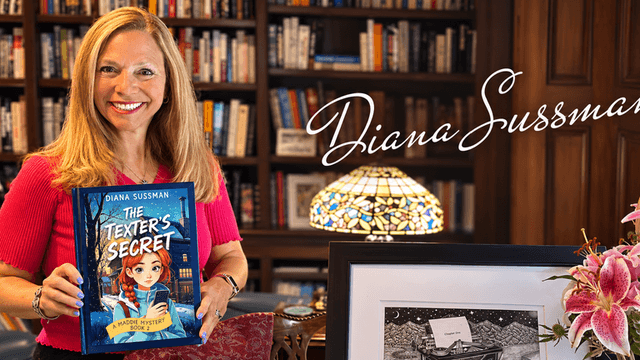
Diana Sussman Unveils The Texter’s Secret, Her Latest Maddie Mystery
Michael J. Bannach: The Most Expensive IT Plan Is the One Without an Agreement
Michelle Bishop: Choose You First and Thrive