
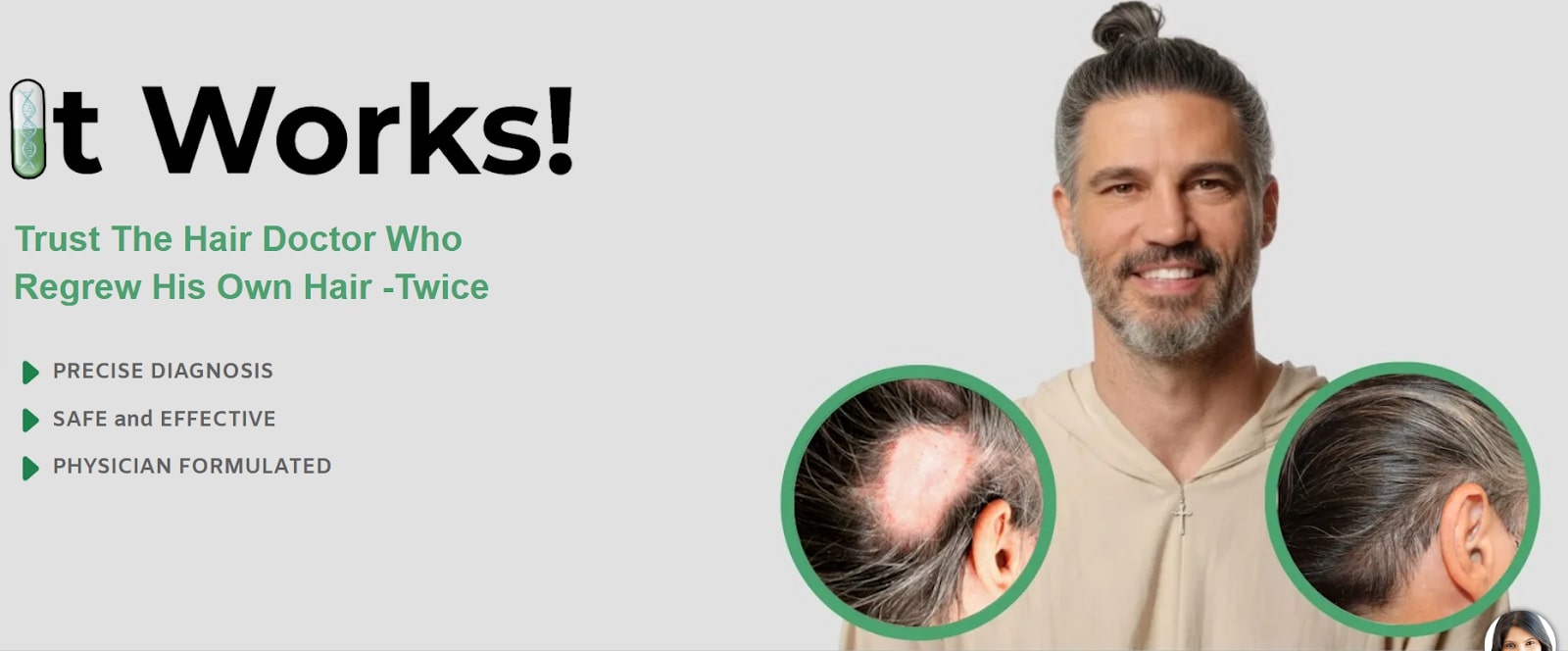
Hair loss can chip away at confidence and identity. Through his Stop and Regrow program, Dr. Ray Nettles is using personalized, science-based care to help people not only regrow hair, but feel like themselves again.
For many people, hair loss feels like a quiet crisis that plays out in the bathroom mirror: more hair on the pillow, a widening part, a receding hairline in photos you never noticed before.
For Brandon, it started far earlier than he expected.
“I was just a teenager when my hairline began creeping back,” he recalls. “I was 17, my friends were worried about school and dating, and I was obsessing over my hair in every reflection I saw.”
By the time he found Stop and Regrow, a hair regrowth program led by Dr. Ray Nettles, he had already tried shampoos, foams, vitamins, and even considered surgery.
“Shortly after starting the program, my hair actually began to come back,” he says. “My crown filled in, my hairline improved. It wasn’t perfect overnight, but it was the first time I didn’t feel helpless.”
Brandon is one of thousands of people who say they’ve found hope in Nettles’ precision-medicine approach to hair loss — and his story begins with Nettles’ own family.
Growing Up Surrounded by Hair Loss
As a child, Ray Nettles watched his father and older brothers lose their hair. It wasn’t just a cosmetic change; he saw how it affected their confidence and how they presented themselves to the world.
“Hair loss isn’t just vanity,” he often says. “It’s how you recognize yourself.”
That experience sparked an early fascination with genetics. As a student, Nettles zeroed in on how traits like hair loss get passed down through a family. By the time he was writing theses and research papers, he was already focused on hereditary hair loss patterns — long before it was his job.
Driven by the belief that hair loss could be better understood and better treated, he went on to medical school and later trained as a hair transplant surgeon and cosmetic dermatologist.

When the Standard Tools Weren’t Enough
In his early years of practice, Nettles used the same treatments most hair specialists relied on: transplant surgery and in some cases medications like minoxidil and finasteride.
He very quickly realized something that bothered him. Patients would see partial improvement or temporary slowing of loss, but most continued to thin. Transplants could rearrange hair, but they didn’t stop the underlying process that was shrinking follicles.
“I realized we were just working on the surface,” he says. “We were moving hair around or stimulating it from the outside, but we weren’t really asking, ‘Why is this person’s hair thinning in the first place?’”
A surprising clue came during an ocular surgery fellowship, when he noticed glaucoma drops causing patients’ eyelashes to grow thicker and longer. If a medication meant for the eyes could affect hair growth, what might be possible by more directly targeting the body’s chemistry?
That question set him on a decades-long path into biomolecular medicine, endocrinology, and anti-aging science.
Treating the Whole Person, Not Just The Scalp
The program that eventually emerged from that journey is Stop and Regrow, which approaches hair loss as a signal — a message from the body that something in the system is off.
Instead of handing every patient the same solution, Nettles begins with a deep look under the hood: detailed bloodwork to examine hormones, enzymes, and nutritional markers linked to hair health.
From there, each person receives a personalized plan, which can include:
- Custom-made topical treatments designed to penetrate the scalp and support follicles
- Oral supplements or medications to help rebalance key enzymes and hormones
- Nutrition and lifestyle guidance so the body has the raw materials it needs to grow healthy hair
“We treat the body as a whole, not just the hair,” Nettles explains. “Your hair is the visible symptom of what’s going on internally. If we don’t correct that, we’re just chasing the problem.”
The Emotional Side of Regrowth
For people living with hair loss, the impact isn’t just physical.
Susie had tried nearly everything before she walked into Stop and Regrow: over-the-counter treatments, salon products, promises in shiny packaging.
“I was constantly checking my hair in every reflection,” she says. “It affected what I wore, how I styled it, whether I wanted to go out. It was exhausting.”
After starting her customized protocol with Stop and Regrow, Susie began seeing new, fine “baby hairs” along her hairline and more density overall.
“I feel more confident and I’m not fretting about my hair the way I used to,” she says. “I’m so grateful to Dr. Nettles and his staff. It’s not just about the hair; it’s about how you feel in your own skin.”
Eugene echoes that sentiment, saying he was drawn in by the program’s “health-first” mindset as much as the promise of regrowth. For him, getting his hair back meant feeling younger and more like himself again.
Doctor, Heal Thyself
Part of what makes Nettles’ story resonate with patients is that he isn’t just treating hair loss — he’s lived it.
Over the years, he has faced both androgenetic alopecia (hereditary hair loss) and alopecia areata, an immune-related form of bald patches. Instead of hiding it, he approached his own case as he would a patient’s: with testing, targeted treatment, and patience.
“I’ve been where my patients are,” he says. “The frustration, the embarrassment, the feeling that you’re aging faster than you should — I know that from the inside. It’s a big part of why I refused to stop searching for better answers.”

Recognition For a Different Kind of Hair Program
In 2025, Stop and Regrow received the Evergreen Award for Best Hair Regrowth Program in the USA. The award recognized the program’s precision-medicine approach and its effort to bring personalized, science-backed care to a condition that is often dismissed as purely cosmetic.
Awards don’t guarantee results, and no treatment works for everyone. But for many patients, the recognition is reassuring: it suggests that what they’re experiencing in the mirror is backed by serious, long-term work behind the scenes.
A New Way To Think About Hair Loss
Nettles is careful to avoid promising miracles. Some patients respond faster than others; some have more advanced loss; some have health conditions that complicate regrowth. But he believes the mindset around hair loss is changing — and should continue to change.
“In a lot of cases, your hair is telling you something,” he says. “Instead of ignoring it or just trying to cover it up, we can listen to what it’s saying about your hormones, your nutrition, your overall health. When we do that, we can often help people feel better from the inside out — and that shows up in their heads.”
For people like Brandon, Susie, and Eugene, that shift has been life-changing.
“I used to avoid photos,” Brandon admits. “Now I don’t think twice. It’s not just about looking younger. It’s about finally feeling like the person I see in the mirror matches who I am.”
As more people seek personalized health solutions, Stop and Regrow represents one attempt to bring that level of care to hair loss — and to the many quiet emotions that come with it.
Readers who want to learn more about Stop and Regrow and its precision-based approach to hair loss can find additional information on the company’s website, visit Stop and Regrow.
Links:
Facebook
Instagram
LinkedIn
TikTok