
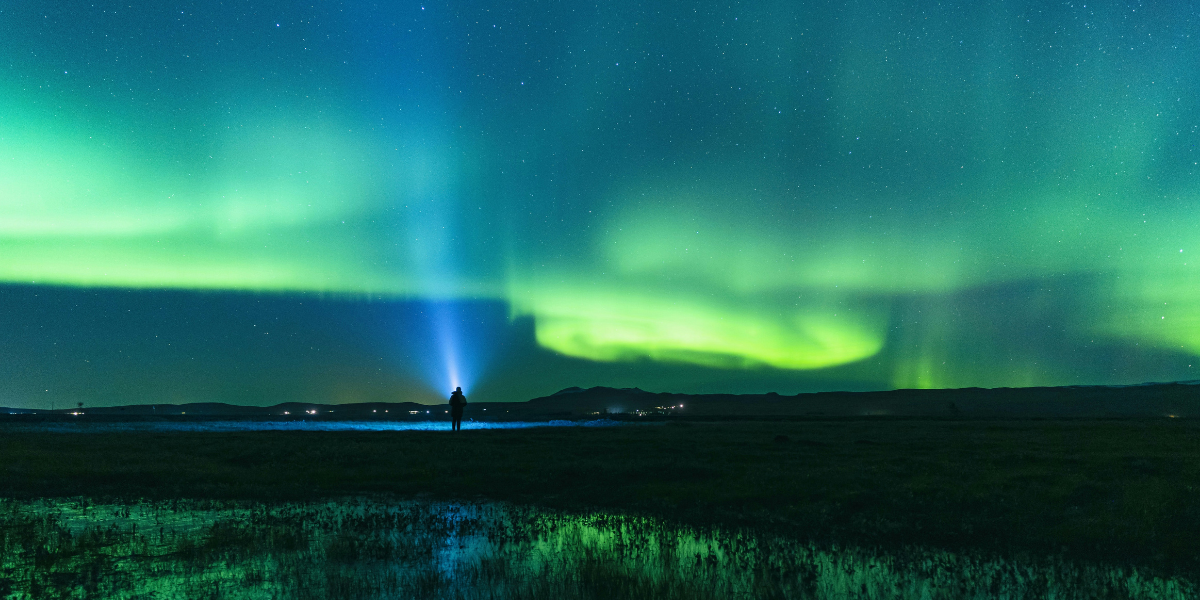
A rare and scientifically significant atmospheric event is drawing attention across the United States tonight as the aurora borealis (Northern Lights) becomes visible across parts of the country, offering a spectacular natural light show seldom seen at such low latitudes. This extraordinary occurrence, driven by heightened solar activity, is not only thrilling skywatchers but also underscores the dynamic connections between the Sun and Earth’s magnetic environment.
On February 4, 2026, a powerful sequence of solar flares and associated coronal mass ejections (CMEs) have created conditions favorable for geomagnetic storms , disturbances in Earth’s magnetic field that can trigger auroras visible much farther south than usual. The most intense of these solar emissions originated from a highly active region on the Sun, known as sunspot AR4366. This sunspot has produced multiple X-class flares , the strongest category defined by solar scientists , prompting heightened auroral activity.
According to space weather forecasts and observers, the aurora could be spotted in up to 11 U.S. states, particularly in regions close to the Canadian border. States such as Alaska, Washington, Idaho, Montana, the Dakotas, Minnesota, Wisconsin, Michigan, and Maine are among those with good viewing prospects after sunset, assuming clear, dark skies away from city lights.
What Caused the Lights
Auroras occur when charged particles ejected by the Sun , typically during solar flares and CMEs , interact with Earth’s magnetic field and atmosphere. These particles excite atoms in the upper atmosphere, causing them to emit light in vibrant colors like green, red, and purple. While auroras are commonly seen near polar regions, significant geomagnetic storms can push them into mid‑latitude areas, making them visible over a broader region.
The ongoing surge in solar activity comes during a period of increased solar output known as solar maximum, part of the Sun’s approximately 11‑year cycle. This phase is characterized by a greater number of sunspots and more frequent energetic events such as solar flares , conditions that increase the likelihood of geomagnetic disturbances on Earth.
Visibility and Best Practices for Viewing
For those hoping to catch a glimpse of the Northern Lights, experts suggest:
- Dark, unobstructed northern sky views: Light pollution can obscure auroras, so rural or elevated locations offer the best conditions.
- After sunset viewing: The best window is after sunset into the early hours of February 5.
- Monitoring real‑time forecasts: Agencies like NOAA (National Oceanic and Atmospheric Administration) and aurora‑tracking websites offer live geomagnetic activity updates that can help predict when and where the lights might appear.
Photographers and amateur astronomers are especially enthusiastic, with some using long‑exposure settings on cameras or even smartphone night modes to capture the vibrant displays. Still, even casual observers can appreciate the beauty with the naked eye when conditions align.
Scientific and Practical Impacts
While beautiful, geomagnetic storms also have scientific and practical implications. Strong events can:
- Affect satellite operations: Charged particles can interfere with satellite electronics and increase drag on low‑Earth orbit spacecraft.
- Disrupt radio and navigation signals: High‑frequency radio communication and GPS accuracy can be temporarily degraded during heightened geomagnetic activity.
- Enhance aurora research: Events like this offer valuable opportunities for scientists to study the Sun‑Earth connection and space weather dynamics in real time.
The phenomenon unfolding across the skies tonight is a reminder of the ever‑present influence of the Sun on Earth’s environment. While auroras are generally associated with the far north, this year’s event marks a rare chance for millions across the United States to witness one of nature’s most stunning spectacles.