
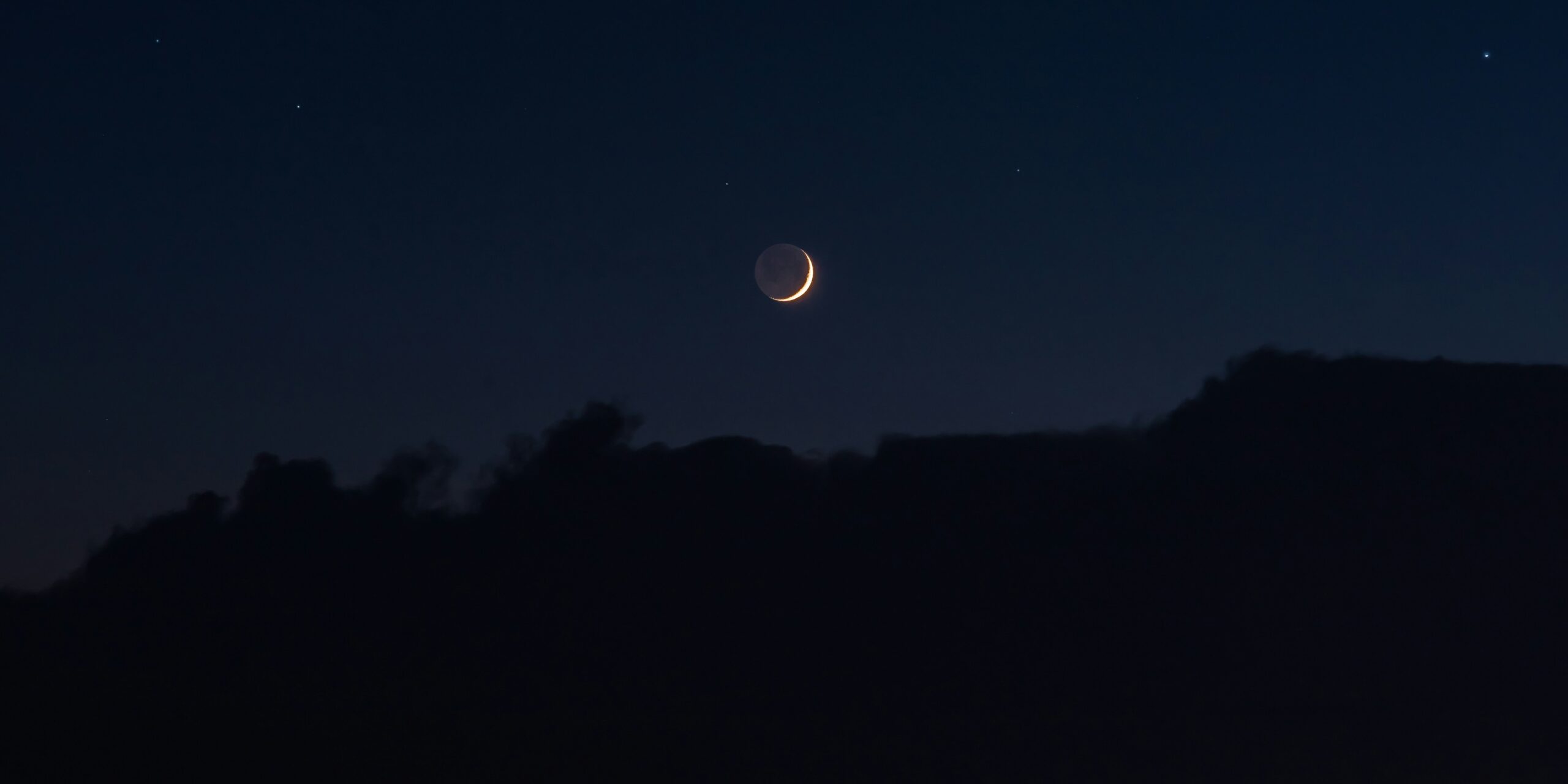
A new moon occurred at approximately 2:52 p.m. EST, marking not only the first new moon of the year but also an exceptional moment for stargazers across the United States. During a new moon phase, the Moon becomes nearly invisible from Earth, as the sunlit side of the lunar surface faces away from observers, casting the moon in shadow. This lack of lunar light makes for a darker night sky, which is perfect for observing the stars and other celestial objects.
The absence of the Moon’s bright reflection provided ideal conditions for those who love to explore the night sky. Without the interference of moonlight, the view of planets, stars, and deep-sky objects is considerably clearer, making it easier to spot distant galaxies and constellations. On this particular evening, several planets were visible in the night sky, with Jupiter and Saturn being especially prominent. For viewers in the Northern Hemisphere, these two gas giants were easier to observe, thanks to the darkened backdrop. Jupiter, with its massive size and distinctive cloud bands, and Saturn, with its iconic rings, were bright points of interest for amateur astronomers and seasoned skywatchers alike. Both planets, along with their moons, stood out in sharp relief against the black canvas of the night sky.
In addition to the planets, the January new moon provided an excellent opportunity to view some of the most famous winter constellations. The winter sky is often filled with bright stars and recognizable constellations, and without the competition from a visible moon, the clarity of these formations was heightened. Constellations such as Orion, the Big Dipper, and the Pleiades were particularly striking, their stars shining brightly in the dark sky. These well-known constellations have fascinated skywatchers for centuries and are often associated with the cold winter months, when the long nights allow for ample stargazing time.
The timing of this new moon also carried astrological significance. Occurring in the sign of Capricorn, it was referred to as the “New Snow Moon,” a name used in lunar calendars to represent the new moon that takes place during the coldest winter months. For many, this moon is a time of reflection, new beginnings, and goal-setting. It is often seen as a period to set intentions for the coming months, whether for personal growth or professional endeavors. The new moon’s influence in Capricorn, a sign known for its focus on structure, ambition, and discipline, is thought to encourage individuals to set clear, actionable goals for the year ahead, making it a perfect moment for stargazers and introspective thinkers alike to reconnect with themselves and the universe.
For those who love both the science and the beauty of the night sky, the new moon of January 2026 was a gift. With the Moon’s light obscured, the stars, planets, and deep-space objects became the focal points of the evening sky. The experience was a reminder of how awe-inspiring the universe can be when viewed without the distractions of artificial light or lunar reflection. Whether observing the brilliant shine of Jupiter and Saturn or tracing the outlines of winter constellations, the night provided a rare and spectacular opportunity for people to immerse themselves in the wonders of the cosmos.
As stargazers across the country turned their eyes to the heavens, the January 18 new moon offered more than just a celestial event—it was a chance to marvel at the vastness of space, a moment to connect with the natural world, and an invitation to start fresh with the promise of a new year. For many, it was an unforgettable evening of discovery, inspiration, and the simple joy of looking up at the night sky.