
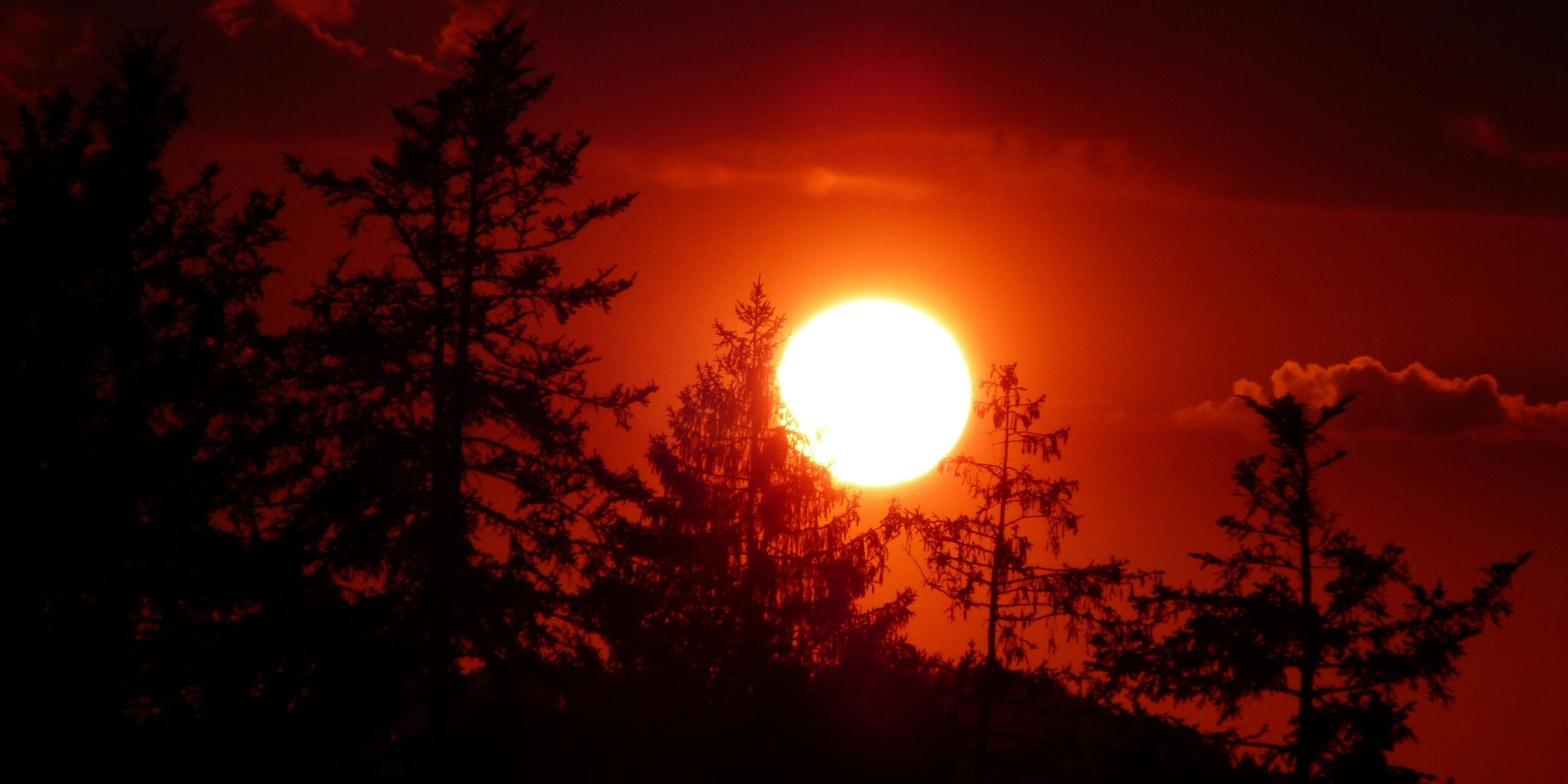
Federal space weather forecasters are advising the public to be aware of moderate geomagnetic activity expected on Christmas Eve, following recent solar activity that has sent charged particles toward Earth. According to the National Oceanic and Atmospheric Administration (NOAA), a coronal mass ejection from the Sun is likely to interact with Earth’s magnetic field, producing geomagnetic storm conditions that could reach G1 to G2 levels during the holiday period.
NOAA officials emphasized that these levels are considered minor to moderate on the agency’s geomagnetic storm scale and are typical during the current phase of the Sun’s activity cycle. Solar Cycle 25, which began in late 2019, is now approaching its peak, a period characterized by increased sunspot activity, solar flares, and coronal mass ejections. As a result, episodes of heightened space weather have become more frequent in recent months.
For most Americans, the expected geomagnetic activity will pass unnoticed. However, forecasters and public health experts note that some individuals may be more sensitive to environmental changes linked to geomagnetic fluctuations. People with cardiovascular conditions, migraines, or heightened sensitivity to atmospheric or electromagnetic variations may experience mild and temporary symptoms such as headaches, fatigue, sleep disturbances, or heart palpitations during periods of increased geomagnetic activity.
While scientific research on the direct health effects of geomagnetic storms remains ongoing and sometimes inconclusive, NOAA and other agencies often include health advisories as a precaution. These advisories are intended to encourage individuals with known sensitivities to monitor their well-being, maintain regular medication routines, stay hydrated, and seek medical attention if symptoms worsen or persist.
Beyond potential health considerations, the anticipated geomagnetic storm has prompted readiness measures across several critical infrastructure sectors. Power grid operators, particularly those overseeing long-distance transmission lines in northern regions, are monitoring conditions closely. Geomagnetic storms can induce electric currents in power lines, which in rare cases may stress transformers or trigger protective shutdowns. Officials stressed that modern power grids are designed to handle minor geomagnetic disturbances and that widespread outages are not expected from a storm at the forecasted intensity.
Satellite operators are also keeping a close watch. Increased solar activity can affect satellites by altering atmospheric density, which increases drag on low-Earth orbit spacecraft, and by exposing sensitive electronics to charged particles. In response, satellite teams may adjust operational modes or orbital parameters as a precaution. These measures help protect satellites that support critical services such as weather forecasting, telecommunications, navigation, and national security.
High-frequency radio communications, used by aviation, maritime operators, and amateur radio enthusiasts, may experience brief disruptions during periods of enhanced geomagnetic activity. Similarly, GPS signals can become slightly less accurate as disturbances ripple through the ionosphere, the upper layer of Earth’s atmosphere that plays a key role in signal transmission. NOAA officials noted that any such effects are expected to be short-lived and minor, with minimal impact on everyday activities.
One potential positive side effect of the geomagnetic activity is the increased chance of auroras, commonly known as the northern lights. When charged particles from the Sun interact with Earth’s atmosphere, they can produce colorful displays in the night sky. During stronger geomagnetic storms, auroras can become visible farther south than usual, potentially offering holiday skywatchers in northern U.S. states a rare visual treat if weather conditions allow.
The timing of the space weather event coincides with a period when many Americans are traveling or gathering with family, prompting NOAA to underscore the importance of public awareness rather than alarm. Space weather forecasts are issued regularly and are part of routine monitoring designed to support preparedness across industries and communities that rely on space-based and electrical systems.
Experts note that the forecasted Christmas Eve storm is part of a broader pattern expected to continue into early 2026, as Solar Cycle 25 remains active. NOAA’s longer-term outlook suggests that additional episodes of elevated geomagnetic activity are likely in the coming weeks, driven by recurring solar wind streams and intermittent solar eruptions.
As space weather becomes an increasingly important consideration in a technology-dependent society, agencies continue to invest in improved forecasting tools and public communication. NOAA officials reiterated that while solar storms may sound dramatic, the vast majority pose little risk to daily life when they remain at minor or moderate levels.
In summary, the expected geomagnetic activity on Christmas Eve serves as a reminder of the dynamic relationship between the Sun and Earth. While impacts on health and technology are expected to be limited, officials encourage awareness and preparedness as part of broader holiday safety considerations. For most Americans, the storm will be little more than a footnote to the season, unfolding quietly above the planet as celebrations continue below.