

400,000-Year-Old Human Teeth Reveal Possible Genetic Connection Between Homo Erectus and Modern Southeast Asians
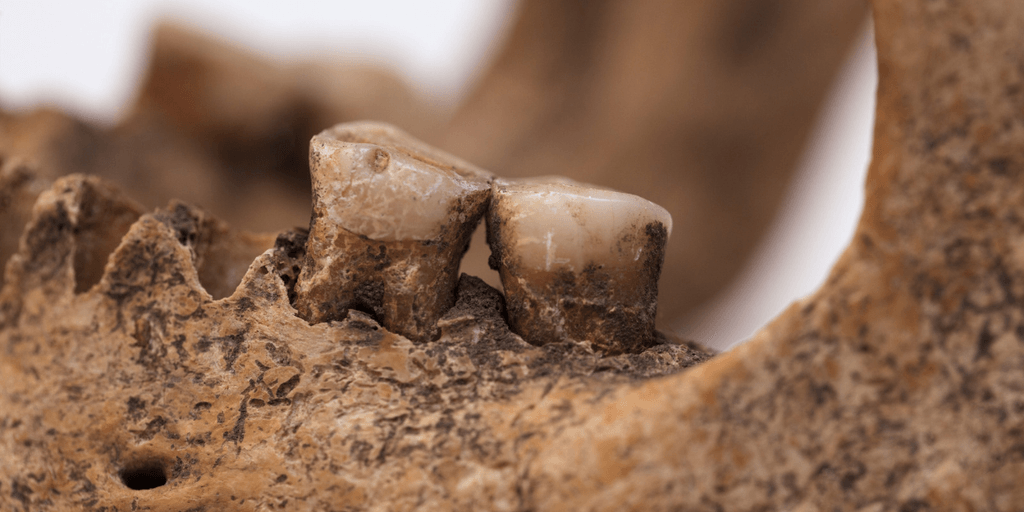
Analysis of 400,000-year-old teeth hints at genetic links between Homo erectus, Denisovans, and modern Southeast Asians.
An international research team examining approximately 400,000-year-old human teeth has uncovered molecular evidence suggesting that Homo erectus may have contributed genetic material to another ancient human population, challenging the traditional understanding of human evolution.
The research, published in Nature and highlighted in a November 5 scientific report, examined ancient proteins preserved in the enamel of six Homo erectus teeth recovered from archaeological sites in China.
The findings provide evidence that ancient human populations may have exchanged genetic material more extensively than previously understood.
The research is particularly significant because some of the genetic connections identified in the study may have eventually reached modern populations in Southeast Asia and Oceania, including people living in the Philippines.
Ancient Teeth Provide New Evidence
Studying ancient human populations has traditionally depended heavily on DNA recovered from fossil remains.
However, DNA deteriorates over time, making it difficult to obtain useful genetic information from extremely old specimens.
Scientists have increasingly explored ancient proteins as an alternative source of biological evidence.
Tooth enamel is particularly useful because its mineral structure can preserve proteins over long periods.
The research team examined six Middle Pleistocene Homo erectus specimens recovered from three Chinese locations: Zhoukoudian, Hexian and Sunjiadong.
The specimens date to approximately 400,000 years ago.
By analyzing preserved enamel proteins, researchers identified molecular variations that helped establish relationships between the ancient populations and other human lineages.
The approach demonstrates how protein analysis can provide information that conventional ancient DNA studies may not be able to recover.
Two Important Molecular Variations
The study identified two amino acid variations shared by the examined specimens.
One variation, identified in the AMBN protein, had not previously been observed in the other ancient human lineages examined by researchers.
This finding helped establish a distinct molecular signature among the studied East Asian Homo erectus specimens.
The second variation was particularly important because it had also been identified in Denisovans.
Denisovans were an ancient human group known primarily through fossil and genetic evidence, including remains recovered from Denisova Cave in Siberia.
The shared molecular characteristic suggests a possible historical connection between Homo erectus populations in East Asia and Denisovans.
Researchers interpreted the findings as evidence consistent with genetic exchange between the groups.
Such exchanges, generally described as introgression, occur when genetic material from one population becomes incorporated into another through interbreeding.
The findings add another layer to the increasingly complex picture of human evolutionary history.
Possible Connection to Modern Southeast Asian Populations
One of the most significant aspects of the research concerns the possible historical pathway connecting ancient Homo erectus populations to modern humans.
The molecular variation identified in the study also appears in Denisovan-related genetic material found in present-day populations.
The research discusses evidence suggesting that the variation may have passed from Homo erectus into Denisovan populations and subsequently into the ancestors of some modern Southeast Asian and Oceanian populations.
This interpretation is relevant to the Philippines, where Denisovan ancestry has previously been identified in population genetics research.
The study does not establish that modern Filipinos directly descended from the particular Homo erectus individuals examined in China.
Instead, it provides evidence for a possible indirect genetic connection through ancient populations that interacted over long periods.
The distinction is important because human evolution involved multiple populations, migration patterns and periods of interbreeding.
Human Evolution Was Not a Simple Replacement Process
For many years, human evolution was frequently presented as a relatively straightforward sequence in which newer human species replaced older populations.
More recent genetic research has challenged that simplified interpretation.
Modern humans outside Africa carry evidence of Neanderthal ancestry, while some populations in Oceania and Southeast Asia also carry Denisovan-related genetic contributions.
The latest research adds further evidence that ancient human populations may have exchanged biological material across different periods and geographic regions.
Rather than developing as completely separate branches, some ancient populations appear to have interacted and contributed genetic material to one another.
The researchers' findings support a more interconnected understanding of human evolutionary history.
This does not mean that every ancient human population contributed to modern humans.
However, the study demonstrates that the evolutionary relationships among ancient groups may have been more complicated than previously recognized.
Why Protein Research Matters
The research also has important implications for archaeological and biological investigation.
Ancient DNA research has transformed the understanding of human migration, population relationships and evolutionary development.
However, the limitations of DNA preservation restrict the age and condition of specimens that can be studied successfully.
Protein analysis offers another method for investigating ancient remains.
Proteins can survive in archaeological materials where DNA has deteriorated beyond meaningful recovery.
Tooth enamel is especially promising because it can preserve molecular information over extended periods.
The ability to identify biological relationships through ancient proteins could expand the range of fossil specimens available for scientific investigation.
Researchers may be able to apply similar techniques to other ancient human remains that have not produced usable DNA.
Questions About Other Ancient Human Populations
The findings also raise questions about other ancient human groups whose evolutionary relationships remain uncertain.
Southeast Asia contains important archaeological evidence involving Homo erectus and other ancient human populations.
These include Homo floresiensis, discovered on the Indonesian island of Flores, and Homo luzonensis, identified through fossil remains in the Philippines.
The available genetic evidence from these groups remains limited.
The protein-analysis approach demonstrated in the new research could provide additional opportunities to investigate their biological relationships.
However, whether similar evidence can be recovered from other fossil populations remains an open scientific question.
A More Complex Picture of Human Origins
The study of 400,000-year-old Homo erectus teeth demonstrates how advances in molecular analysis can change scientific understanding.
By examining proteins preserved in ancient enamel, researchers identified evidence consistent with interactions between human populations previously considered more separate in evolutionary discussions.
The findings do not resolve every question surrounding human origins, but they provide another important piece of evidence supporting a more interconnected evolutionary history.
For researchers studying ancient populations, the ability to recover molecular information from extremely old remains creates new opportunities to investigate how human lineages developed, interacted and contributed to the diversity of people living today.

Good Morning US Contributor
Covers world affairs and science, connecting research and foreign policy to the readers they affect.
This article features partner, contributor, or branded content from a third party. Members of the Good Morning US editorial staff were not involved in the creation of this content. All views and opinions are those of the contributor alone.
You May Also Like

The Game Show Trolley Turns Savannah Into A Game Board

Bill's Family Garage Door Named Best Garage Door Repair Company in the United States of 2026

Hike Tee: Bringing Humor, Sustainability, and Meaningful Connections to Every Outdoor Adventure

Prepping Bargains: How Diane Dunn Is Making Everyday Preparedness More Affordable For Families

Americans Head to the Polls in 2026 Midterm Elections as Control of Congress and State Governments Hangs in the Balance