
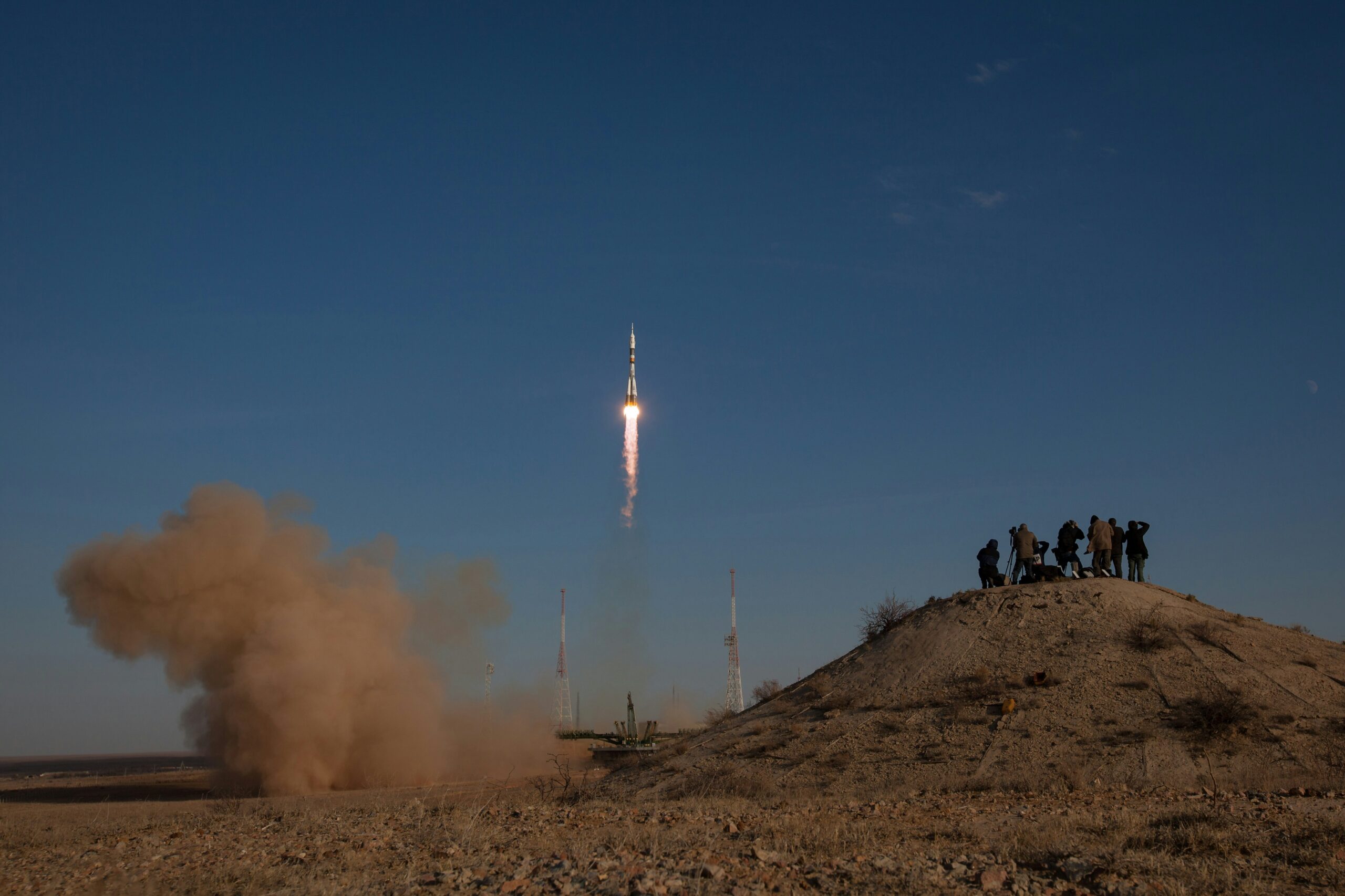
On April 12, 2023, China successfully completed a critical test of its Long March 10 rocket, a major milestone that is expected to bring the country closer to its goal of becoming a leader in space exploration. The test, which took place at the Wenchang Space Launch Center in Hainan, demonstrated the rocket’s potential to support future lunar and Mars missions, solidifying China’s position as a dominant player in the rapidly evolving space race.
The Long March 10 is a heavy-lift rocket designed to carry larger payloads, including crewed spacecraft, landers, and scientific instruments, for missions beyond Earth’s orbit. It is part of China’s ambitious space exploration program, which has already achieved significant success with its Chang’e lunar missions, the Tianwen Mars mission, and the Tiangong space station. The test, which involved firing the rocket’s engines and conducting various performance checks, was a key step in ensuring that the rocket would be ready for its first operational mission, expected to launch in the coming years.
Key players in this milestone include the China National Space Administration (CNSA), which has led the development of the Long March 10 rocket, and the country’s aerospace engineers and scientists, who have worked tirelessly to bring the rocket to life. CNSA Administrator Zhang Kejian, in a statement following the test, praised the successful demonstration, noting that it marked a “significant step in China’s long-term space exploration goals.” “With the Long March 10, China is one step closer to achieving its dream of exploring the Moon, Mars, and beyond,” Zhang said.
The Long March 10’s success is particularly significant because it positions China to embark on more ambitious space missions, including the establishment of a permanent lunar base and future manned missions to Mars. The rocket’s increased payload capacity allows China to carry more complex spacecraft and scientific instruments into space, giving it the ability to conduct more sophisticated missions that could include planetary exploration, asteroid mining, and space-based telescopes.
A particularly notable moment during the test was the rocket’s smooth ignition sequence, which has historically been a critical point of failure in previous space missions. The rocket’s engines performed flawlessly, ensuring that the vehicle would be able to handle the demanding conditions of space travel. The test also confirmed that the rocket’s guidance and communication systems were fully operational, an essential factor for future crewed missions to the Moon and Mars.
The impact of the Long March 10’s success on the commercial and public image of China’s space program is far-reaching. As the country continues to develop and test more advanced space technologies, the global space sector is closely watching China’s progress. In particular, private companies in the aerospace industry—such as SpaceX and Blue Origin—are taking note of China’s achievements, particularly as the country continues to develop a robust set of technologies for deep-space exploration. This success may also drive collaboration between private companies and China’s space agencies, opening doors for further technological innovations and joint ventures.
Commercially, the Long March 10 is expected to have significant implications for the global space launch market. As China’s space program expands, it is expected to compete directly with other countries and private companies in launching payloads into orbit. This could create more competition in the market, potentially lowering launch costs and providing more opportunities for international clients to access China’s space capabilities.
Behind the scenes, the development of the Long March 10 rocket has been a monumental effort, with years of research, testing, and design. The rocket is a product of decades of advancement in China’s space exploration capabilities, and the country’s space agencies have been working diligently to ensure that it is capable of handling the complex challenges of interplanetary exploration. The Long March 10 will be a key part of China’s ambitious plans to establish a human presence on the Moon and Mars by the 2030s, with the potential to open new pathways for the exploration of deep space.
Looking ahead, China’s space program is set to continue its rapid growth, with the successful test of the Long March 10 rocket marking just one of many milestones on the horizon. As the country works toward a manned mission to the Moon and eventual Mars exploration, its space program will continue to shape the future of space exploration. The success of the Long March 10 is a testament to China’s determination and technological prowess, ensuring its place at the forefront of humanity’s quest to explore the stars.