
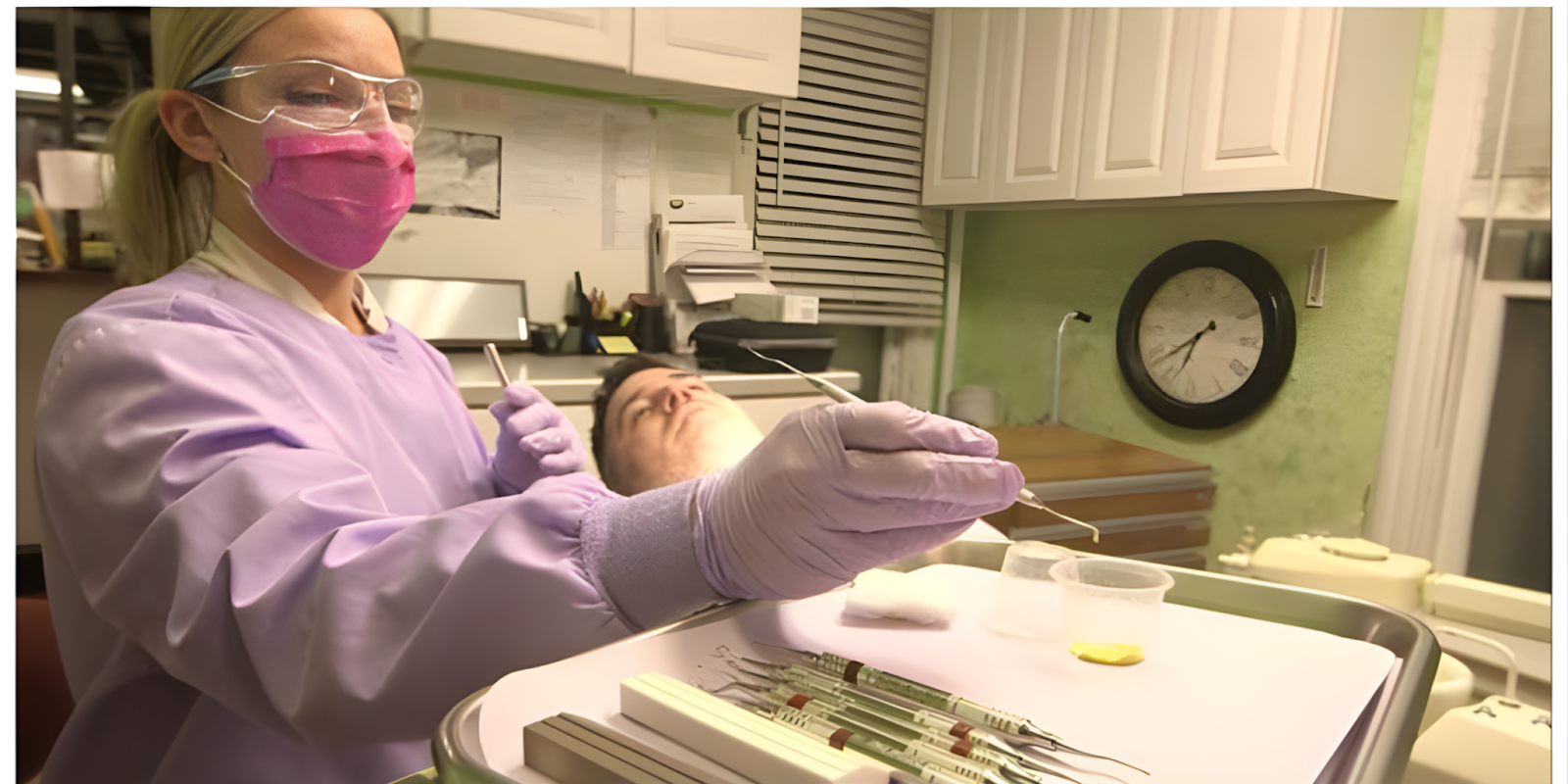
In this groundbreaking research, Dr. Larry Bleier reveals the latest advancements in periodontal treatment, enhancing care with innovative technology.
Dr. Larry Bleier has long been a trailblazer in the field of periodontology, consistently pushing the boundaries of what’s possible in dental care. His recent clinical research, published in the MAR Dental Sciences and Oral Rehabilitation Journal, presents a revolutionary method for treating periodontal disease and implant care through minimally invasive techniques. In this article, we explore the transformative findings of his work, the breakthroughs that led to these advancements, and the profound impact they are set to have on patients and dental professionals alike.
The Journey to Breakthrough
Dr. Bleier’s journey began with a deep commitment to advancing dental science. A graduate of the University of Pennsylvania School of Dental Medicine, Dr. Bleier went on to receive his certification in Periodontology from Harvard School of Dental Medicine. With over 40 years of experience in clinical dentistry, his passion for improving patient outcomes has never wavered. His clinical expertise spans several prestigious institutions, from Veterans Hospital in West Roxbury to SUNY Upstate Medical Center, and he is board-certified by the American Board of Periodontology.
Through his extensive career, Dr. Bleier has seen firsthand the limitations of traditional periodontal treatments. Root planing and scaling, commonly used to treat gum disease and prepare the root surface for implants, have long been the standard. However, despite their effectiveness, these methods often fall short in the face of severe periodontal disease or complex implant care needs. It became clear to Dr. Bleier that a more advanced solution was necessary, one that minimized invasiveness while maximizing patient comfort and clinical success.
Overcoming Obstacles in Periodontal Care
Dr. Bleier’s research focuses on enhancing the scaling and root planing process with new techniques designed to overcome the historic limitations of traditional treatment methods. One of the critical challenges he identified was the difficulty in achieving complete decontamination of tooth roots, particularly in cases with deep probing depths or extensive bone loss. Classic studies revealed that even with multiple scaling attempts, further removal of calculus and contaminants often failed to yield significant improvements.
As he delved deeper into understanding the causes behind these challenges, Dr. Bleier recognized that current mechanical instruments were insufficient to address the depth and complexity of certain periodontal defects, such as furcations in multi-rooted teeth. Furthermore, even surgical intervention through flap surgery often failed to achieve the desired level of decontamination, limiting tissue repair and regeneration.
The turning point came in 2017, when the American Academy of Periodontology (AAP) and the European Federation of Periodontology (EFP) updated their guidelines for diagnosing periodontal disease and peri-implant diseases. However, despite these advancements, little was said about novel treatment options for these conditions. Dr. Bleier saw this gap as an opportunity to innovate and develop a more effective treatment protocol that combined mechanical debridement with advanced chemical solutions.
The Breakthrough: Enhanced Root Planing with Cutting-Edge Technology
Dr. Bleier’s research culminated in the development of a new approach to periodontal therapy that integrates advanced chemical debridement with enhanced mechanical treatment. This novel approach, known as Enhanced Scaling and Root Planing (ESRP), uses a combination of peroxide-based gels and antimicrobial agents applied to dental instruments during all phases of periodontal therapy.
The ESRP method involves applying viscous antimicrobial and antibiotic-containing gels directly onto the working ends of periodontal instruments. This innovation ensures that the root surfaces receive both mechanical and chemical debridement simultaneously, leading to a more thorough cleaning of the tooth root and surrounding tissue. The chemical agents, including carbamide peroxide and tetracycline, not only clean the root surface but also provide local anesthetic effects, reducing the need for additional injections or topical anesthetics.
One of the major advantages of this technique is its ability to be used with traditional scaling instruments, which can now be sharpened and refined chairside using a specialized honing tool. This tool ensures that the instruments remain sharp and smooth, providing optimal performance and minimizing the risk of tissue damage. This technology has been further enhanced by the use of Cutting Edge Technology (CET) sharpening stones, which allow dental professionals to maintain sharp edges on their instruments in real-time during clinical procedures.
The result? A treatment protocol that offers greater precision, less patient discomfort, and more effective outcomes, even in complex cases of periodontal disease and implant care.
Clinical Success: Real-World Results
The success of Dr. Bleier’s method has been documented in numerous clinical cases, where patients have experienced significant improvements in periodontal health. In one study, patients who underwent ESRP saw reductions in probing depths from 8-9 mm to 3-4 mm, with restored clinical health. Importantly, these results were achieved without the need for surgery or intensive anesthetic interventions, making the treatment more accessible and less invasive for patients.
In addition to reducing the need for surgery, the ESRP protocol has demonstrated an ability to manage complex cases that involve furcations, bone loss, and peri-implant diseases. This method has been particularly beneficial for patients with advanced periodontal disease, as it addresses the root causes of the disease, bacterial infections and biofilm accumulation, while promoting tissue regeneration and healing.
Patients who have undergone ESRP report significantly lower levels of discomfort and faster recovery times compared to traditional methods. This is particularly important for those undergoing implant procedures, as the treatment minimizes the risk of infection and promotes faster osseointegration, ensuring the long-term success of the implant.
A New Era in Periodontal and Implant Care
Dr. Bleier’s technologies address this major health problem according to a recently published research article in a European Research Publication. Dr. Bleier’s groundbreaking work has the potential to reshape the future of periodontal and implant care. By combining mechanical debridement with chemical treatment, his method offers a comprehensive solution to some of the most challenging issues in dental health. The use of optimized sharpening technology, along with tailored pharmaceutical gels, has created a new standard of care that can be applied in both non-surgical and surgical settings.
Furthermore, Dr. Bleier’s research emphasizes the importance of patient involvement in maintaining periodontal health. Through individualized maintenance plans and co-therapy, patients can play an active role in their oral health, reducing the need for future interventions and promoting long-term success.
The clinical and real-world applications of Dr. Bleier’s work extend far beyond the traditional boundaries of periodontology. His innovations have the potential to change the way dental professionals approach periodontal and implant care, offering a more effective, less invasive, and more patient-friendly alternative to traditional methods.
Advancing Your Practice with Dr. Bleier’s Techniques
For dental professionals looking to enhance their practice and improve patient outcomes, Dr. Bleier’s innovative ESRP method offers an exciting opportunity. By integrating cutting-edge technology with proven chemical treatments, this approach promises to redefine how periodontal and implant care are delivered. To learn more about Dr. Bleier’s research, the CET-enhanced treatment protocols, and how they can benefit your practice, explore his published work in the MAR Dental Sciences and Oral Rehabilitation Journal or check their youtube for more information on licensing his groundbreaking technologies.
Invest in the future of dentistry, embrace the next generation of periodontal care today.