
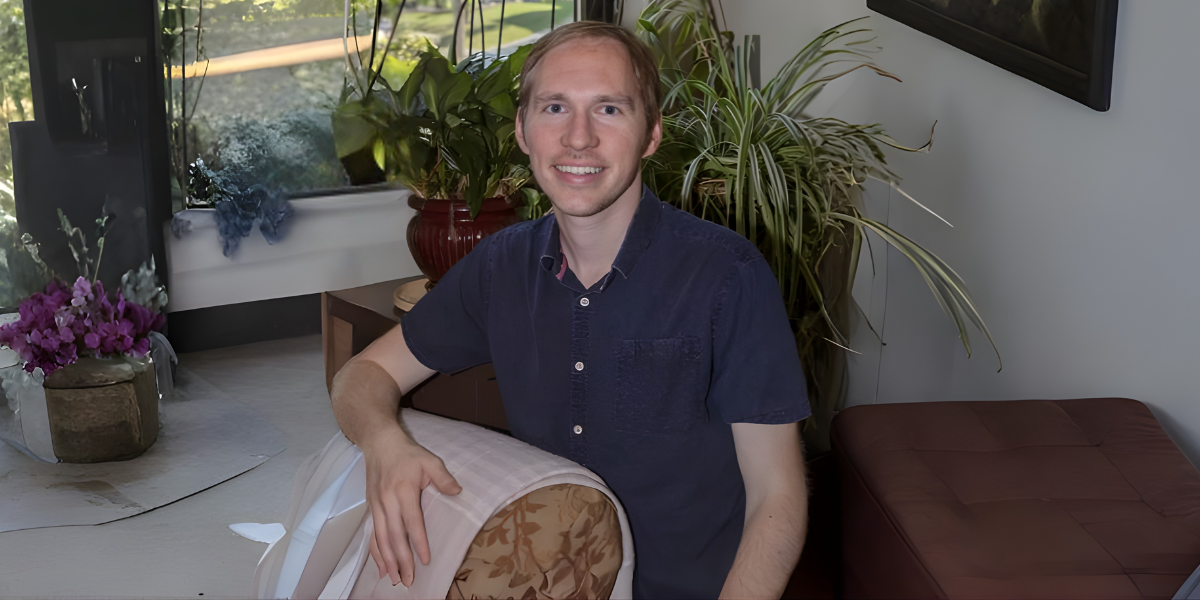
How one psychologist is transforming family conflict by weaving together ancient wisdom and psychological science.
Most parents know the feeling well. A simple request turns into a standoff. A shared meal becomes a negotiation. By the end of the day, the household that was supposed to be a refuge feels more like a battleground. For Dr. Samuel Eshleman Latimer, PsyD, that familiar exhaustion is not just a personal struggle families endure quietly. It is a solvable problem, and he has spent his career building the framework to solve it.
A Mission Rooted in Both Science and History
Dr. Eshleman Latimer is a clinical psychologist, a PhD candidate in social psychology at the Graduate Centre for Advanced Studies, and the founder of Fostering Growth and Cooperation. His work centers on a question that is deceptively simple: what does it actually take to build a peaceful, cooperative household? His answer draws from two worlds that rarely share the same conversation, the rigor of psychological science and the time-tested wisdom of hunter-gatherer societies.
This integration is not a marketing angle. It is the intellectual foundation of everything Dr. Eshleman Latimer teaches. “What we are going to be going over,” he explains in one of his course sessions, “is some aspects of ancient wisdom.” He draws on the research of anthropologist David Lancy, whose work explores the anthropology of childhood, and reporter Michaeleen Doucleff, author of “Hunt Gather Parent.” He has also personally interviewed Elena Bridgers, whose literature examines motherhood and fatherhood within hunter-gatherer communities. These are not peripheral references. They are load-bearing pillars of his approach.
Where Ancient Insight Meets Modern Practice
At the heart of Dr. Eshleman Latimer’s Family Peace Program is a shift in language that sounds small but produces profound results. Rather than framing household decisions around what a parent wants or what a partner needs, he teaches families to ask a different question: what is best for the family right now?
This reorientation is what he calls the family-centered model of communication. In practice, it means moving away from individual-focused power struggles and toward a shared group identity. He uses a vivid analogy to illustrate it: picture a solar system where the sun is the family unit itself, and each member orbits around it like a planet. When that groupish mindset is genuinely internalized, autonomy within the household becomes possible because freedom no longer threatens the group. It serves it. This perspective echoes the framework described in Hunt, Gather, Parent.
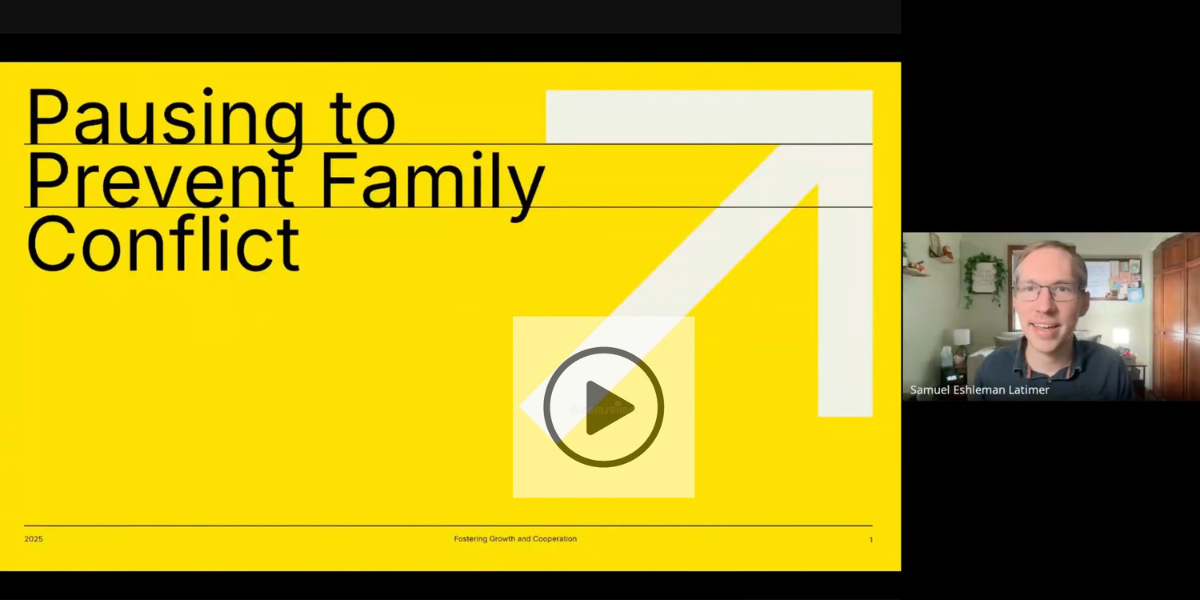
This distinction between autonomy and independence represents one of Dr. Eshleman Latimer’s most thoughtful and practical insights. Independence, when pushed to its extreme, often leads to isolation; autonomy, when rooted in family-centered values, fosters cooperation. He is careful to clarify that autonomy does not mean ignoring harmful behavior or withdrawing guidance. Instead, it involves relinquishing the urge to control small, inconsequential choices—how a family member loads the dishwasher, for instance, or how a partner spends a quiet moment—while consistently modeling and reinforcing what serves the well-being of the family as a whole. The underlying principle closely parallels ideas explored in Hunt, Gather, Parent by Michaeleen Doucleff.
The clinical backbone of this work comes from dialectical behavior therapy, a modern, evidence-based modality developed by psychologist Marsha Linehan. By layering DBT skills with anthropological insight, Dr. Eshleman Latimer offers families something neither field could provide alone: a holistic, historically grounded, and scientifically validated path toward lasting cooperation.
Programs Built for Real Families
Fostering Growth and Cooperation offers several structured programs designed to meet families and couples where they are. Couples Building Cooperation and Resilience addresses the relational patterns that erode partnership over time. Parenting with Less Power Struggles gives parents concrete tools to shift household dynamics without resorting to control. Relationships and Anxiety explores how anxiety shapes conflict and what families can do to interrupt those cycles.
Beyond his direct work with families, Dr. Eshleman Latimer has brought these ideas to some of the most respected institutions in the country. He has delivered public workshops and presentations at Columbia University and Children’s Hospital, sharing conflict management principles with clinicians, educators, and practitioners. He also mentors clinicians and graduate students through Fostering Growth and Cooperation and Xavier University, ensuring that this approach reaches families not only directly but through the professionals who serve them.
A Practitioner Who Practices What He Teaches
What distinguishes Dr. Eshleman Latimer from many voices in the family wellness space is the quality of his teaching. He does not present these frameworks as abstract theory. He speaks openly about applying them in his own household, about the difficulty of letting go of control, and about the ongoing work that cooperation actually requires. His course content is candid, accessible, and grounded in the kind of honesty that builds trust.
He is also clear about the limits of any single approach. He acknowledges that introverts have genuine needs for reduced stimulation. He recognizes that some individuals present with more oppositional patterns that require different strategies. His work does not flatten complexity. It respects it.
At a time when societal polarization is intensifying and families are feeling the pressure from every direction, Dr. Eshleman Latimer’s mission carries weight far beyond the household level. He believes that peaceful families are not just a private good. They are a public one, and that reducing conflict at home is one of the most meaningful contributions a person can make to a healthier society.
Bring Ancient Wisdom Into Your Home Today
If your household feels caught in cycles of tension, control, and exhaustion, Fostering Growth and Cooperation offers a research-backed, historically grounded path forward. Explore Dr. Eshleman Latimer’s Family Peace Program and discover how the integration of modern psychology and ancestral wisdom can help your family build the cooperation and resilience it deserves.
Explore More About Fostering Growth And Cooperation
Connect with Fostering Growth and Cooperation, Facebook, Instagram, and YouTube. You may also reach Dr. Eshleman Latimer directly at sa****@***************************on.com or by phone at +1 (513) 201-7765