

Earth Registers One of the Shortest Days on Record This Summer
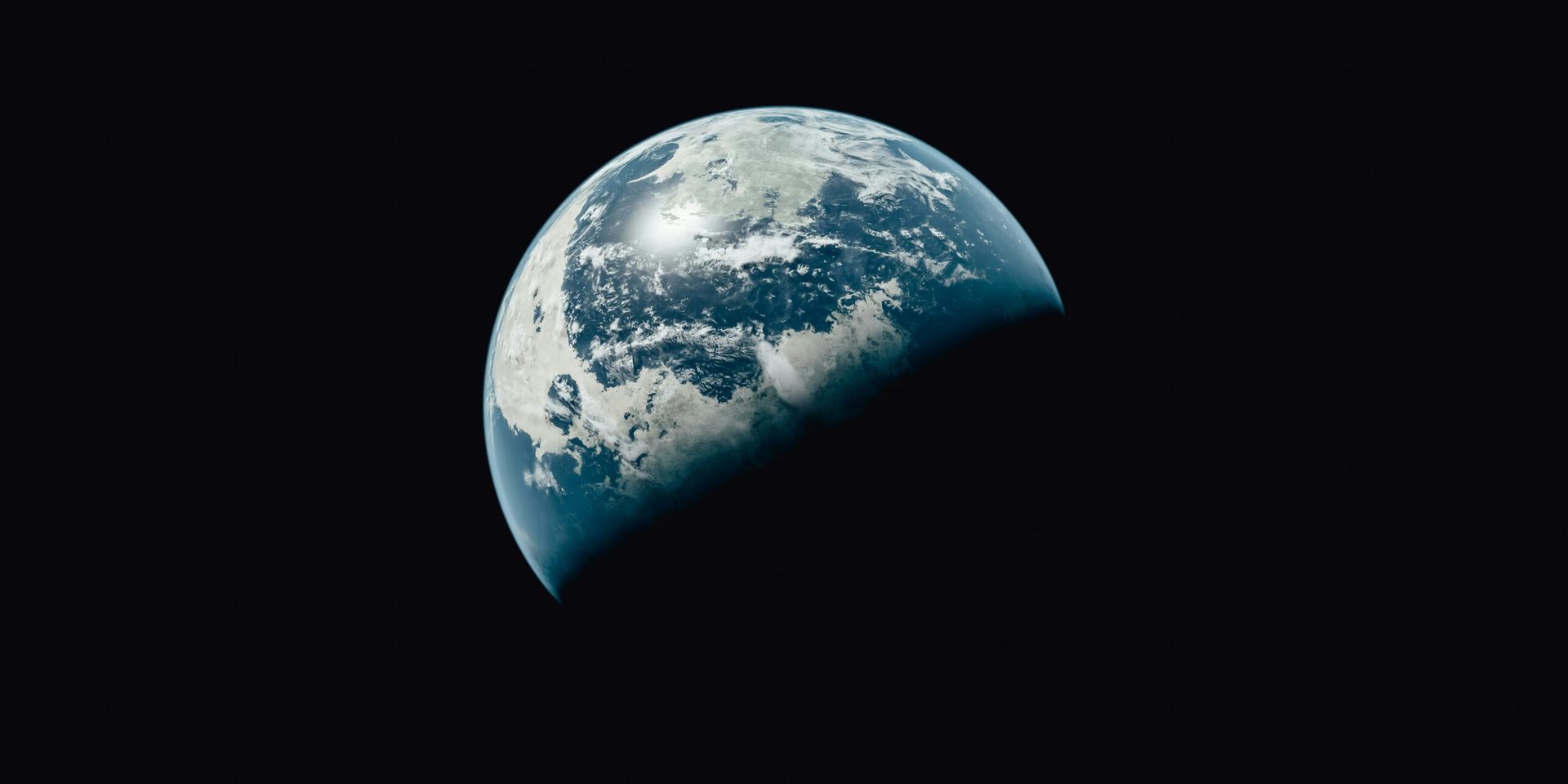
In a subtle but scientifically significant shift, Earth recorded one of its shortest days of the year on July 22, 2025, shaving off about 1.34 milliseconds from the standard 24‑hour cycle. While unnoticeable to humans, such minuscule changes bear important implications for the systems that underpin modern society.
July 9, 2025, marked the shortest day of the year so far, with a reduction of approximately 1.3 to 1.6 milliseconds. July 22 followed as the second-shortest day, and another is predicted for August 5, expected to shorten the day by 1.25 to 1.5 milliseconds. These shifts, though brief, come close to the all-time record of July 5, 2024, which was 1.66 milliseconds under the standard day length.
Scientists believe several forces are behind this acceleration. One explanation lies in lunar gravitational dynamics. The moon’s orbit and its position relative to Earth’s equator influence how fast the planet spins. When the moon shifts far from the equatorial plane, as it did during these three short days, it can marginally accelerate Earth’s rotation.
Read Also: https://goodmorningus.com/nasas-axiom-4-crew-returns-to-earth-after-historic-mission/
Another significant factor is geophysical change. Melting polar ice, groundwater shifts, and tectonic activity cause mass redistribution across the planet, altering Earth’s moment of inertia and slightly increasing its spin. Additionally, seasonal weather patterns and ocean currents contribute to day-to-day fluctuations, although they are more difficult to measure individually.
These minuscule changes pose a challenge for systems reliant on pinpoint accuracy. Atomic clocks, GPS networks, telecommunications infrastructure, and financial trading platforms all depend on synchronization down to the microsecond. Even minor drifts in Earth’s rotation can disrupt data timing, navigation, and market operations.
The phenomenon also revives discussions around leap seconds, the adjustments made to Coordinated Universal Time (UTC) to align atomic time with Earth’s rotation. Historically, leap seconds have only been added to slow down clocks when the planet’s rotation lagged. But now, with the possibility of Earth spinning faster, scientists are preparing for the unprecedented move of introducing a negative leap second—essentially subtracting a second to stay aligned with real-world timekeeping.
Despite a 2022 global agreement to phase out leap seconds by 2035, current trends may force a reassessment. Timekeeping organizations, including the International Earth Rotation and Reference Systems Service (IERS), continue to monitor Earth’s spin and will issue updates if a leap-second adjustment becomes necessary.
Earth’s rotational speed has fluctuated throughout history. While the general trend over billions of years has been a gradual slowing, short-term accelerations are not uncommon. In 2020, for instance, there were 28 days shorter than 24 hours, a rare occurrence not seen since at least 1960. The growing frequency of such days has raised concerns among scientists and technologists.
Some experts believe Earth’s internal dynamics may play a larger role than previously assumed. Seismic activity, core-mantle interactions, and variations in Earth’s magnetic field could be contributing to this unexpected acceleration. As Dr. Leonid Zotov noted, “Most scientists believe it is something inside the Earth. Ocean and atmospheric models don’t explain this huge acceleration.”
As climate change continues to reshape Earth’s surface and interior, its impact is now evident even in the imperceptible rhythm of planetary time. While the public may never feel the difference of a day that’s a few milliseconds shorter, the implications for technology and scientific understanding are far-reaching.
Monitoring these changes isn’t merely academic—it’s essential. Organizations involved in timekeeping, satellite positioning, and global finance must continue refining their systems to accommodate nature’s subtle shifts. What seems like a cosmic quirk is, in fact, a reflection of the Earth’s evolving relationship with the universe and with human technology.

Good Morning US Contributor
Covers world affairs and science, connecting research and foreign policy to the readers they affect.
This article features partner, contributor, or branded content from a third party. Members of the Good Morning US editorial staff were not involved in the creation of this content. All views and opinions are those of the contributor alone.
You May Also Like

When Technology Fails Care: Why Behavioral Health Can No Longer Treat IT as an Afterthought

Christian Clothing Co. Makes Faith Wearable

Lee A. Patterson: The Hope Dealer

Why Our Competitors Field Has Fewer Entries Than Yours

John David Gregory And The Story Behind The Faceless Man