

Told Your Neck Pain Is “Just Wear and Tear”? Here’s What That Phrase Leaves Out

Disc wear shows up on most scans after 60. Most people never feel it. So why do some people hurt every day?
It usually shows up in the car first. You go to check traffic before changing lanes, and your neck won’t turn far enough, so you turn your whole upper body instead. Mornings start stiff. Picking something up off the floor takes planning. And when you finally bring it up at an appointment, the answer comes back in a few familiar words: wear and tear. Arthritis. It’s part of getting older.
Many people leave that appointment believing nothing more can be done. “Tired of being told it’s part of aging and that it’s arthritis, but nothing could be done aside from taking ibuprofen,” one Artuvate customer wrote in a company survey. Another put it this way: “I feel much older than my age because I feel limited with what I can physically do.”
What “Wear and Tear” Actually Means
The medical name for age-related wear in the neck is cervical spondylosis. It describes changes in the discs, the cushions between the bones of the neck, and in the small joints around them. Over the years, discs lose some height and can bulge slightly, and the bones nearby can form small spurs.
It’s very common. According to Cleveland Clinic, by age 60 about 9 in 10 people have cervical spondylosis. And according to the American Academy of Orthopaedic Surgeons, for most people it causes no symptoms at all.
That second fact deserves a second look. If almost everyone over 60 has disc wear, and most of them never feel it, then “wear and tear” on its own doesn’t explain why one person’s neck hurts every morning while their neighbor’s doesn’t. The scan shows what’s there. It doesn’t always explain what you’re feeling.
When Wear Becomes Something You Feel
For some people, the changes in the neck start to crowd the openings where nerves leave the spine. Those nerves travel to the shoulders, arms, and hands. When one is irritated where it exits the neck, the discomfort doesn’t always stay in the neck. It can show up as stiffness that never fully lets go, pain that spreads toward the shoulder, or, sometimes, tingling in the arm or fingers. The muscles around the area often tighten too, as if they’re guarding it.
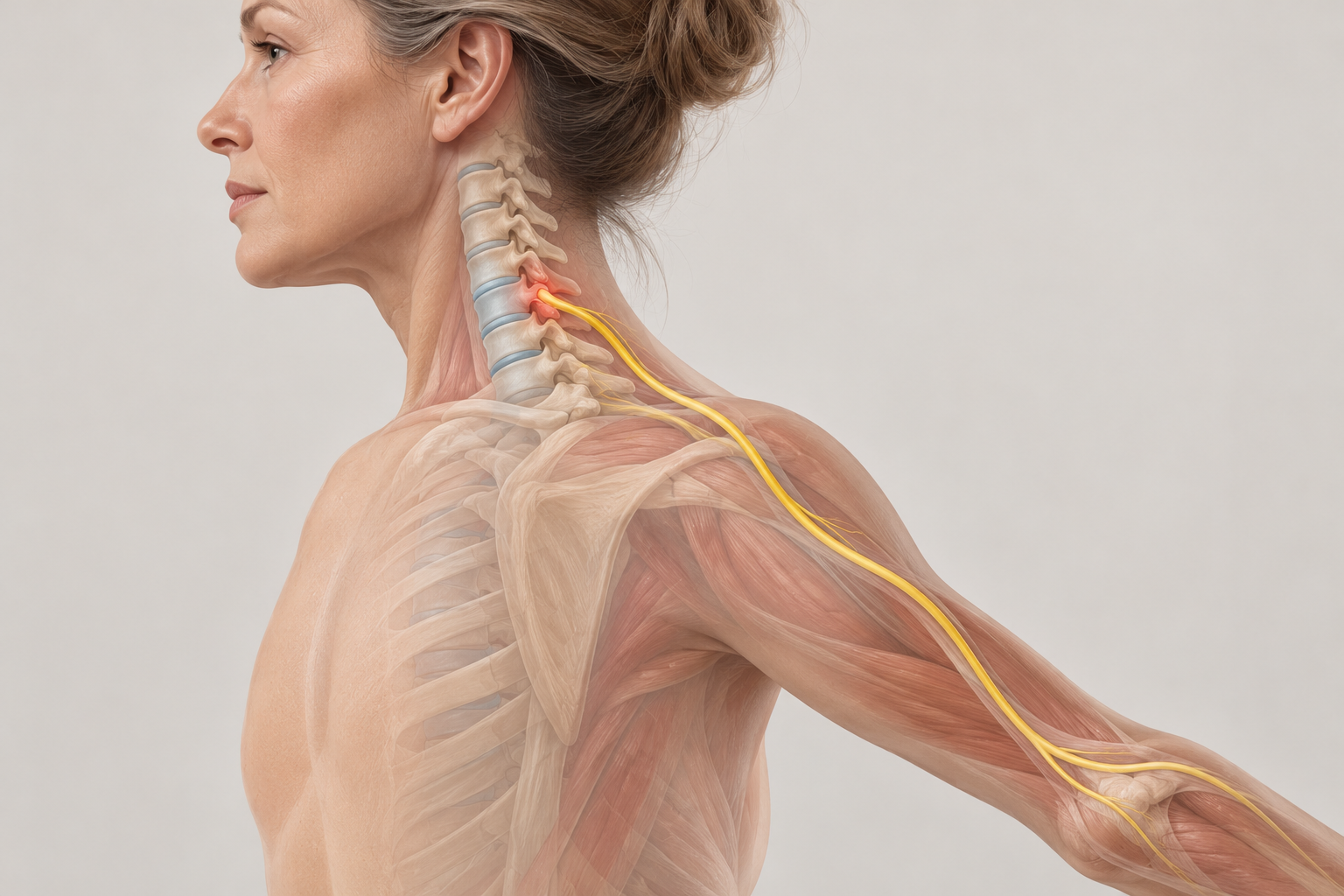
That’s why someone can be told “it’s just your age” and still feel something very specific. Age explains the wear. It may not explain the whole story.
When to See a Doctor
Some symptoms shouldn’t wait. Numbness, tingling, or weakness in an arm or hand deserves a doctor’s visit, especially if it’s getting worse. See a doctor promptly if you’re dropping things, losing grip strength, having trouble with balance or walking, or feeling symptoms in both arms. Those can be signs that a nerve or the spinal cord needs medical attention.
What Usually Helps
Most people with this kind of neck pain are treated without surgery. The American Academy of Orthopaedic Surgeons notes that in most cases treatment for cervical spondylosis is nonsurgical, and that physical therapy is usually the first step. Its patient guide also mentions traction to gently stretch the joints and muscles of the neck, and careful use of heat, ice, and massage to help with symptoms.
Many people already do some of this at home: a heating pad in the evening, a massage once a month, a new pillow every few months. “My family thinks I’m crazy for the number of pillows I’ve tried,” one customer wrote.
Where Artuvate Comes In
Artuvate began with the founder’s mother, who lived with neck pain for years and usually reached for medication to get through it. Her son wanted to find something she could do for herself, at home, alongside the care she already had.
“What bothered me was how often people are told ‘it’s your age’ and sent home with nothing else to try,” the company’s founder said. “We wanted to give them something simple they could do at the end of the day, in their own living room.”
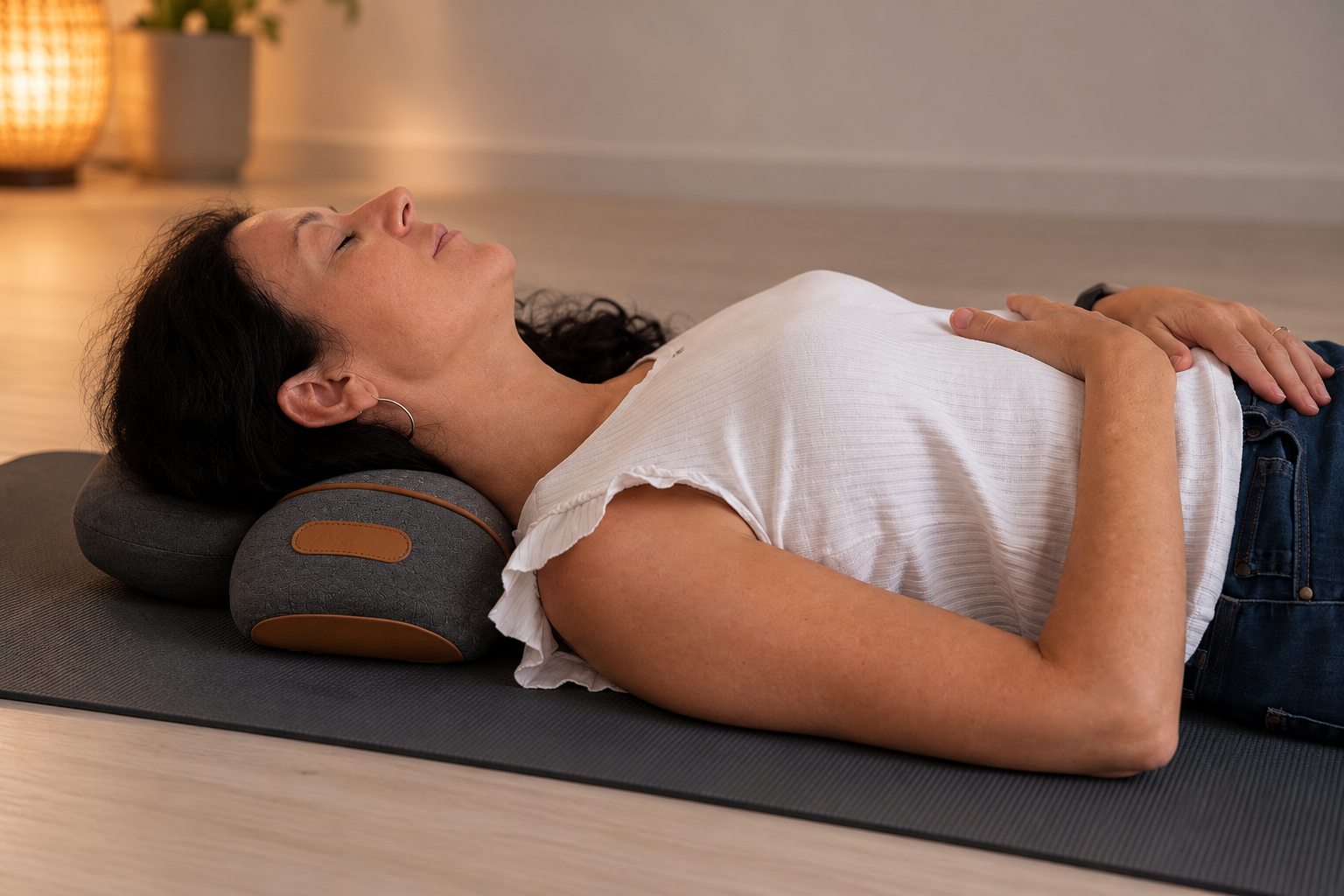
The result is FisioRest, a contoured neck rest you lie back on at home. It supports the neck along its natural curve with gentle traction-style support, while heat and vibration massage work on the base of the skull and upper neck. A typical session lasts 15 to 30 minutes, usually in the evening.
FisioRest isn’t a medical treatment, and it doesn’t replace physical therapy or a doctor’s care. It isn’t suitable for anyone who has had neck fusion or other recent neck surgery, and people with osteoporosis, spinal stenosis, a diagnosed spinal cord condition, or who are pregnant should check with their doctor before using it. Every FisioRest comes with a 365-day trial at home and a two-year warranty, so people can decide for themselves whether it fits their routine.
Getting older changes the neck. But hearing “it’s just your age” doesn’t have to be the end of the conversation.
Learn More About Artuvate
For more information about FisioRest and Artuvate’s approach to at-home neck comfort, visit artuvate.co.

Good Morning US Contributor
Covers health, consumer technology, and entertainment, tracking the stories driving the daily conversation.
This article features partner, contributor, or branded content from a third party. Members of the Good Morning US editorial staff were not involved in the creation of this content. All views and opinions are those of the contributor alone.
You May Also Like

The Game Show Trolley Turns Savannah Into A Game Board

Bill's Family Garage Door Named Best Garage Door Repair Company in the United States of 2026

Hike Tee: Bringing Humor, Sustainability, and Meaningful Connections to Every Outdoor Adventure

Prepping Bargains: How Diane Dunn Is Making Everyday Preparedness More Affordable For Families

400,000-Year-Old Human Teeth Reveal Possible Genetic Connection Between Homo Erectus and Modern Southeast Asians