

NASA Prepares Global Celebration as Voyager 1 Approaches Historic One-Light-Day Distance
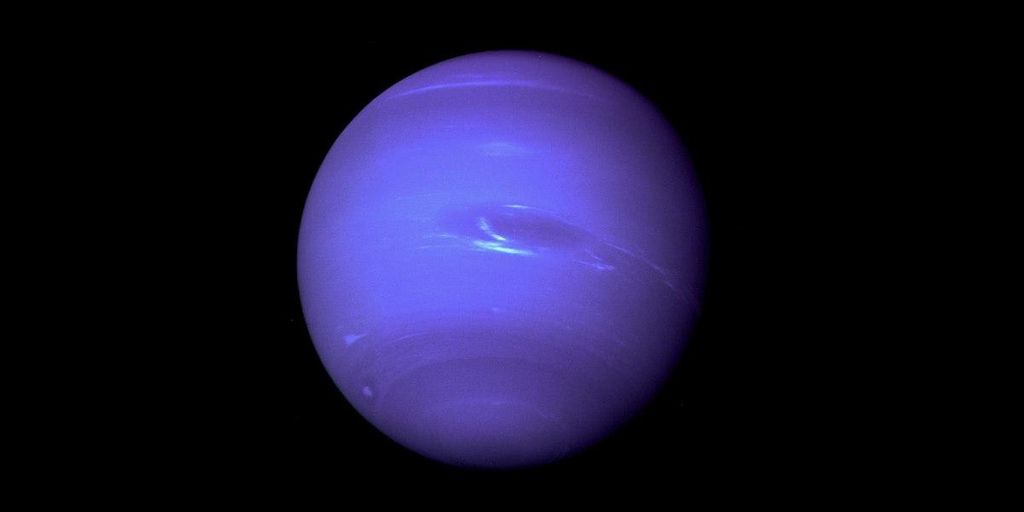
Voyager 1 is nearing a milestone that will place the spacecraft more than 16 billion miles from Earth.
WASHINGTON. NASA announced plans for a global public celebration of Voyager 1 as the spacecraft approaches a historic distance from Earth, marking another extraordinary achievement for one of humanity's longest-running space exploration missions.
Launched in 1977, Voyager 1 is expected to reach a distance of one light-day from Earth on November 18. At that distance, light traveling from the spacecraft would require approximately 24 hours to reach Earth.
The milestone represents more than 16 billion miles, or approximately 25.9 billion kilometers, from the planet.
NASA's announcement introduces a series of activities designed to recognize the mission's achievements and connect the public with the spacecraft's continuing journey through interstellar space.
The spacecraft remains the most distant human-made object, making the milestone an important moment in the history of space exploration.
A Mission That Began Nearly Five Decades Ago
Voyager 1 was launched in 1977 as part of NASA's ambitious program to explore the outer planets.
The mission was designed to take advantage of a planetary alignment that occurs approximately once every 176 years, allowing the spacecraft to use gravitational assistance to travel between distant planetary destinations.
Its early journey included observations of Jupiter and Saturn, providing scientists with valuable information about the planets, their moons and surrounding environments.
The spacecraft's findings contributed significantly to scientific understanding of the outer solar system.
Voyager 1 later continued beyond the planets, moving toward the outer boundary of the Sun's influence.
In 2012, it entered interstellar space, becoming the first human-made spacecraft to reach that region.
Its continuing journey has extended the scientific value of the original mission far beyond its initial planetary exploration objectives.
Understanding the One-Light-Day Milestone
A light-day is the distance light travels in one day.
Because light moves at approximately 186,000 miles per second, one light-day represents an enormous distance.
Voyager 1's anticipated milestone means that a radio signal traveling from Earth to the spacecraft would require approximately 24 hours to arrive.
A response signal would then require another 24 hours to return, excluding additional processing or communication delays.
This illustrates the extraordinary distances involved in operating a spacecraft far beyond the planets.
Communication with Voyager 1 depends on NASA's Deep Space Network, a system of large antennas located in different parts of the world.
The network allows mission controllers to send commands and receive scientific information from spacecraft operating at vast distances.
As Voyager 1 travels farther away, communication becomes increasingly demanding because signals weaken over distance and require careful coordination.
NASA Plans Worldwide Public Participation
NASA's announcement included an activity called Shine Bright for Voyager's Light-Day.
The initiative encourages people around the world to create a symbolic wave of golden light after sunset on November 17.
The agency has developed a website that allows smartphones and tablets to flash the spacecraft's call sign, VGR, using Morse code.
Participants are encouraged to capture photographs or videos of their light signals and share them through social media.
The activity is intended to connect a worldwide audience with the spacecraft's milestone through a simple symbolic demonstration.
NASA also plans a separate discussion involving members of the Voyager mission team and agency leadership.
The discussion will take place at the Jet Propulsion Laboratory in Southern California and will address the status of Voyager 1 and Voyager 2, their scientific observations and the challenges involved in maintaining spacecraft that have operated for nearly half a century.
Scientific Value Beyond the Solar System
Voyager 1 and Voyager 2 continue to provide scientific observations of the environment beyond the heliosphere.
The heliosphere is the protective bubble created by the Sun's influence through the solar wind and magnetic field.
Studying the region outside this boundary allows researchers to investigate conditions in interstellar space.
The measurements provide information about particles, magnetic fields and the interaction between the solar environment and the surrounding galaxy.
These observations are difficult to obtain through other means because spacecraft have to travel beyond the Sun's immediate influence to collect them directly.
The twin Voyager missions therefore continue to contribute information that cannot be replicated through ordinary observations from Earth.
Voyager 2 entered interstellar space in 2018, following a different trajectory from its sister spacecraft.
Together, the probes provide two separate perspectives on the distant environment surrounding the solar system.
The Challenge of Keeping Voyager Operational
Operating a spacecraft for nearly 50 years presents substantial engineering challenges.
The Voyager probes were built using technologies from an earlier period of space exploration.
Their systems must continue functioning despite extreme distances, low temperatures, radiation exposure and limited onboard power.
Mission engineers have gradually adjusted operations to preserve available energy and maintain essential scientific capabilities.
The spacecraft's aging systems require careful management because repairs cannot be performed physically.
Every operational decision must account for the spacecraft's condition and the time required for commands to travel between Earth and the probes.
The continued operation of Voyager 1 demonstrates the value of long-term engineering planning and the expertise of successive generations of mission personnel.
A Legacy of Scientific Exploration
NASA's planned activities also include a preview of an upcoming documentary about the Voyager mission, scheduled for release in 2027 to mark its 50th anniversary.
The anniversary provides an opportunity to examine the mission's scientific contributions and its place in the history of space exploration.
Voyager 1 began as a planetary exploration spacecraft and developed into an extraordinary scientific instrument operating beyond the heliosphere.
Its approaching one-light-day distance provides a measurable reminder of how far human technology has traveled.
The milestone also highlights the continuing importance of scientific missions designed to produce knowledge over extended periods.
Nearly five decades after launch, Voyager 1 remains an active connection between Earth and the distant environment beyond the solar system.

Good Morning US Contributor
Covers world affairs and science, connecting research and foreign policy to the readers they affect.
This article features partner, contributor, or branded content from a third party. Members of the Good Morning US editorial staff were not involved in the creation of this content. All views and opinions are those of the contributor alone.
You May Also Like

Beans & Rice: Florida Coffee With A Bigger Purpose

Better Me Medical Spa & Wellness: Dr. Alla Tsimerman And Mark Wagner Bring A New Vision To Boca Raton
NASA's Voyager 1 Approaches Historic One-Light-Day Milestone More Than 16 Billion Miles From Earth

Microsoft 365 Outage Disrupts Outlook, Teams and Copilot Services Across North America

A Light in the Sky: Brian Gutierrez’s Journey From Foster Care to Public Service