

New Research Explores How Scientists Can Predict Superconductor Properties Without Experiments
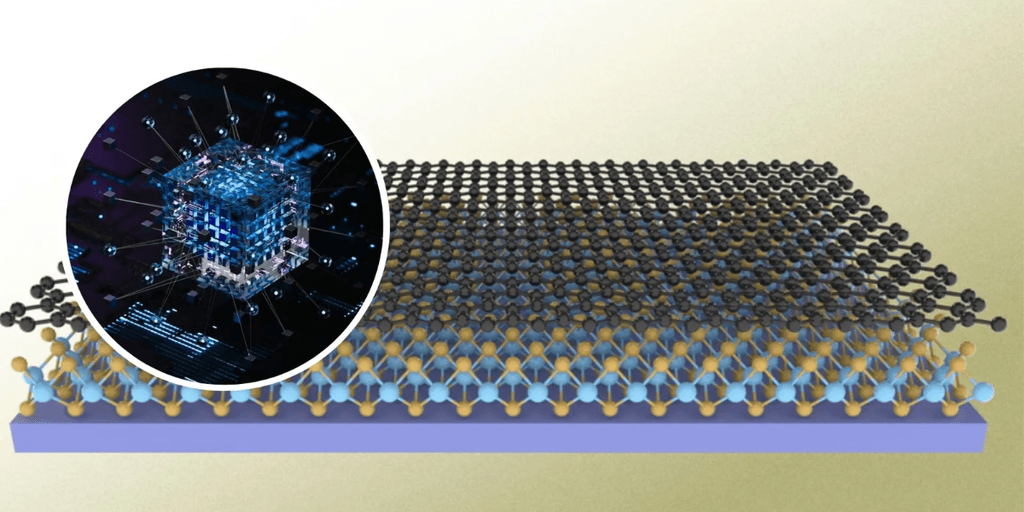
RIKEN researchers developed a computational model to predict key superconductor properties without laboratory testing.
Researchers have developed a computational approach for calculating two fundamental properties of superconductors without relying on experimental measurements, opening another avenue for studying materials that carry electrical current without resistance under suitable conditions.
The work, reported by Japan's RIKEN research institute, focuses on two characteristic lengths that help describe how superconductors behave: the coherence length and the magnetic penetration depth. These properties are central to understanding how superconducting states form and how magnetic fields interact with superconducting materials.
The development is relevant to a long-running scientific challenge. Superconductors have potential applications in medical imaging, high-field magnets, energy systems and advanced computing, but discovering and evaluating useful materials can require extensive laboratory work.
Two measurements that help describe superconductors
The coherence length describes the characteristic distance over which the superconducting state changes in space. It is important for understanding how the material responds to disturbances and how superconductivity behaves around defects or boundaries.
The magnetic penetration depth describes how far a magnetic field can enter a superconductor before it is substantially screened. Together, the two quantities help researchers classify superconductors and understand their response to magnetic fields.
Traditionally, determining these properties can involve experiments that require specialized equipment and carefully controlled conditions. The ability to estimate them through a computational method could provide researchers with another way to evaluate candidate materials before moving to laboratory testing.
Reducing dependence on experimental data
The RIKEN research describes a method designed to calculate the two lengths without using experimental data as its starting point. That distinction is important because experimental measurements are not always readily available for newly synthesized materials or theoretical candidates.
A computational approach could allow researchers to explore material behavior earlier in the discovery process. Scientists may be able to compare candidates, identify promising characteristics and decide which materials warrant more detailed experimental investigation.
The method does not eliminate the need for laboratory validation. Superconductivity involves complex interactions, and theoretical predictions must be tested against real material behavior. Differences between idealized models and physical samples can arise from defects, impurities, structural variations and other factors.
Instead, the approach offers a potential way to make the early stages of research more efficient by providing estimates that can guide subsequent experiments.
Why superconductors remain important
Superconductors are materials that can conduct electricity with zero electrical resistance below particular conditions. Many known superconductors require very low temperatures, while other materials exhibit superconductivity under different combinations of temperature and pressure.
Their unusual properties have made them important in technologies that depend on strong and stable magnetic fields. Magnetic resonance imaging systems, particle accelerators and certain scientific instruments rely on superconducting magnets.
Researchers are also investigating whether improved superconducting materials could contribute to more efficient power systems, compact electrical devices and new forms of computing. Practical adoption depends on material performance, operating conditions, manufacturing requirements and cost.
A method that helps scientists evaluate superconducting properties could therefore contribute to a broader research effort, even if it does not itself produce a new material or device.
Computation as a tool for materials discovery
The development reflects a wider shift in materials science, where theoretical modeling and computational techniques increasingly complement laboratory experimentation. Researchers can use simulations to narrow down possibilities and investigate how changes in material structure may affect performance.
The value of such methods depends on their reliability and the range of materials to which they can be applied. A calculation that works for one class of superconductors may require adjustment before it can be used for another. Comparisons with established measurements will remain important for determining the method's accuracy.
For the field, the ability to calculate fundamental superconducting characteristics without experimental input represents a potentially useful research tool. It may help scientists approach material screening with fewer initial dependencies on specialized measurements.
The broader significance will become clearer as researchers test the approach across additional materials and compare its predictions with laboratory results. For now, the work adds another computational option to the scientific effort to understand and develop superconductors.

Good Morning US Contributor
Covers world affairs and science, connecting research and foreign policy to the readers they affect.
This article features partner, contributor, or branded content from a third party. Members of the Good Morning US editorial staff were not involved in the creation of this content. All views and opinions are those of the contributor alone.
You May Also Like

Told Your Neck Pain Is “Just Wear and Tear”? Here’s What That Phrase Leaves Out

The Game Show Trolley Turns Savannah Into A Game Board

Bill's Family Garage Door Named Best Garage Door Repair Company in the United States of 2026

Hike Tee: Bringing Humor, Sustainability, and Meaningful Connections to Every Outdoor Adventure

Prepping Bargains: How Diane Dunn Is Making Everyday Preparedness More Affordable For Families