
NASA’s Artemis Program Keeps Lunar Exploration in Focus as Science and Engineering Advance
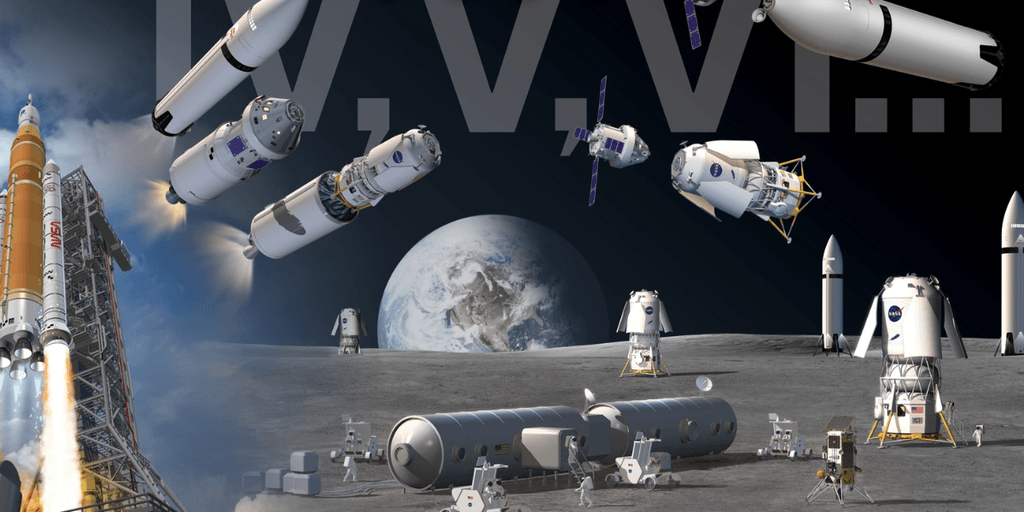
NASA’s lunar exploration program highlights the engineering, research and operational challenges involved in preparing humans for sustained activity beyond Earth.
Human exploration of the Moon continues to depend on advances in spacecraft engineering, life-support systems, navigation and scientific planning. NASA’s Artemis program has become the central U.S. effort to develop the capabilities needed for renewed crewed lunar exploration and future missions farther into space.
The program represents a long-term undertaking rather than a single launch or scientific discovery. Its objectives include returning astronauts to the lunar surface, expanding scientific understanding of the Moon and testing technologies that could support more ambitious missions.
The significance of lunar exploration extends beyond the symbolic achievement of sending people back to the Moon. It provides opportunities to study planetary history, test equipment in a challenging environment and develop operational experience for missions that require crews to function far from Earth.
Why the Moon Remains Scientifically Important
The Moon preserves evidence of the early history of the Earth-Moon system. Unlike Earth, where weather, erosion, oceans and biological activity have substantially altered the surface over time, many lunar features retain records of ancient impacts and geological processes.
Studying lunar rocks, surface materials and craters can help researchers investigate how planets formed and evolved. Samples collected during earlier lunar missions transformed scientific understanding of the Moon’s composition and history, and new missions offer opportunities to examine locations that have received comparatively little direct exploration.
Scientists are particularly interested in the lunar south polar region because permanently shadowed areas may contain water ice. If confirmed and characterized in accessible locations, lunar water could contribute to scientific research and potentially support future exploration activities.
However, identifying ice is only the beginning. Researchers must determine its distribution, concentration, physical form and accessibility. Water found in difficult terrain or mixed with other materials may require complex equipment and substantial energy to extract.
The scientific value of these investigations depends on careful measurements and transparent analysis rather than assumptions about what resources may be available.
Engineering Beyond Earth
Operating on the Moon presents challenges that differ sharply from those encountered on Earth. The lunar surface lacks a breathable atmosphere, experiences extreme temperature variations and exposes equipment to radiation and abrasive dust.
Spacecraft must transport crews and equipment safely, while surface systems must provide power, communications, thermal protection and reliable life support.
Lunar dust presents a particularly persistent engineering problem. Fine particles can cling to equipment and spacesuits, interfere with mechanisms and complicate maintenance. Engineers must design systems that remain functional despite exposure to this material.
Radiation is another major concern. Earth’s atmosphere and magnetic environment provide substantial protection from certain forms of space radiation, but astronauts beyond that protection require additional safeguards. Mission planners must account for exposure during travel and surface operations.
Communication also becomes more complicated as missions move farther from established infrastructure. Reliable links between spacecraft, surface equipment and Earth-based teams are essential for navigation, monitoring and emergency response.
These requirements demonstrate why lunar exploration depends on coordinated engineering across multiple disciplines. A spacecraft may perform well in one environment but encounter difficulties when exposed to conditions that were not adequately anticipated or tested.
The Role of Robotics and Scientific Instruments
Robotic exploration is an important complement to human missions. Uncrewed spacecraft can collect measurements, photograph terrain, investigate surface composition and test technologies before astronauts arrive.
Robotic systems can also examine locations that may be difficult or dangerous for people to reach. Instruments operating on the lunar surface can measure temperature, radiation and the properties of local materials.
The combination of robotic reconnaissance and human exploration allows mission planners to gather information before committing crews and equipment to demanding surface operations.
Scientific instruments are especially valuable when their measurements can be compared with observations collected by earlier missions. Repeated measurements help researchers identify patterns, test hypotheses and determine whether an apparent discovery reflects a broader geological process.
The development of lunar exploration technology can also contribute to research in robotics, autonomous navigation, remote sensing and materials science. These capabilities have applications beyond spaceflight, although their commercial or scientific value depends on how they are adapted for other settings.
International Cooperation and Program Complexity
Modern lunar exploration involves an extensive network of government agencies, research institutions, aerospace companies and international partners.
Such cooperation can expand the scientific capabilities available to missions, distribute technical responsibilities and establish compatible systems for future exploration. It also requires coordination on schedules, safety requirements, communications and technical standards.
Large exploration programs face substantial management challenges because individual systems must work together. Delays in one component can affect other parts of a mission, particularly when spacecraft, launch vehicles, spacesuits and surface equipment must be ready at the same time.
Testing is therefore central to mission preparation. Engineers must demonstrate that systems can withstand launch forces, operate in space and function under conditions that cannot be reproduced perfectly on Earth.
Program timelines can change as testing identifies technical problems or as safety requirements evolve. Such changes should be understood in the context of complex engineering rather than treated as evidence that a mission’s scientific objectives have been abandoned.
Preparing for Longer Missions
The Moon provides a nearby environment in which space agencies can investigate problems associated with sustained human activity beyond Earth.
Researchers must understand how crews respond to isolation, limited resources, disrupted sleep schedules and prolonged exposure to space conditions. Mission designers must also develop procedures for equipment failures, medical emergencies and unexpected changes in the operating environment.
Lessons from lunar missions may inform future planning for Mars exploration, although the two destinations present substantially different challenges. Mars is much farther away, making communication delays, transportation requirements and emergency support more demanding.
The broader scientific importance of the Artemis effort lies in combining exploration with systematic testing. Progress depends on reliable spacecraft, carefully designed experiments and a willingness to revise plans when evidence identifies problems.
As lunar exploration advances, the Moon remains both a scientific destination and a testing ground for technologies intended to expand human activity beyond Earth. Its value will ultimately be measured not simply by the distance traveled, but by the quality of the research, engineering knowledge and operational experience gained along the way.

Good Morning US Contributor
Covers world affairs and science, connecting research and foreign policy to the readers they affect.
This article features partner, contributor, or branded content from a third party. Members of the Good Morning US editorial staff were not involved in the creation of this content. All views and opinions are those of the contributor alone.
You May Also Like

Told Your Neck Pain Is “Just Wear and Tear”? Here’s What That Phrase Leaves Out

The Game Show Trolley Turns Savannah Into A Game Board

Bill's Family Garage Door Named Best Garage Door Repair Company in the United States of 2026

Hike Tee: Bringing Humor, Sustainability, and Meaningful Connections to Every Outdoor Adventure
New Research Explores How Scientists Can Predict Superconductor Properties Without Experiments