
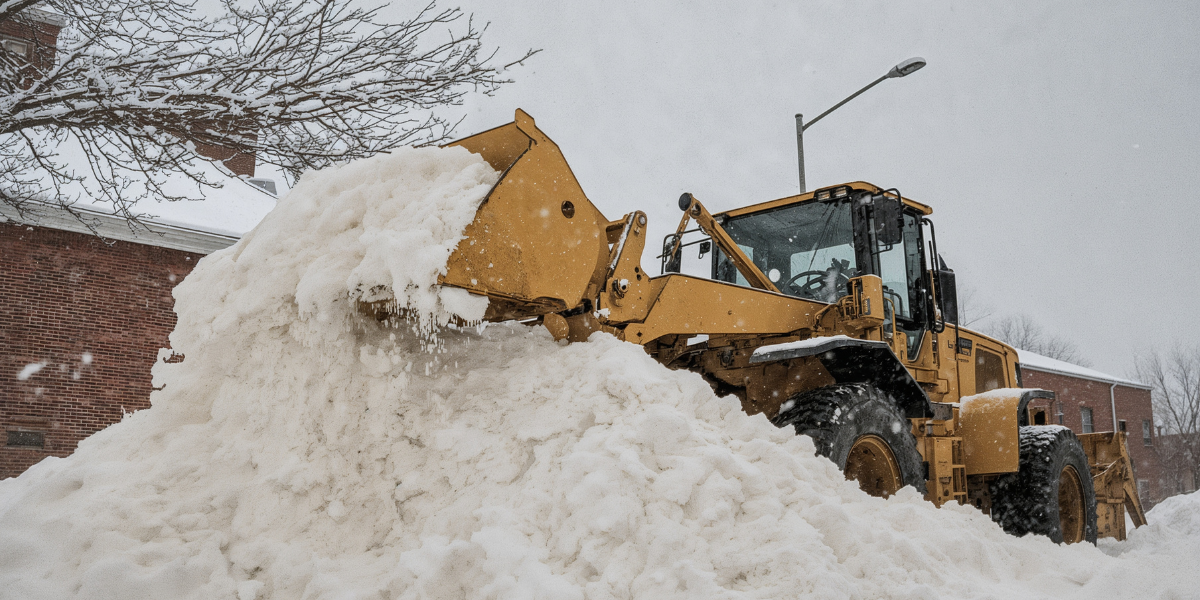
The United States is digging out and beginning recovery efforts on Thursday, February 26, 2026, after a historic late-winter blizzard battered the Northeast this week, leaving feet of snow, widespread travel disruptions, and major ongoing impacts on infrastructure and daily life.
The storm system, widely referred to as the Blizzard of 2026 and classified meteorologically as a powerful nor’easter that intensified into a bomb cyclone, moved across the country before rapidly strengthening along the East Coast between February 22 and 24. The system delivered record snowfall totals, hurricane-force wind gusts, and prolonged blizzard conditions across the Northeastern United States, particularly affecting cities from New York to Boston and surrounding Mid-Atlantic and New England states.
Record Snowfall and Widespread Disruption
Preliminary data shows that Providence, Rhode Island, received an extraordinary 37.9 inches of snow, shattering the city’s previous snowfall records and ranking among the largest single-storm totals in the region’s modern history. Other communities across Massachusetts, Connecticut, and parts of New York reported more than two feet of accumulation, with some localized areas surpassing that mark due to heavy banding and wind-driven drifts.
Blizzard warnings were issued across major metropolitan corridors as whiteout conditions reduced visibility to near zero at times. Wind gusts approached hurricane strength along coastal areas, compounding the impact by creating deep snowdrifts, downing trees, and damaging power lines.
The storm caused widespread power outages affecting hundreds of thousands of residents at its peak. Utility crews have been working continuously to restore service, though officials caution that full restoration in some hard-hit neighborhoods may take additional time due to the extent of infrastructure damage and the difficulty of accessing certain areas.
Air travel was significantly disrupted. Hundreds of flights were canceled or delayed at major airports serving New York City, Boston, and other regional hubs as runways required repeated clearing and airlines worked to reposition aircraft and crews. Rail and bus services were also temporarily suspended or limited in some areas due to safety concerns.
Emergency Responses and Regional Cooperation
State and local governments activated emergency operations centers ahead of the storm’s arrival, urging residents to avoid non-essential travel and to prepare for extended periods indoors. Snowplow fleets operated around the clock, prioritizing major highways, emergency routes, and access to hospitals.
In a notable display of regional cooperation, neighboring states deployed additional snow removal equipment and personnel to assist communities overwhelmed by the scale of the snowfall. Crews from Connecticut were sent to support municipalities in Rhode Island and Massachusetts, where plow operators faced the daunting task of clearing densely populated urban streets buried under multiple feet of compacted snow.
Governors across the region declared states of emergency, enabling access to additional resources and streamlining coordination among transportation departments, public safety agencies, and utility providers. Officials emphasized that while snowfall has tapered off, the recovery phase will continue through the end of the week as crews address lingering hazards such as icy roadways, blocked sidewalks, and weakened tree limbs.
Unprecedented Impacts on Daily Life
The severity of the blizzard was underscored by rare operational decisions. In Massachusetts, The Boston Globe canceled its print edition for only the second time in its 153-year history due to unsafe travel conditions, highlighting the extraordinary nature of the storm’s disruption.
Public schools across much of the Northeast closed for multiple days, with some districts shifting to remote learning. Businesses in central business districts reported limited operations as employees were unable to commute safely. Grocery stores and hardware retailers experienced surges in demand ahead of the storm, as residents stocked up on essentials such as food, batteries, and snow removal supplies.
Municipal leaders have urged residents to exercise caution during cleanup, reminding the public that snow shoveling and roof clearing can pose health risks, particularly for older adults or individuals with underlying conditions. Emergency responders reported an uptick in weather-related calls during the height of the storm, including stranded motorists and minor accidents.
Meteorological Significance
Meteorologists note that the storm’s rapid intensification into a bomb cyclone, a term used when atmospheric pressure drops sharply within a short period, played a key role in its intensity. This process fueled strong winds and heavy snowfall rates, at times exceeding several inches per hour.
While winter storms are common in the Northeast, experts describe this event as one of the most intense in recent years in terms of snowfall totals and sustained wind speeds across multiple states. The storm’s breadth and impact on densely populated areas amplified its overall disruption.
Weather analysts are expected to study the system’s development, snowfall distribution, and emergency response measures in the months ahead. Such analysis may help inform future forecasting improvements and preparedness strategies for extreme winter weather events.
Recovery and Moving Forward
As of February 26, attention has shifted toward restoring normalcy. Transportation agencies are steadily reopening roadways and resuming transit schedules, while power companies continue targeted repairs in neighborhoods where outages persist. Officials are also monitoring temperatures, as fluctuating conditions could lead to refreezing and additional hazards.
The Blizzard of 2026 will likely be remembered for its record-breaking snowfall, powerful winds, and sweeping impact on daily life across the Northeast. For many communities, the coming days will focus on clearing, rebuilding, and reflecting on the resilience demonstrated in the face of one of the region’s most formidable winter storms in recent memory.