
Why the Mekong Could Shape the Next Generation of Indochina Tours?
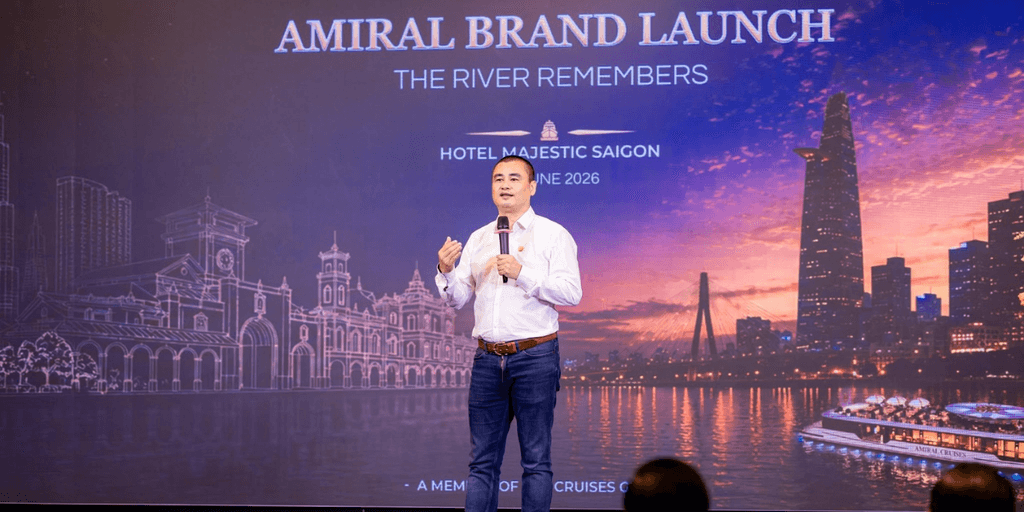
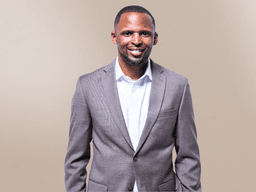
Dr. Pham Ha explores how the Mekong River can redefine luxury travel across Vietnam, Cambodia and Laos through slower, more meaningful journeys.
For Dr. Pham Ha, Founder and CEO of Lux Travel DMC, the Mekong is not simply one of Southeast Asia’s great rivers. After years working in Vietnam’s luxury travel industry, he sees it as a different way of moving through Indochina: one that connects landscapes, communities and cultures at a pace that allows travellers to understand more than the destinations listed on a map.
His interest in developing river-based travel is not new. In an interview with Breaking Travel News during the World Travel Awards in 2023, Pham Ha spoke about the ambition to develop signature cruising experiences on the Saigon and Mekong Rivers, alongside the company’s established expertise in Vietnam’s bays and archipelagos.
The idea continues to shape how he thinks about the future of private travel in Vietnam and across Indochina. For Pham Ha, the question is not whether the Mekong can become another tourism attraction. It is whether the river can offer travellers a more meaningful way to experience the region.
What: A Different Way to Travel Through Indochina
Pham Ha’s starting point is a simple observation: a multi-country journey through Vietnam, Cambodia and Laos can easily become a collection of famous destinations.
Hanoi, Ho Chi Minh City, Phnom Penh and Luang Prabang each have their own identity, while Angkor remains one of the region’s defining cultural landmarks. Yet travelling between such places often means that the movement itself becomes secondary — a flight, a road transfer or a few hours spent simply getting to the next hotel.
Pham Ha sees an opportunity to approach an Indochina tour differently.
“The Mekong is a way to connect,” is the underlying principle of his thinking. The river crosses national boundaries and has shaped the lives of communities across mainland Southeast Asia for generations. Following it by water can therefore offer something that conventional point-to-point travel cannot: the landscape between destinations becomes part of the experience.
From the Mekong Delta’s canals and agricultural communities to the river landscapes around Cambodia and Laos, the journey reveals different relationships between people and water. Travellers are not simply visiting three countries; they are seeing how geography connects them while also understanding how each society has developed its own relationship with the river.
For a tourism leader focused on private and experiential travel, that distinction matters.
Why: The Mekong Responds to What Experienced Travellers Are Looking For
Pham Ha’s view of the Mekong reflects a wider shift in luxury travel: experienced travellers now value personal, flexible, and hard-to-replicate experiences over formal additions to a trip.
Hotels, transport, and service remain essential, but they are no longer the whole experience.
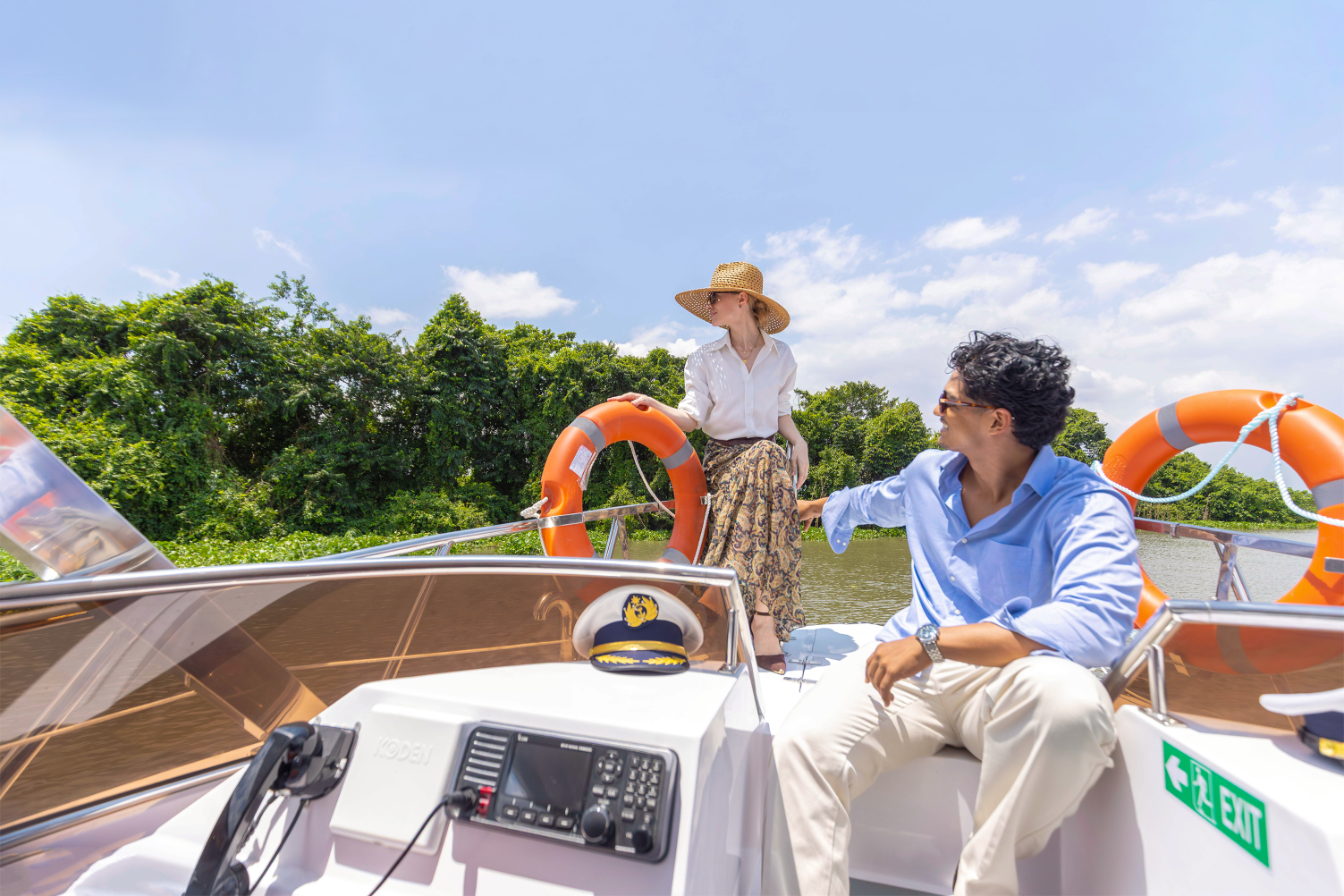
A river offers something different: time. From a boat, travellers see landscapes, villages, and daily life unfold slowly, turning short crossings into meaningful observation.
This slower rhythm is especially valuable in Indochina, where journeys often move between dense cultural and urban highlights. The Mekong provides a counterbalance, turning travel itself into part of the destination.
For private travel, this flexibility is key, allowing the pace to adapt to the traveller rather than a fixed schedule.
The Challenge: Making a River Experience Feel Authentic, Not Manufactured
The potential of the Mekong is clear. Turning that potential into a meaningful travel experience is more complicated.
One of the challenges Pham Ha recognises is that river travel can easily become detached from the communities and landscapes it is supposed to reveal. A cruise may offer beautiful scenery while still leaving travellers as passive observers, watching local life from the other side of a window.
For him, that is not enough.
The Mekong should not become another standardised tourism product in which the same format is reproduced across different destinations. The river's strength lies precisely in the differences between the communities, landscapes and cultures along its course.
There is also a practical challenge: creating a river experience that combines comfort with genuine access to local life.
Luxury travellers expect a high standard of service, but an experience becomes less meaningful if every element is so carefully controlled that nothing feels spontaneous. The balance is to provide comfort and professional organisation while still allowing travellers to engage with the environment around them.
That requires more than a boat.
It requires local knowledge, carefully selected partners and guides who understand how to interpret what travellers are seeing. It also requires a willingness to design experiences around a particular place rather than forcing the place into a predetermined product.
How: Turning the Vision Into Experiences at Lux Travel DMC
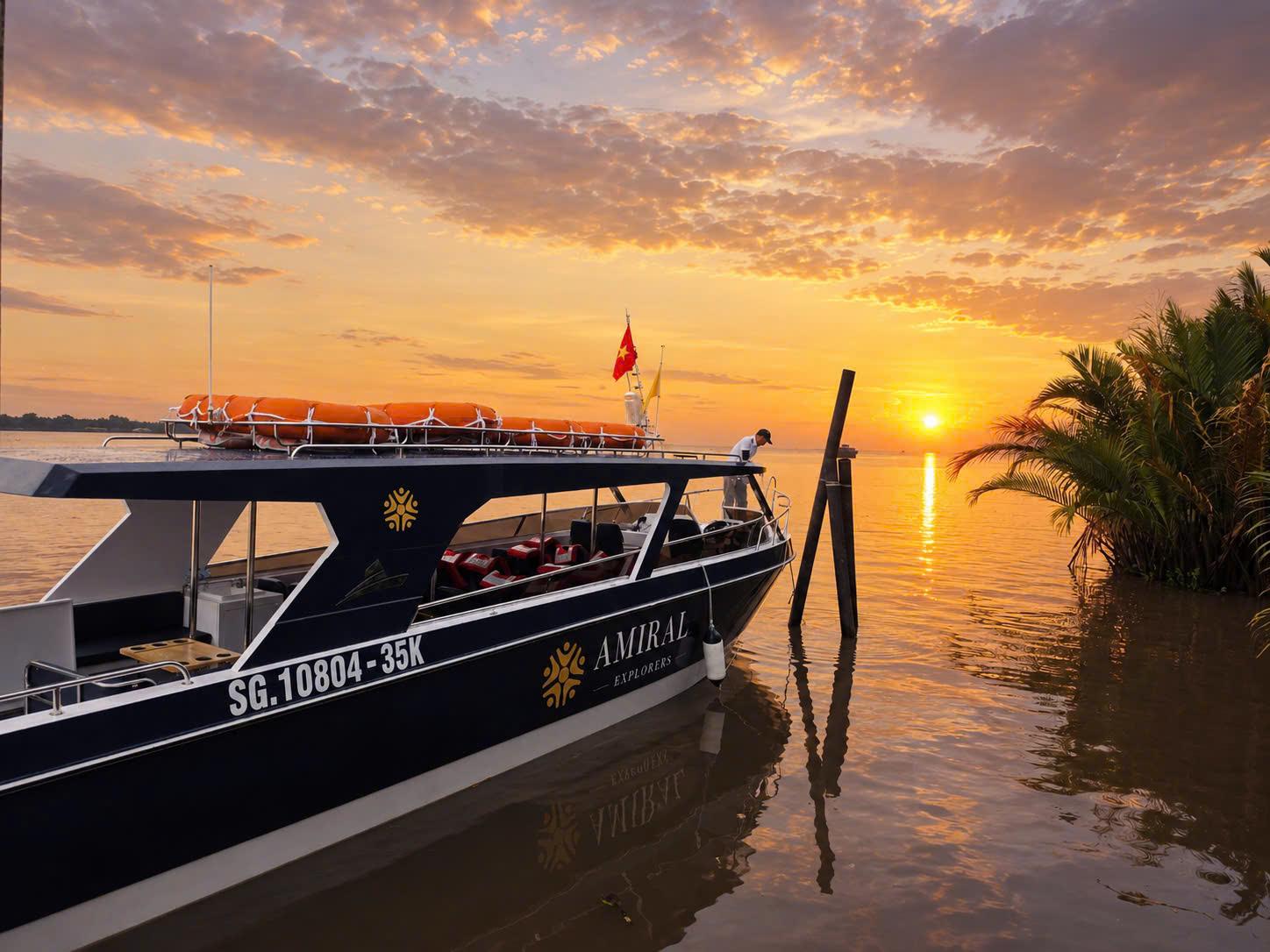
At Lux Travel DMC, the river is treated as a base for exploration rather than something to simply observe.
The company’s two-day Song Xanh Sampan experience in the Mekong Delta reflects this idea, combining cruising with local cuisine, cycling and rowing so travellers can move between the river and nearby communities.
A river journey can easily become passive if travellers only watch scenery pass by. By mixing time on the water with onshore activities, the Mekong becomes a continuous thread linking different experiences.
Guiding is equally important. Local experts help travellers understand what they are seeing: a floating market, a fruit farm or a riverside village all have deeper cultural and economic meaning.
In 2026, Lux Travel DMC gathered nearly 30 guides in Hanoi to focus on service quality, expertise and sustainable tourism. For Pham Ha, investing in guides and local partners is essential to making the Mekong experience meaningful.
Keeping the River Local as Its Potential Grows
There is another part of the challenge that Pham Ha does not separate from the future of Mekong travel: responsibility.
The more travellers seek authentic experiences, the greater the risk that local communities become treated as scenery or that the demand for “authenticity” itself changes the places visitors want to discover.
Pham Ha’s perspective is that river-based tourism needs to remain connected to local people and livelihoods. Developing a new experience therefore means thinking beyond what the traveller sees and considering the relationships behind it - with boat operators, guides, communities and local suppliers.
This is consistent with Lux Travel DMC’s broader approach to responsible tourism and its emphasis on local partnerships and employment.
For Pham Ha, authenticity is not something that can simply be added to a tour description. It depends on whether the people, places and traditions encountered by travellers remain meaningful beyond the tourism transaction.
That makes the development of Mekong experiences a longer-term process rather than a single product launch.
From a River Route to a New Travel Philosophy
Pham Ha’s interest in the Mekong ultimately goes beyond cruising.
The river represents a different way of thinking about how travellers move through Indochina. Instead of designing journeys entirely around the fastest connection between famous destinations, the route itself can become part of the experience.
The Mekong also provides an unusual geographical thread through Vietnam, Cambodia and Laos. Yet Pham Ha does not see this as a reason to standardise the three countries into one river story.
The opposite is true.
The Mekong means something different in each place. In Vietnam, it is closely tied to the agricultural and water-based life of the Delta. Around Phnom Penh, it forms part of the geography of the Cambodian capital. In Laos, it becomes part of the landscape and cultural identity surrounding places such as Luang Prabang.
The value lies in seeing these differences alongside the connection.
That is why the idea Pham Ha discussed in 2023 - developing signature cruising experiences on the Saigon and Mekong Rivers - remains relevant to his thinking today. The ambition is not simply to put more travellers on boats, but to create a way of travelling in which landscape, culture and movement become inseparable.
What Comes Next
For Dr. Pham Ha, the future of luxury travel in Indochina will not necessarily be defined by adding more destinations or more elaborate services.
It may instead be about creating more space to experience places properly.
The Mekong offers a natural opportunity to do that. Its waterways connect countries, but its deeper value lies in the people, landscapes and everyday life that have developed around them. For travellers willing to slow down, the river can provide a perspective on Indochina that is difficult to gain from airports and highways.
Lux Travel DMC is where Pham Ha’s broader vision is translated into practical travel design: private river experiences, local guides, carefully selected partners and activities that bring travellers beyond passive sightseeing.
For him, the Mekong is therefore not simply another route to sell. It is a proposition about how travel itself can evolve - from moving between destinations to understanding the spaces in between them.
And perhaps that is the river’s greatest potential: not simply taking travellers further across Indochina, but allowing them to see the region differently along the way.

Good Morning US Contributor
Covers world affairs and science, connecting research and foreign policy to the readers they affect.
This article features partner, contributor, or branded content from a third party. Members of the Good Morning US editorial staff were not involved in the creation of this content. All views and opinions are those of the contributor alone.
You May Also Like

When Technology Fails Care: Why Behavioral Health Can No Longer Treat IT as an Afterthought

Christian Clothing Co. Makes Faith Wearable
Lee A. Patterson: The Hope Dealer

Why Our Competitors Field Has Fewer Entries Than Yours
John David Gregory And The Story Behind The Faceless Man