
AI Leaders Call for International Cooperation as Technology Moves Deeper Into Global Security
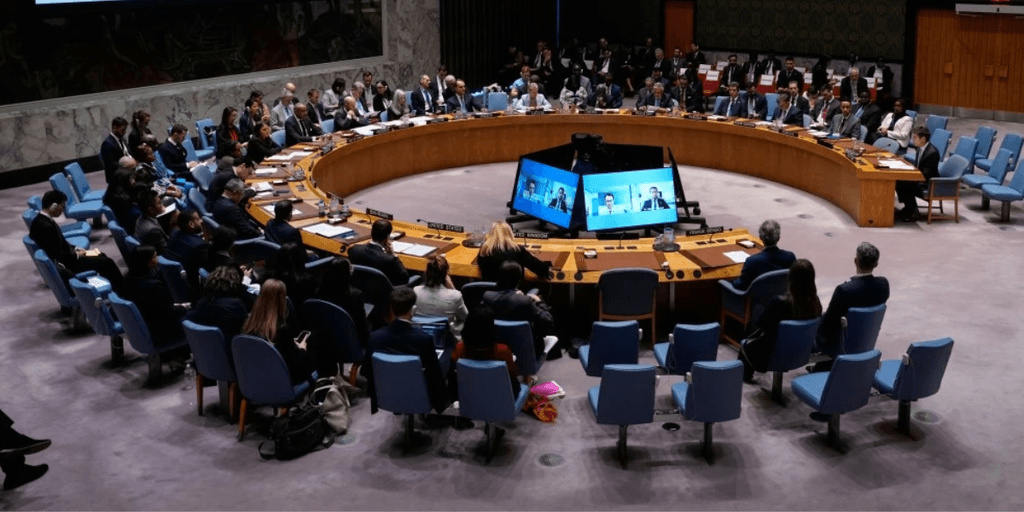
AI executives told world leaders that international cooperation and common safeguards are becoming increasingly important as systems grow more capable.
Artificial intelligence moved into a prominent international security discussion Thursday as technology leaders called for greater cooperation among governments to address risks associated with increasingly capable AI systems.
OpenAI CEO Sam Altman and Anthropic CEO Dario Amodei spoke to the United Nations Security Council during a period of rapid AI development, emphasizing the need for countries to cooperate on safety standards, testing and security.
AI Becomes a Global Security Issue
The discussion reflected how artificial intelligence has expanded beyond technology companies and consumer applications into questions involving national security, international standards and global governance.
Amodei argued that AI could create risks extending beyond individual countries and called for mechanisms that would allow governments to verify compliance with international commitments.
Among the ideas discussed were international restrictions on using AI to develop biological weapons, shared evaluation and verification systems, common testing standards and mechanisms for reporting significant AI security incidents.
The discussion did not establish a new international agreement, but it highlighted the growing attention being given to AI at the highest levels of international institutions.
Rapid Development Creates New Questions
AI systems have developed rapidly in recent years, with companies investing heavily in models capable of generating text, images, software and other forms of content.
The expansion has created significant economic opportunities while also raising questions about cybersecurity, misinformation, biological research and the use of AI in military systems.
Governments have increasingly begun developing their own AI policies, but the technology does not operate within national borders. AI systems can be developed in one country, hosted in another and used globally.
That international character makes coordination more complicated.
The Push for Common Standards
One of the central issues discussed at the United Nations was the need for common standards.
Without shared testing procedures, governments may have different ways of evaluating whether an AI system presents significant risks. Similarly, differences in reporting requirements could make it difficult to understand how serious incidents occur across borders.
Common standards could provide governments and companies with a framework for comparing AI systems and identifying risks.
The proposals discussed at the Security Council included evaluation and verification systems designed to give countries greater confidence that other governments are following agreed rules.
AI and National Security
The conversation is also occurring as governments increasingly consider AI part of national security planning.
AI can be used for intelligence analysis, cybersecurity, logistics, research and other government functions. At the same time, the technology can potentially be misused to automate harmful activities or increase the speed and scale of existing threats.
The issue therefore involves both technological capability and institutional oversight.
For ordinary users, many of these discussions may seem distant from everyday applications such as chatbots or productivity tools. However, the policies established around advanced AI can eventually influence how those technologies are developed, tested and deployed.
International Cooperation Faces Practical Challenges
International AI cooperation is complicated by competition among countries and companies.
Governments want access to advanced technology while also protecting economic and national-security interests. Technology companies operate in competitive markets and must balance development with safety requirements.
The United States, China, Europe and other technology-producing regions are pursuing different approaches to AI regulation and industrial development.
The challenge is finding areas where governments can cooperate without eliminating legitimate technological competition.
Why the Discussion Matters
The United Nations discussion illustrates how quickly AI has moved from a specialized technology issue into a broader international policy question.
The conversation is no longer limited to how companies should build models or how consumers should use them. It increasingly involves how countries can establish common expectations around testing, security and responsible development.
No single discussion can resolve those questions, and Thursday's meeting did not produce a comprehensive international framework.
It did, however, demonstrate that AI governance is becoming part of the global security conversation. As AI systems continue to become more capable and more widely deployed, decisions about standards, oversight and international cooperation are likely to remain central to how the technology develops.

Good Morning US Contributor
Covers health, consumer technology, and entertainment, tracking the stories driving the daily conversation.
This article features partner, contributor, or branded content from a third party. Members of the Good Morning US editorial staff were not involved in the creation of this content. All views and opinions are those of the contributor alone.
You May Also Like

Everwild Apothecary And The Land + Sea Bet

PURVA Brings Gluten-Free Baking and Traditionally Brewed Chai to Modern Kitchens
Ascension365: Bringing Unity to Our Community

Believe In Lean Is Redefining Transformation by Proving Mindset Matters More Than Diets

Dr. Gemaine Owen Wants To Put Practical Caregiving Knowledge Into Every Family’s Hands