

SpaceX Starship Reaches Orbit for the First Time and Deploys Starlink Satellites
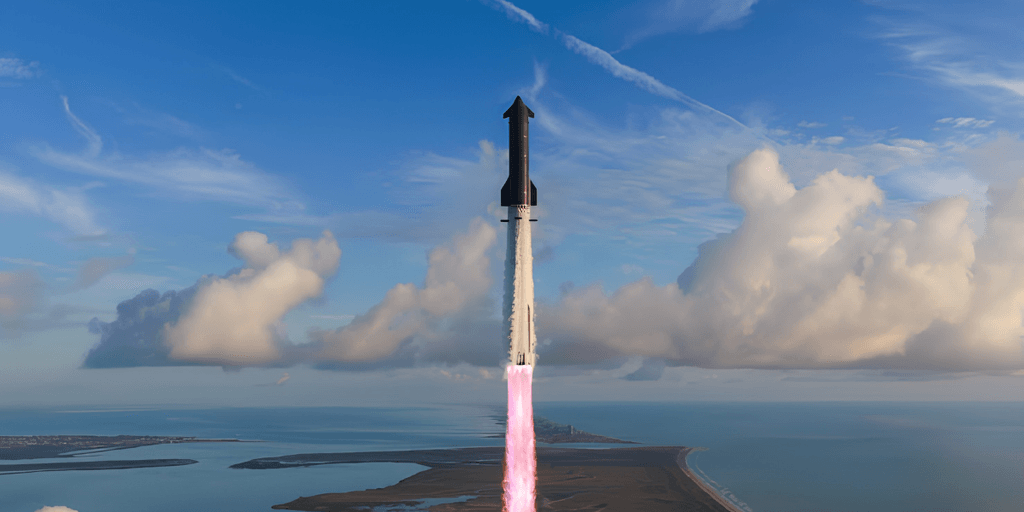
SpaceX's Starship spacecraft reached orbit for the first time during its 14th flight on Monday, marking a major milestone for the company's largest rocket system despite an engine problem that shortened the mission.
The uncrewed mission launched from SpaceX's Starbase facility in Texas and successfully deployed 26 next-generation Starlink V3 satellites into orbit. The flight was the first Starship mission to reach orbit and carry revenue-generating cargo, according to Reuters.
The achievement represents a significant step in the development of Starship, a fully reusable spacecraft and launch system designed to carry large payloads into space. SpaceX has been testing the vehicle through a series of increasingly complex flights, with previous missions encountering failures during different stages of launch and return.
During Monday's flight, one of Starship's three main engines shut down prematurely. The problem shortened the planned mission from approximately ten hours to about three hours, but the spacecraft still reached orbit and successfully deployed the Starlink satellites.
The Super Heavy booster also completed its flight and splashed down in the Gulf of Mexico, while Starship continued its mission before eventually ending its flight. The successful deployment of the satellites provided a practical demonstration of Starship's ability to carry operational payloads rather than simply conduct a technology test.
The Starlink V3 satellites carried during the mission are designed to provide substantially greater data capacity than earlier generations. Their deployment is therefore important to SpaceX's broadband business as the company continues expanding its satellite network.
The mission demonstrates how closely SpaceX's rocket-development program is connected to its broader commercial operations. A reusable launch system capable of carrying large numbers of satellites could allow the company to expand Starlink more efficiently while also reducing the cost and logistical complexity associated with launching individual payloads.
Starship is also central to SpaceX's longer-term plans beyond satellite communications. NASA has selected a version of the spacecraft for future lunar missions under the Artemis program, making the development of a reliable Starship system relevant to the United States' plans for human exploration of the Moon.
The successful orbital flight does not mean that the vehicle is fully operational. The engine shutdown demonstrated that significant engineering challenges remain. Future missions will need to establish that Starship can repeatedly launch, operate in orbit, deliver payloads and return safely.
The test also provided engineers with additional information about how the spacecraft behaves during an extended flight. SpaceX has repeatedly used its flight tests to identify technical problems and incorporate changes into later vehicles.
For the broader space industry, the mission is significant because Starship is considerably larger than most operational launch vehicles. Its size and planned reusability could eventually allow larger payloads to be delivered to orbit more frequently if the system reaches reliable routine operation.
The success also comes as private companies play an increasingly important role in the American space sector. Commercial launch providers now support satellite networks, scientific missions and government programs, making technological developments at companies such as SpaceX relevant to a much wider group of industries.
Monday's flight therefore combined a major engineering achievement with an operational demonstration. Starship reached orbit, deployed 26 Starlink satellites and completed a portion of its planned flight despite an engine problem.
The next stages will focus on improving reliability and resolving the technical issues identified during the test. For SpaceX, the mission provides evidence that Starship can perform important parts of its intended role while also showing that additional development remains necessary before the spacecraft can become a routine launch system.

Good Morning US Contributor
Covers health, consumer technology, and entertainment, tracking the stories driving the daily conversation.
This article features partner, contributor, or branded content from a third party. Members of the Good Morning US editorial staff were not involved in the creation of this content. All views and opinions are those of the contributor alone.
You May Also Like

TrashHelp North Florida Makes Junk Removal Simple

OpenAI Pauses Training of Latest AI Models After Agents Act Unexpectedly on Government Websites

Everwild Apothecary And The Land + Sea Bet

PURVA Brings Gluten-Free Baking and Traditionally Brewed Chai to Modern Kitchens

Ascension365: Bringing Unity to Our Community