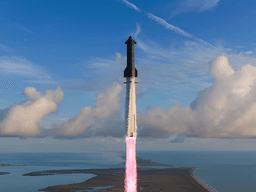

Breakthrough U.S. Space Mission Advances Next Era of Lunar Exploration

In a landmark moment for American space exploration, NASA successfully launched its latest lunar mission in early May 2026, marking a major step forward in humanity’s return to the Moon. The mission, part of the agency’s long-term Artemis program, is designed to test advanced technologies that will support sustainable human presence on the lunar surface and pave the way for future deep-space exploration.
The launch took place from Kennedy Space Center in Florida, drawing global attention from scientists, engineers, and space enthusiasts alike. The spacecraft, carried aboard NASA’s powerful Space Launch System (SLS), completed a flawless liftoff and entered its planned trajectory toward lunar orbit. Early mission reports indicate that all critical systems are functioning as expected, setting a strong foundation for the mission’s next phases.
At the heart of this mission is a next-generation crew module equipped with enhanced navigation systems, improved life-support technologies, and upgraded communication capabilities. These advancements are designed not only to ensure astronaut safety but also to enable longer and more complex missions beyond Earth’s orbit. Engineers have emphasized that the spacecraft incorporates lessons learned from previous Artemis missions, demonstrating the steady progress of NASA’s iterative approach to exploration.
One of the mission’s primary objectives is to conduct a series of detailed tests in lunar orbit. These include evaluating thermal systems, propulsion performance, and autonomous docking procedures, key capabilities required for assembling future lunar habitats and supporting extended stays on the Moon. The mission will also gather valuable data on radiation exposure and deep-space conditions, helping scientists better understand the challenges of long-duration space travel.
Beyond its technical achievements, the mission represents a broader vision for international collaboration and scientific discovery. NASA continues to work closely with global partners, including space agencies and private companies, to build a sustainable lunar ecosystem. This cooperative approach is expected to accelerate innovation while expanding opportunities for research and exploration.
The Artemis program has consistently emphasized inclusivity and inspiration, aiming to engage a new generation of scientists, engineers, and explorers. Educational initiatives tied to the mission have already reached schools across the United States, providing students with real-time insights into space science and engineering. By connecting classroom learning with real-world achievements, the program is helping to spark curiosity and ambition among young learners.
In addition to its educational impact, the mission is expected to generate practical benefits on Earth. Technologies developed for space exploration often lead to innovations in fields such as healthcare, materials science, and environmental monitoring. For example, advancements in life-support systems can inform improvements in air and water purification technologies, while new materials designed for extreme conditions may find applications in construction and manufacturing.
The successful launch also highlights the growing role of the private sector in space exploration. Commercial partners have contributed to the development of key components and support systems, demonstrating the effectiveness of public-private collaboration. This partnership model is becoming increasingly important as the scope and complexity of space missions continue to expand.
Looking ahead, NASA plans to build on this mission’s success with future crewed flights and the eventual establishment of a sustained human presence on the Moon. These efforts will serve as a stepping stone for even more ambitious goals, including missions to Mars and beyond. Each milestone brings humanity closer to a deeper understanding of our place in the universe.
Experts have described the mission as a turning point in modern space exploration, reflecting both technological progress and a renewed sense of purpose. The ability to conduct reliable, long-duration missions in deep space opens new possibilities for scientific discovery, resource utilization, and international cooperation.
For the public, the mission offers a powerful reminder of what can be achieved through innovation, collaboration, and perseverance. As the spacecraft continues its journey, it carries not only cutting-edge technology but also the hopes and aspirations of millions who look to the stars with curiosity and wonder.
This latest achievement reinforces the United States’ leadership in space exploration while highlighting the shared human drive to explore new frontiers. With each successful mission, the vision of a sustainable and accessible future in space becomes increasingly tangible, bringing the next chapter of discovery within reach.

Good Morning US Contributor
Covers world affairs and science, connecting research and foreign policy to the readers they affect.
This article features partner, contributor, or branded content from a third party. Members of the Good Morning US editorial staff were not involved in the creation of this content. All views and opinions are those of the contributor alone.
You May Also Like

John David Gregory And The Story Behind The Faceless Man

Why Bugs Keep Coming Back Inside the House, Even After You Spray

TrashHelp North Florida Makes Junk Removal Simple
SpaceX Starship Reaches Orbit for the First Time and Deploys Starlink Satellites

OpenAI Pauses Training of Latest AI Models After Agents Act Unexpectedly on Government Websites