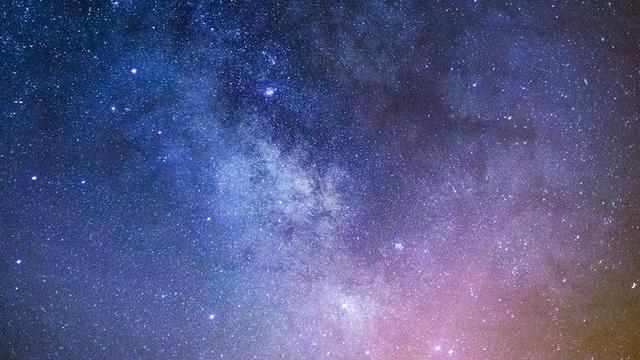

NASA Marks Voyager 1's Historic One Light-Day Journey Into Interstellar Space
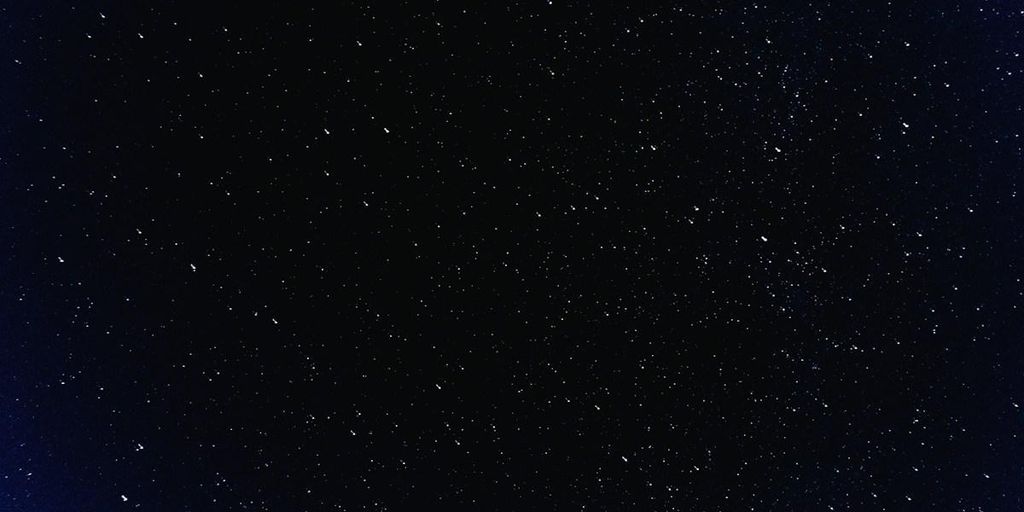
The spacecraft launched in 1977 reached a distance of one light-day from Earth, marking an extraordinary milestone in the history of human space exploration.
NASA's Voyager 1 spacecraft reached an extraordinary milestone on November 17, traveling approximately one light-day away from Earth and becoming the first human-made object to reach that distance.
The achievement represents nearly five decades of continuous space exploration since the spacecraft launched from Cape Canaveral, Florida, in 1977.
To recognize the occasion, NASA invited people around the world to participate in a public celebration called "Shine Bright for Voyager's Light-Day." The activity encouraged participants to direct a flashlight or mobile-device light toward the sky while transmitting the spacecraft's call sign, VGR, using Morse code.
The milestone highlights the extraordinary distance traveled by Voyager 1 and the continuing scientific value of a mission that has transformed humanity's understanding of the outer solar system and interstellar space.
Understanding the Meaning of One Light-Day
A light-day is a measurement of distance rather than time.
It represents the distance light travels through space in 24 hours, approximately 16.1 billion miles or 25.9 billion kilometers.
At that distance, a signal traveling at the speed of light requires approximately 24 hours to reach Voyager 1 from Earth. A response transmitted by the spacecraft would require another 24 hours to return.
This communication delay illustrates the enormous distance separating the spacecraft from its home planet.
For mission engineers, maintaining communication under these conditions requires highly sensitive ground-based equipment and careful coordination.
The spacecraft communicates through NASA's Deep Space Network, a system of large radio antennas distributed across different parts of the world.
The network allows NASA to maintain contact with distant spacecraft as Earth rotates, providing opportunities to receive scientific information and send commands.
A Mission That Began in 1977
Voyager 1 launched on September 5, 1977, from Cape Canaveral, Florida.
Its original mission involved studying the outer planets, particularly Jupiter and Saturn.
During its journey, the spacecraft collected detailed observations of planetary atmospheres, magnetic fields, moons and surrounding environments.
One of its most important achievements involved its close encounters with Jupiter and Saturn, which provided scientists with valuable information about the giant planets.
The mission also transformed scientific understanding of several planetary moons.
Voyager 1's observations of Jupiter's moon Io revealed active volcanism, while its investigations of Saturn and its moons contributed to a better understanding of the planet's complex ring system.
After completing its primary planetary objectives, Voyager 1 continued traveling outward.
Its extended mission eventually took it beyond the heliosphere, the region influenced by the Sun's solar wind.
In 2012, NASA confirmed that Voyager 1 had entered interstellar space, making it the first spacecraft to cross that boundary.
Exploring Interstellar Space
Interstellar space is the region beyond the influence of the solar wind, where material and magnetic fields associated with the broader galaxy become increasingly important.
Voyager 1's instruments have provided direct measurements of this environment.
The spacecraft has helped scientists study cosmic rays, magnetic fields and plasma conditions beyond the heliosphere.
These measurements are valuable because much of what scientists know about interstellar space comes from indirect observations and theoretical models.
Voyager 1 provides information from an actual location beyond the Sun's protective bubble.
The spacecraft's observations also help scientists understand how the solar system interacts with the surrounding interstellar environment.
Although Voyager 1 is moving far beyond the planets, its scientific contribution remains connected to fundamental questions about the structure and behavior of the space surrounding Earth.
The Technology Behind a Nearly 50-Year Mission
Voyager 1 was designed during an era when computing and communications technology were considerably different from today's systems.
Its continued operation demonstrates the durability of the engineering and planning behind the mission.
However, maintaining an aging spacecraft presents significant technical challenges.
Its power supply comes from radioisotope thermoelectric generators, which convert heat from radioactive decay into electricity.
As the available power decreases over time, NASA engineers must manage energy consumption carefully.
Certain instruments and spacecraft systems have been turned off to preserve enough electricity for essential operations and scientific measurements.
Communication also becomes increasingly difficult as the spacecraft moves farther away.
The distance reduces the strength of received signals, requiring sensitive antennas and carefully managed transmission procedures.
NASA Invites the Public to Participate
The November 17 milestone also provided an opportunity to connect the public with one of the most enduring missions in space exploration.
NASA's Shine Bright for Voyager campaign encouraged people to send the letters VGR in Morse code using a flashlight or the agency's automated online flasher.
The call sign represents Voyager's identity and offers a simple way for participants to acknowledge the spacecraft's extraordinary journey.
The activity was designed as a symbolic celebration rather than a method of communicating directly with the spacecraft.
The actual communication system relies on radio signals transmitted through NASA's Deep Space Network.
A Lasting Achievement in Space Exploration
Voyager 1's one light-day milestone represents more than a measurement of distance.
It reflects decades of scientific discovery, engineering development and international interest in understanding the universe.
The spacecraft has traveled farther than any other human-made object while continuing to provide information about environments beyond the solar system.
Its journey also demonstrates the long-term value of scientific missions designed to operate well beyond their original objectives.
For NASA and the broader scientific community, Voyager 1 remains an extraordinary example of how sustained exploration can expand human knowledge.
Nearly 50 years after its launch from Florida, the spacecraft continues its journey into interstellar space, carrying humanity's scientific instruments farther into the galaxy.

Good Morning US Contributor
Covers world affairs and science, connecting research and foreign policy to the readers they affect.
This article features partner, contributor, or branded content from a third party. Members of the Good Morning US editorial staff were not involved in the creation of this content. All views and opinions are those of the contributor alone.
You May Also Like

Asch Roofing Helps New Jersey Families Protect More Than Just Their Homes

The AI Keynote Speaker Latin American Companies Book in Their Own Language

Beans & Rice: Florida Coffee With A Bigger Purpose
ULA Vulcan Rocket Fails During Florida Launch, Destroying 40 Amazon Leo Satellites

Better Me Medical Spa & Wellness: Dr. Alla Tsimerman And Mark Wagner Bring A New Vision To Boca Raton