

ULA Vulcan Rocket Fails During Florida Launch, Destroying 40 Amazon Leo Satellites
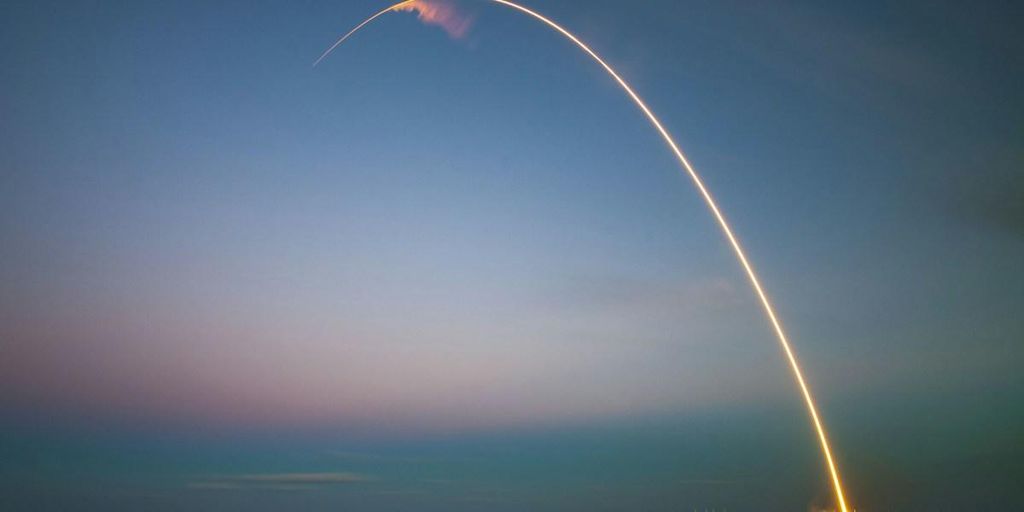
An anomaly approximately 10 minutes after liftoff ended a major commercial space mission and raised questions about launch reliability and satellite deployment.
A United Launch Alliance Vulcan rocket failed during a commercial space mission from Florida on Sunday, November 15, destroying all 40 Amazon Leo satellites aboard and creating a significant setback for the expanding satellite communications industry.
The rocket lifted off from Cape Canaveral Space Force Station at approximately 12:40 p.m. Eastern Time. The mission initially progressed through several planned flight milestones before ULA reported that the vehicle experienced an anomaly approximately 10 minutes after launch.
The failure prevented the rocket from delivering its payload into orbit. ULA confirmed that the mission had not achieved its objective and said it would work with Amazon and other relevant organizations to investigate what happened.
The incident represented the first complete launch failure in ULA's history and marked an important development in the continuing expansion of commercial space operations.
A Mission Carrying 40 Communications Satellites
The payload consisted of 40 satellites belonging to Amazon Leo, the company's planned low-Earth-orbit broadband network.
Amazon is developing the constellation to provide internet connectivity through satellites operating much closer to Earth than traditional geostationary communications satellites.
Low-Earth-orbit systems can offer advantages in communication latency because signals travel shorter distances between satellites and ground-based users.
The technology has become increasingly important as companies seek to provide connectivity to rural communities, remote locations and areas where conventional broadband infrastructure is difficult or expensive to establish.
Amazon's broader deployment strategy involves thousands of satellites. The company has identified a planned constellation of 3,236 spacecraft, with the goal of establishing a network capable of providing global broadband coverage.
The loss of 40 satellites therefore represented a meaningful setback, although it did not eliminate the company's wider network development program.
What Happened During the Launch
The Vulcan rocket completed its initial liftoff sequence from Florida before encountering the anomaly during its flight.
The launch broadcast showed the vehicle progressing through several expected milestones, including the separation of its solid rocket boosters and the operation of its upper-stage propulsion system.
However, approximately 10 minutes after launch, ULA reported that the rocket had failed to deliver the Amazon payload into orbit.
The company did not immediately identify the cause.
The available information did not establish whether the failure originated in propulsion, guidance, staging, communications or another component of the vehicle.
That distinction is important because modern launch vehicles depend on multiple systems working together under demanding conditions.
Investigators must examine flight telemetry and other technical information before determining what corrective actions may be necessary.
Why Vulcan Matters to the United States
Vulcan is an important component of ULA's effort to provide a modern launch system for government, national security and commercial customers.
The vehicle was developed to replace the company's older Atlas V and Delta IV rockets.
Its development also reflects a broader effort to maintain dependable domestic launch capacity.
The United States depends on commercial launch providers to transport satellites used for communications, scientific research, navigation and national security.
A reliable launch industry is particularly important as the number of satellites operating in orbit continues to increase.
ULA's previous Vulcan missions had been successful, making the November failure a significant development for the company's launch program.
The rocket had completed four earlier flights before the incident. The latest mission was also its first launch in approximately nine months, following earlier technical reviews involving components of the vehicle.
The investigation will therefore be important in determining how the failure affects future launch operations.
Implications for Satellite Internet
Amazon's loss highlights the logistical challenges associated with building large satellite networks.
Satellite operators must coordinate spacecraft manufacturing, launch schedules, orbital deployment, ground stations and customer services.
A failed launch can affect several parts of that process.
The loss of an entire payload also creates replacement requirements and may influence the timing of future deployment milestones.
Amazon has been competing in a market where SpaceX's Starlink network has already established a substantial presence.
Both companies are pursuing satellite-based connectivity, although their deployment strategies, infrastructure and service arrangements differ.
The incident demonstrates that access to launch vehicles remains a critical factor in the development of large communications networks.
Investigation and Next Steps
ULA said it would work with Amazon and other appropriate organizations to determine the cause of the anomaly and identify corrective measures.
Blue Origin, which supplies the BE-4 engines used by Vulcan, is part of the rocket's broader industrial supply chain. However, no confirmed finding established that the engines caused the failure.
The investigation will need to distinguish between confirmed technical evidence and possible explanations.
Until the cause is established, the timing of Vulcan's return to flight remains uncertain.
The failure also highlights the importance of technical accountability in an industry where individual missions carry expensive equipment and support infrastructure used by millions of people.
A Significant Setback for Commercial Space
The November 15 mission illustrated both the opportunities and operational risks associated with commercial space development.
Satellite networks have become increasingly important to telecommunications and digital infrastructure, but their expansion depends on dependable launch systems and successful orbital deployment.
For ULA, the immediate priority is identifying the failure and establishing a path toward restoring Vulcan's operational reliability.
For Amazon, the challenge involves managing the lost payload while continuing to develop its broader satellite network.
The incident was a substantial setback, but its long-term consequences will depend on the investigation, the corrective measures implemented and the availability of future launch opportunities.

Good Morning US Contributor
Covers world affairs and science, connecting research and foreign policy to the readers they affect.
This article features partner, contributor, or branded content from a third party. Members of the Good Morning US editorial staff were not involved in the creation of this content. All views and opinions are those of the contributor alone.
You May Also Like

Asch Roofing Helps New Jersey Families Protect More Than Just Their Homes

The AI Keynote Speaker Latin American Companies Book in Their Own Language

Beans & Rice: Florida Coffee With A Bigger Purpose

Better Me Medical Spa & Wellness: Dr. Alla Tsimerman And Mark Wagner Bring A New Vision To Boca Raton

NASA's Voyager 1 Approaches Historic One-Light-Day Milestone More Than 16 Billion Miles From Earth