
Breakthrough Prize 2026 Honors Scientific Advances Shaping the Future
The 2026 Breakthrough Prize ceremony, often referred to as the “Oscars of Science,” recognized some of the world’s most significant scientific achievements this month in Los Angeles, awarding more than $18 million to researchers in life sciences, physics, and mathematics. The annual event brought together leading scientists, technology executives, and public figures to celebrate discoveries that could influence medicine, technology, and scientific understanding for years to come.
Founded in 2012 by technology leaders including Sergey Brin, Mark Zuckerberg, Priscilla Chan, Yuri Milner, and Anne Wojcicki, the Breakthrough Prize aims to spotlight scientific accomplishments in the same way major entertainment awards recognize achievements in film and television. This year’s ceremony continued that tradition by honoring researchers whose work has advanced treatments for genetic diseases, expanded understanding of the universe, and solved complex mathematical problems.
Among the most notable awards in life sciences was recognition for researchers Jean Bennett, Katherine A. High, and Albert Maguire, whose work led to the development of the first FDA-approved gene therapy for an inherited disease. Their research created new possibilities for treating previously incurable genetic disorders and represented a milestone in modern medicine. The prize committee highlighted the broader impact of gene therapy research, particularly its potential to improve the quality of life for patients with rare inherited conditions.
Additional life sciences awards honored advances in the treatment of sickle cell disease and new discoveries related to amyotrophic lateral sclerosis (ALS) and dementia. These medical breakthroughs are especially significant as researchers continue searching for more effective treatments for chronic and neurodegenerative illnesses affecting millions of people worldwide. According to organizers, the winning research demonstrated how scientific innovation can move from laboratory experimentation toward real-world clinical applications.
In the field of physics, the Muon g-2 collaboration received recognition for conducting highly precise measurements of the muon, a subatomic particle that may provide clues about physics beyond the Standard Model. Scientists involved in the project have spent years analyzing particle behavior to determine whether existing theories fully explain the structure of the universe. The findings have attracted international attention because they could eventually lead to revisions in long-standing physics models.
The mathematics prize was awarded to French mathematician Frank Merle for his contributions to nonlinear partial differential equations, a field that plays a critical role in understanding complex systems in physics and engineering. His research has influenced studies involving wave behavior, fluid dynamics, and mathematical modeling across multiple scientific disciplines.
The event also featured the presentation of a Special Prize in Physics to David J. Gross, whose foundational work in quantum field theory and string theory has shaped modern theoretical physics for decades. Organizers described Gross’s contributions as instrumental in expanding scientists’ understanding of particle interactions and the structure of matter.
One of the newer honors introduced during the ceremony was the Vera Rubin New Frontiers Prize, designed to recognize early-career women scientists. Carolina Figueiredo received the inaugural award for her research in particle physics and geometry, highlighting the growing emphasis on encouraging diversity and inclusion within the scientific community.
The significance of the Breakthrough Prize extends beyond the financial awards themselves. Scientific organizations and universities often point to public recognition events like this as an opportunity to increase interest in science, technology, engineering, and mathematics education. By placing scientific achievements in a high-profile public setting, organizers hope to inspire younger generations to pursue careers in research and innovation.
This year’s ceremony also reflected the growing intersection between technology companies and scientific advancement. Many of the event’s founders and sponsors are leaders in the technology sector, and the ceremony emphasized how collaboration between private industry and academic research continues to accelerate discoveries in medicine, artificial intelligence, and physics. As investment in scientific research expands globally, partnerships between universities, healthcare institutions, and technology firms are expected to play an increasingly important role in future breakthroughs.
Experts say the 2026 award recipients represent broader trends shaping scientific research today: precision medicine, advanced computational modeling, and large-scale international collaboration. Many of the honored projects involved teams working across institutions and countries, demonstrating how modern scientific challenges increasingly require coordinated global efforts.
The Breakthrough Prize ceremony arrives at a time when public interest in science remains high, particularly in areas related to healthcare innovation and emerging technologies. Organizers stated that the awards are intended not only to celebrate achievement but also to communicate the real-world importance of scientific research to a broader audience.
For readers and observers, the key takeaway from this year’s event is clear: scientific progress continues to shape industries, healthcare systems, and everyday life at an accelerating pace. From gene therapies that may transform medicine to physics research that could redefine understanding of the universe, the discoveries recognized at the 2026 Breakthrough Prize ceremony illustrate how research and innovation remain central to solving some of the world’s most complex challenges.

Good Morning US Contributor
Covers world affairs and science, connecting research and foreign policy to the readers they affect.
This article features partner, contributor, or branded content from a third party. Members of the Good Morning US editorial staff were not involved in the creation of this content. All views and opinions are those of the contributor alone.
You May Also Like

John David Gregory And The Story Behind The Faceless Man

Why Bugs Keep Coming Back Inside the House, Even After You Spray

TrashHelp North Florida Makes Junk Removal Simple
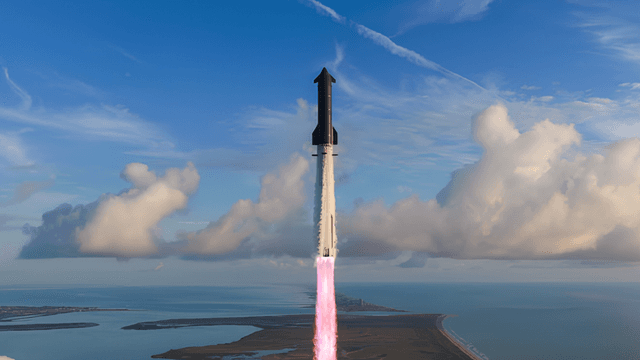
SpaceX Starship Reaches Orbit for the First Time and Deploys Starlink Satellites
OpenAI Pauses Training of Latest AI Models After Agents Act Unexpectedly on Government Websites