
NASA’s Next-Generation Mars Helicopter Passes Major Testing Milestone
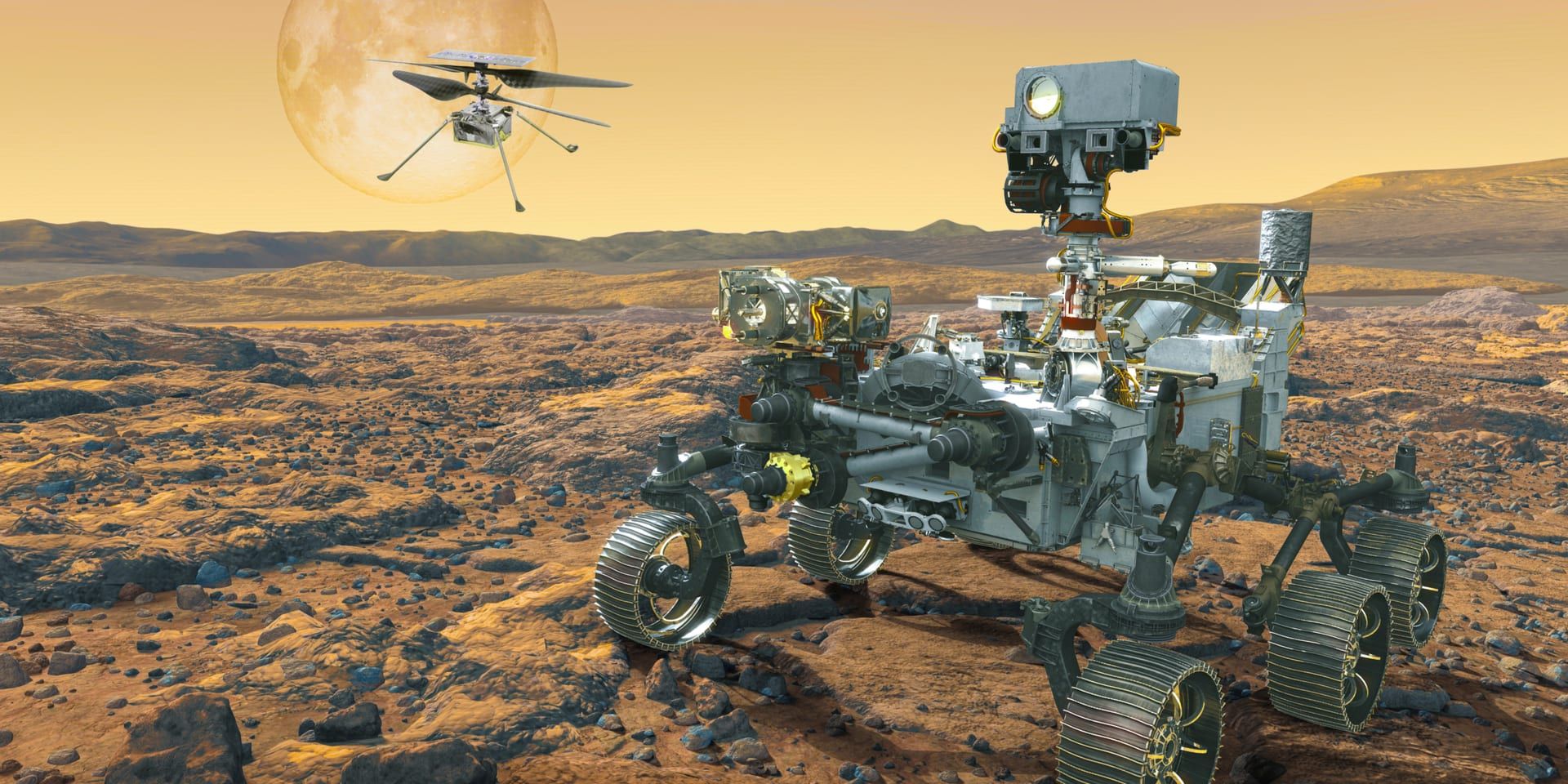
NASA has announced a significant advancement in space exploration following the successful testing of next-generation helicopter rotor blades designed for future Mars missions. The breakthrough, achieved at NASA’s Jet Propulsion Laboratory (JPL) in California, marks a major step forward in expanding aerial exploration capabilities on the Red Planet.
The latest round of testing focused on advanced rotor systems that could power a new generation of Martian aircraft capable of carrying larger scientific payloads and traveling greater distances. Engineers conducted the experiments inside a specialized vacuum chamber designed to replicate the thin atmospheric conditions on Mars. During these trials, the rotor blades operated at extremely high speeds, even surpassing the speed of sound while maintaining stability and structural integrity, an impressive engineering feat under such conditions.
This development builds on the success of Ingenuity, the small robotic helicopter that arrived on Mars alongside NASA’s Perseverance rover in 2021. Initially planned as a short-term demonstration, Ingenuity exceeded expectations by completing dozens of flights, proving that powered flight is possible in Mars’ extremely thin atmosphere. The Martian atmosphere has only about 1% of the density of Earth’s, making flight particularly challenging.
NASA officials say the newly tested rotor technology could enable larger and more capable helicopters in future missions. These aerial vehicles may carry advanced scientific instruments, imaging equipment, and potentially assist in sample collection. By reaching locations that are inaccessible to rovers, such as steep cliffs, deep craters, and rugged terrain, these helicopters could unlock new scientific discoveries about Mars’ geological history and past climate conditions.
The upgraded rotor blades represent a significant improvement over earlier designs. Engineers refined their shape, materials, and aerodynamic performance to generate more lift and efficiency in low-density conditions. Because of Mars’ thin atmosphere, helicopter blades must spin much faster than those on Earth to stay airborne. Achieving stable, high-speed rotation under these constraints is a key milestone in the evolution of extraterrestrial aviation.
In parallel with rotor advancements, NASA researchers are also exploring next-generation propulsion systems that could reduce travel time between Earth and Mars. These efforts include experimental technologies such as plasma-based propulsion, which may enable faster and more efficient interplanetary travel in the future. When combined with advanced aerial robotics, such systems could significantly accelerate scientific exploration on Mars.
The timing of this progress aligns with NASA’s broader Moon-to-Mars exploration strategy. Through its Artemis program, the agency aims to establish a sustained human presence on the Moon as a stepping stone for future crewed missions to Mars. Technologies being tested today, including high-performance rotor systems, are expected to play a crucial role in supporting these long-term goals.
The successful testing also highlights the growing importance of aerial vehicles in planetary exploration. Unlike ground-based rovers, helicopters can cover large areas quickly, capture detailed images from above, and identify promising scientific targets in a fraction of the time. This capability allows mission teams to make more informed decisions and optimize exploration strategies.
Aerospace experts note that the achievement demonstrates how rapidly experimental technologies can evolve. What began as a proof-of-concept mission with Ingenuity has now become the foundation for more ambitious aerial exploration systems. Future missions may include fleets of autonomous helicopters working alongside rovers and orbiters to provide a more comprehensive understanding of the Martian environment.
Beyond its scientific implications, the project also underscores continued innovation within the U.S. aerospace sector. NASA’s collaborations with research institutions and private industry partners are driving advancements in robotics, materials science, and autonomous flight systems. Many of these innovations have the potential to benefit technologies on Earth, including improvements in aviation efficiency and remote sensing.
For the public, this milestone reflects the rapid pace of modern space exploration. Just a few years ago, powered flight on another planet was considered highly experimental. Today, NASA is pushing the boundaries further by developing aircraft capable of greater speed, endurance, and functionality.
As testing continues and mission concepts evolve, next-generation Mars helicopters could become essential tools in the search for answers about the planet’s past, and its potential to have once supported life.

Good Morning US Contributor
Covers world affairs and science, connecting research and foreign policy to the readers they affect.
This article features partner, contributor, or branded content from a third party. Members of the Good Morning US editorial staff were not involved in the creation of this content. All views and opinions are those of the contributor alone.
You May Also Like

John David Gregory And The Story Behind The Faceless Man

Why Bugs Keep Coming Back Inside the House, Even After You Spray

TrashHelp North Florida Makes Junk Removal Simple
SpaceX Starship Reaches Orbit for the First Time and Deploys Starlink Satellites

OpenAI Pauses Training of Latest AI Models After Agents Act Unexpectedly on Government Websites